
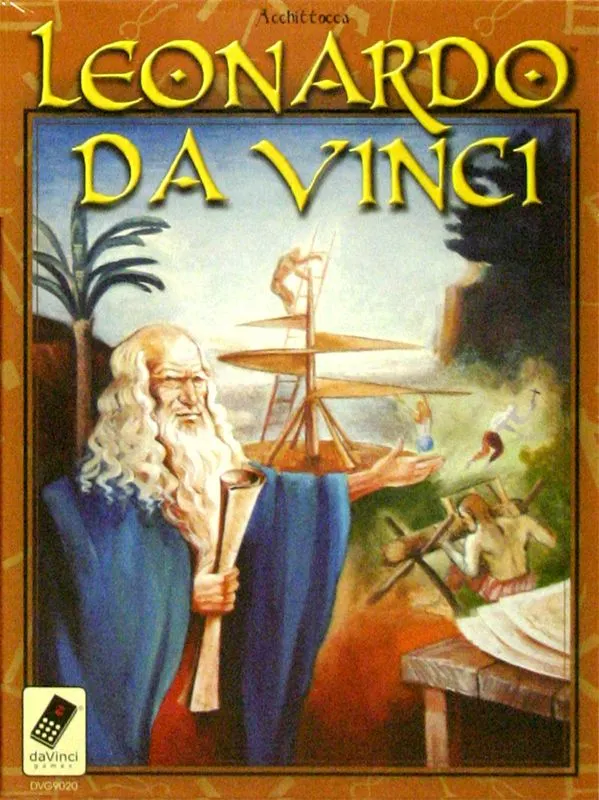
- Pozycja w BGG
- BGG #2253
- Ocena BGG
- 6,7
Leonardo da Vinci
- 2–5 graczy
- 90 min
- Złożoność 3,2/5
- 2006
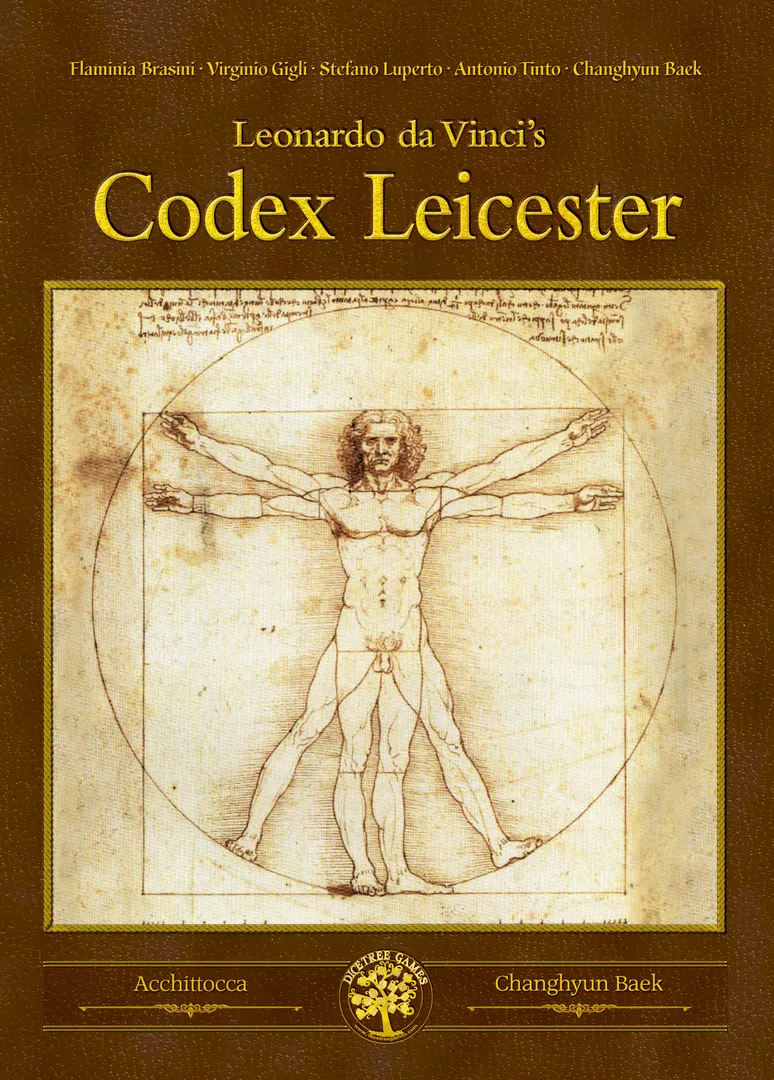
2023
Pomoc w zasadach gry Leonardo da Vinci's Codex Leicester
Zrozumiałe wyjaśnienia tur, efektów kart i spornych sytuacji z odnośnikami do oficjalnych źródeł i zapisaną historią pytań.
Dla 1 gracza
Co chcesz wiedzieć?
Odpowiedzi pochodzą z oficjalnej instrukcji, ze stroną do sprawdzenia.
Leonardo da Vinci's Codex Leicester to gra planszowa wydana w 2023 roku dla 1–5 graczy, z rozgrywką trwającą 30–150 minut i dla osób od 14 lat. Projekt gry: Stefano Luperto, Antonio Tinto, Virginio Gigli, Flaminia Brasini i Changhyun Baek. Główne mechaniki: Area Majority / Influence i Worker Placement.






Po angielsku
Codex Leicester is the reimplementation of Leonardo da Vinci (2006) by Acchittocca (Flaminia Brasini, Virginio Gigli, Stefano Luperto, Antonio Tinto) in collaboration with the founder of DiceTree Games, Changhyun Baek. It is a new game using the original’s system and theme. This is a worker placement game for 1 to 5 players, featuring strong player interaction. Playtime lasts approximately 30 minutes per player. Summary: Players find themselves as inventors trying to breathe life into their designs, all of which draw their inspiration from the notes of the master himself: the Codex Leicester of Leonardo da Vinci. Ranging from relatively simple to epic, all these inventions require materials and time to bring them to fruition. Of course, genius alone won’t get the job done. Get support from the Council and sponsors. You will need to expand your workshops and procure Automata designed by Leonardo himself – all this to increase your work efficiency. Hire apprentices straight out of the academy to nab highly coveted materials from the market before your rivals. Time is of the essence. Race to be the foremost in completing inventions. You will unlock rewards and special abilities if you are the first player to complete the inventions. Otherwise, you will get less rewards without special abilities. After 7 rounds, the player who has amassed the largest fortune will be awarded victory! Who among you will be the most ingenious Renaissance inventor? -description from publisher = Changes from Leonardo da Vinci (2006): - The allocation of start game resources has changed. 4 resource selection cards are distributed, of which 2 are kept, and their corresponding resources are collected. Receive additional resources according to to turn order. - Competitive elements have been strengthened for a 2 or 3 players game, allowing enjoyment of a similar tension at any player count. - More invention cards! An increase from 25 to 40 cards, with each card having special effects that players can use instantly, once in a round, and permanently. - More enticing Council options! An increase from four to eight options, with florins piling up on tiles that no one has chosen each time a new tile is placed. - Card resources have been replaced with meeples, and player screens have been added. - Invention card completion has been modified so that everyone knows what inventions are being worked on at any given time. - Invention cards are now divided into current and future spaces, adding a new dimension for strategic play. - The 15-week inventions are now only revealed at the start of the game, allowing players to prepare in advance. - Restrictions of the workshops have been lifted so that you can upgrade them, as well as add automata, in the middle of working on an invention. - Each player now gets six objectives, all of which yield rewards upon fulfillment. So if you find yourself falling behind in completing inventions, these objectives will help you catch up. - New effects have been added to the Laboratory and Academy. You can buy 1 work from the Laboratory and 1 resource from the Academy. Now there’s a reason to use the Laboratory and Academy in the later of the game. - The game consists of 7 rounds. Players pay salaries to hired assistants at the end of rounds 3, 5, and 7. Some effects of the Laboratory and Academy change in rounds 4 and 6. In round 7, players can sell resources instead of buying them. - The game comes with a double-sided game board; double-layered player boards; premium wooden, glass, and plastic resource tokens; and 12 transparent containers for storing components.
Według katalogu Leonardo da Vinci's Codex Leicester obsługuje od 1 do 5 graczy. Ten zakres odpowiada liczbie graczy podanej przez wydawcę, więc grę można przygotować dla dowolnej grupy w jego granicach. Przygotowanie, niektóre zasady i punktacja mogą jednak różnić się w zależności od liczby graczy; dokładną konfigurację sprawdź w instrukcji swojego wydania.
Podany czas rozgrywki w Leonardo da Vinci's Codex Leicester wynosi 30–150 minut. To szacunek wydawcy dla pełnej partii. Rzeczywisty czas zależy od grupy, liczby graczy i znajomości zasad: pierwsze partie zwykle trwają dłużej, a doświadczone grupy kończą szybciej. Przygotowanie gry i tłumaczenie zasad nie są wliczone w ten szacunek.
Katalog podaje dla Leonardo da Vinci's Codex Leicester wiek od 14 lat. To zalecenie wydawcy, które uwzględnia wymagania dotyczące czytania, złożoność zasad i drobne elementy, a nie tylko tematykę. Młodsi gracze często mogą dołączyć z pomocą dorosłego; sprawdź zalecenie wiekowe swojego wydania i weź pod uwagę doświadczenie grupy z grami planszowymi.
Leonardo da Vinci's Codex Leicester ma ocenę złożoności 3,2 na 5 według graczy BoardGameGeek, co czyni ją grą średnio złożoną. Ocena pokazuje, ile znajomości zasad, planowania i podejmowania decyzji wymaga typowa rozgrywka. Cięższe gry wymagają dłuższego pierwszego tłumaczenia, dlatego przed wieczorem z grami warto skorzystać z przewodnika przygotowania.
Leonardo da Vinci's Codex Leicester należy do tych kategorii: Industry / Manufacturing, Renaissance i Book. Główne mechaniki to Area Majority / Influence i Worker Placement. Kategorie opisują temat i świat gry, a mechaniki to, co gracze faktycznie robią w swojej turze. Każda mechanika prowadzi do strony katalogu z podobnymi grami, co pomaga znaleźć coś porównywalnego na kolejny wieczór.
Autorzy wymienieni przy Leonardo da Vinci's Codex Leicester to: Stefano Luperto, Antonio Tinto, Virginio Gigli, Flaminia Brasini i Changhyun Baek. Te informacje pochodzą z opublikowanych danych gry i wskazują osoby odpowiedzialne za jej projekt, a nie ilustratorów czy wydawców. Strony autorów w MeepleRules zbierają inne tytuły tych samych twórców, co pomaga, gdy gra ci się podoba i szukasz podobnych.
W katalogu Leonardo da Vinci's Codex Leicester figuruje jako gra podstawowa. Można w nią grać samodzielnie, korzystając z elementów z pudełka, bez żadnego innego tytułu. Dodatki, jeśli istnieją, dokładają nową zawartość lub zasady i są wymienione w katalogu osobno, z odnośnikiem do tej gry podstawowej.