
- Ocena BGG
- 8,1
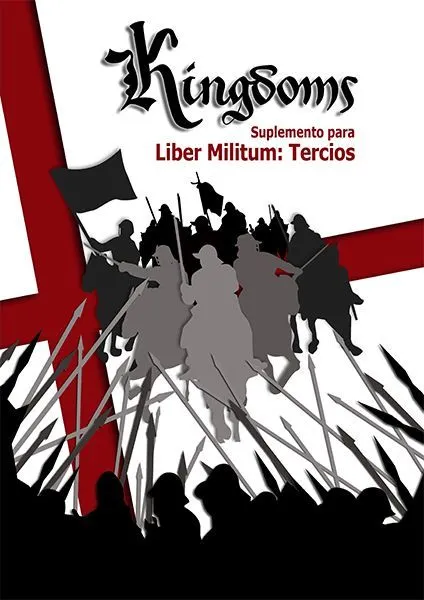
Kingdoms: Expansion for Liber Militum – Tercio
- 2–6 graczy
- 120 min
- 2015
2015
Pomoc w zasadach gry Liber Militum: Tercios
Zrozumiałe wyjaśnienia tur, efektów kart i spornych sytuacji z odnośnikami do oficjalnych źródeł i zapisaną historią pytań.
Dla 2 graczy
Co chcesz wiedzieć?
Odpowiedzi pochodzą z oficjalnej instrukcji, ze stroną do sprawdzenia.
Liber Militum: Tercios to gra planszowa wydana w 2015 roku dla 2–6 graczy, z rozgrywką trwającą 90–180 minut i dla osób od 12 lat. Główne mechaniki: Dice Rolling, Simulation i Campaign / Battle Card Driven.


Po angielsku
From the publisher: Liber Militum Tercios is a new historical wargame that will allow us to recreate the great battles of the Thirty Years’ War. The game was developed by El Kraken Released, team, and is edited by Design & Edits WxW Co. There are 2 different versions of Tercios: Liber Militum: The full version Brevis Editio: Short Version, synthesized and free. Portada-Brevis-EditioTercios is not intended for any specific miniatures scale. All rule design effort was put on allowing the player to adapt the game to any different model basing and scales.. However, we do recommend certain model sizes for units on the rules, but others could be used without compromising playability. Geometry dependence has been avoided as much as possible. The number of miniatures that is necessary to represent a unit is subject to the sole discretion of the Army Collector, it is up to everyone to decide how many models will be enough to identify our troops. Even so, we suggest certain number in the rules, but just for guidance. Tercios is a large scale wargame, since each unit in the game represents huge formations that often comprised more than a thousand men. This is why it is a game with more abstraction than others, because at this scale of war reenactment, individual soldier actions has no consecuences, it matters as a whole.. The gameplay is based upon orders execution, that are deployed at a planning phase. Command cards are used (there are 5 different cards), that are placed face down next to our units, and prepare our troops for different tasks: to run, to shoot, charge the enemy or resist stoically. Units activation is alternated between players. The very command cards allow us to keep track of which units have been activated. The fact that the turns are not complete for a single player, but alternated between the two players, make the game a fluid dynamic experience. Once all the command cards have been executed, the turn will be finished and we will be ready to start a new one. Cards also allow us to react, under certain circumstances, to enemy activity, what makes commands a complex tactical resource.. Deepening in the mastering of good decisions during the planning phase and managing the unexpected is a challenge for the player; reflective strategic fund is stimulated, what makes the experience very intuitive and agile.. Not knowing what cards your opponent has set and choosing the order of activation for your units, makes a very realistic simulation of the uncertainties of a real battle and delivers an increasing thrill, as the turns pass by.. As usual in wargames, actions are resolved by rolling dices. Tercios proposes a very simple system using six-sided dice; no need to do complex calculations, or having to learn a host of special rules. For a player with minimum experience (or without) it will be a matter of minutes to become familiar with the system.
Według katalogu Liber Militum: Tercios obsługuje od 2 do 6 graczy. Ten zakres odpowiada liczbie graczy podanej przez wydawcę, więc grę można przygotować dla dowolnej grupy w jego granicach. Przygotowanie, niektóre zasady i punktacja mogą jednak różnić się w zależności od liczby graczy; dokładną konfigurację sprawdź w instrukcji swojego wydania.
Podany czas rozgrywki w Liber Militum: Tercios wynosi 90–180 minut. To szacunek wydawcy dla pełnej partii. Rzeczywisty czas zależy od grupy, liczby graczy i znajomości zasad: pierwsze partie zwykle trwają dłużej, a doświadczone grupy kończą szybciej. Przygotowanie gry i tłumaczenie zasad nie są wliczone w ten szacunek.
Katalog podaje dla Liber Militum: Tercios wiek od 12 lat. To zalecenie wydawcy, które uwzględnia wymagania dotyczące czytania, złożoność zasad i drobne elementy, a nie tylko tematykę. Młodsi gracze często mogą dołączyć z pomocą dorosłego; sprawdź zalecenie wiekowe swojego wydania i weź pod uwagę doświadczenie grupy z grami planszowymi.
Liber Militum: Tercios ma ocenę złożoności 2,5 na 5 według graczy BoardGameGeek, co czyni ją grą raczej lekką. Ocena pokazuje, ile znajomości zasad, planowania i podejmowania decyzji wymaga typowa rozgrywka. Cięższe gry wymagają dłuższego pierwszego tłumaczenia, dlatego przed wieczorem z grami warto skorzystać z przewodnika przygotowania.
Liber Militum: Tercios należy do tych kategorii: Wargame, Miniatures i Renaissance. Główne mechaniki to Dice Rolling, Simulation i Campaign / Battle Card Driven. Kategorie opisują temat i świat gry, a mechaniki to, co gracze faktycznie robią w swojej turze. Każda mechanika prowadzi do strony katalogu z podobnymi grami, co pomaga znaleźć coś porównywalnego na kolejny wieczór.
W katalogu Liber Militum: Tercios figuruje jako gra podstawowa. Można w nią grać samodzielnie, korzystając z elementów z pudełka, bez żadnego innego tytułu. Dodatki, jeśli istnieją, dokładają nową zawartość lub zasady i są wymienione w katalogu osobno, z odnośnikiem do tej gry podstawowej.