

- Pozycja w BGG
- BGG #7962
- Ocena BGG
- 7,0
Bismarck (Second Edition)
- 2 graczy
- 150–240 min
- Złożoność 3,2/5
- 1978
2011
Pomoc w zasadach gry Lost Battles: Forty Battles & Campaigns of the Ancient World
Zrozumiałe wyjaśnienia tur, efektów kart i spornych sytuacji z odnośnikami do oficjalnych źródeł i zapisaną historią pytań.
Dla 1 gracza
Co chcesz wiedzieć?
Odpowiedzi pochodzą z oficjalnej instrukcji, ze stroną do sprawdzenia.
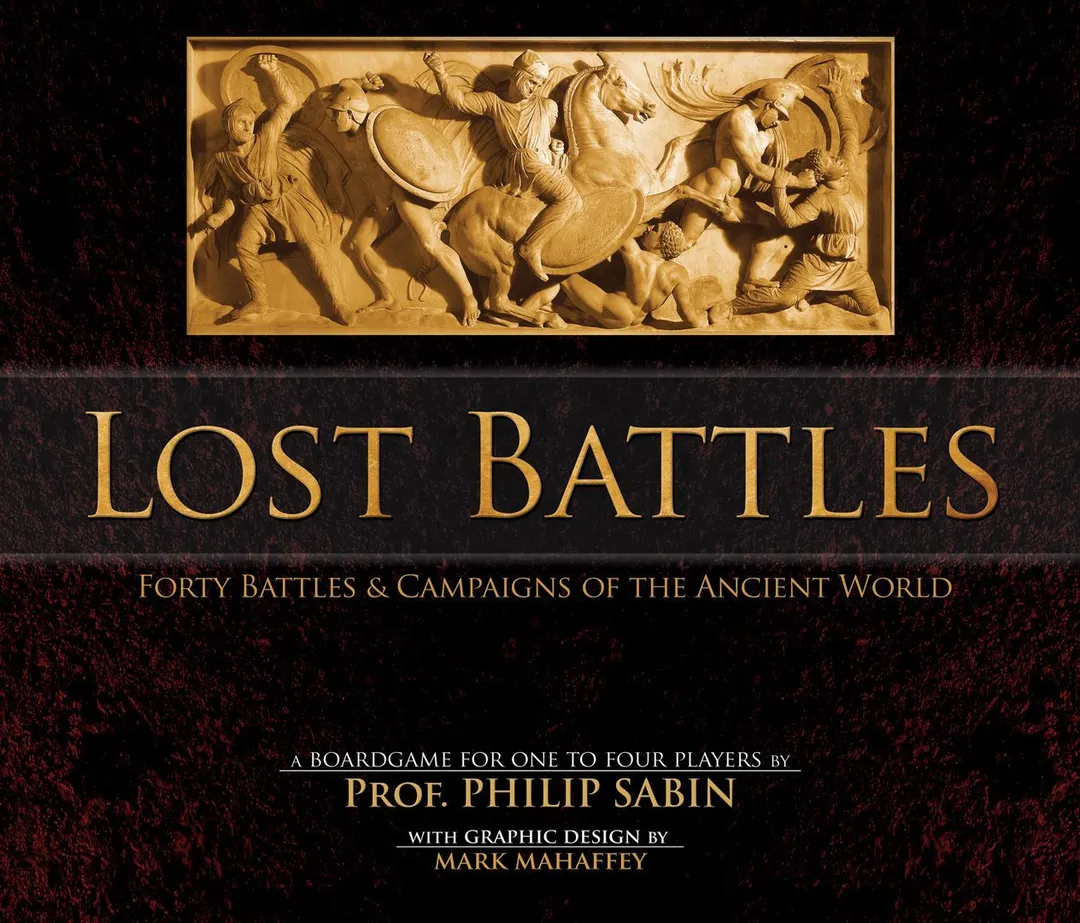
Lost Battles: Forty Battles & Campaigns of the Ancient World to gra planszowa wydana w 2011 roku dla 1–4 graczy, z rozgrywką trwającą 140 minut i dla osób od 12 lat. Projekt gry: Philip Sabin. Główne mechaniki: Dice Rolling, Grid Movement i Modular Board.








Po angielsku
"Lost Battles" is forty games in one. The game covers battles and campaigns in the Mediterranean and Near East from the Persian defeat at Marathon in 490 BC to Caesar's victory at Pharsalus in 48 BC. It has been exhaustively tested and refined over the past several years, and is based on Professor Philip Sabin's decades of research and simulation design on ancient warfare; and it includes an updated copy of his book, with extensive historical and design notes on every scenario. The game can be fought on three levels - the grand tactical, the grand strategic, or a combination of the two. At the grand tactical level, 1 or 2 players may refight any of 35 different land battles such as Leuctra, Gaugamela, Raphia, Cannae, Cynoscephalae or the Sambre - far more than in any other single boxed game. At the grand strategic level, 1 to 4 players may refight the epic duels of the two centuries from 350 to 150 BC, starting with the eclipse of Achaemenid Persia by Alexander of Macedon, and ending with Hannibal's campaigns and the conquest of Carthage and the Hellenistic states by the resurgent Roman republic. The most ambitious games combine these two levels, and see 1 to 4 players using tactical battles to resolve strategic campaigns across part or all of this two century period, or else refighting a series of historical battles to decide conflicts such as the three-cornered contest for dominance between Athens, Sparta and Thebes from the start of the Peloponnesian War to the death of Epaminondas. The accent throughout is on combining historical accuracy with speed and accessibility. The free-standing strategic game may be completed in just 30 minutes, while individual land battles may be re-fought in two hours or less. There is constant player interaction, and a series of tortuous dilemmas - how should the scarce command points be allocated across the battlefront, which troop types should be put in the lead against particular opponents, should units attack all-out at the cost of becoming exhausted themselves, and should generals join the fighting to rally their disheartened men at the risk of being killed and so making things far worse? The game includes all the many troop types from hoplites, legionaries, phalangites and archers to cataphracts, scythed chariots and war elephants, and it includes simple rules to reflect the huge differences in generalship and troop quality and to allow outclassed armies to win a handicapped 'game victory' even if they are defeated on the field, as long as they do better than they did historically. All aspects of the game are avowedly solitaire-friendly, and can be run by a single player swapping sides just as easily as by one or more players per side. Tactical battles are fought on a 5 x 4 grid of full-colour 5 inch square hard mounted terrain tiles, which dovetail to form any desired battlefield. The individually die-cut counters have rounded corners and are also in full-colour; they depict the various different troop types. The strategic game is fought on a hard mounted map showing the area from Spain to India.
Według katalogu Lost Battles: Forty Battles & Campaigns of the Ancient World obsługuje od 1 do 4 graczy. Ten zakres odpowiada liczbie graczy podanej przez wydawcę, więc grę można przygotować dla dowolnej grupy w jego granicach. Przygotowanie, niektóre zasady i punktacja mogą jednak różnić się w zależności od liczby graczy; dokładną konfigurację sprawdź w instrukcji swojego wydania.
Podany czas rozgrywki w Lost Battles: Forty Battles & Campaigns of the Ancient World wynosi 140 minut. To szacunek wydawcy dla pełnej partii. Rzeczywisty czas zależy od grupy, liczby graczy i znajomości zasad: pierwsze partie zwykle trwają dłużej, a doświadczone grupy kończą szybciej. Przygotowanie gry i tłumaczenie zasad nie są wliczone w ten szacunek.
Katalog podaje dla Lost Battles: Forty Battles & Campaigns of the Ancient World wiek od 12 lat. To zalecenie wydawcy, które uwzględnia wymagania dotyczące czytania, złożoność zasad i drobne elementy, a nie tylko tematykę. Młodsi gracze często mogą dołączyć z pomocą dorosłego; sprawdź zalecenie wiekowe swojego wydania i weź pod uwagę doświadczenie grupy z grami planszowymi.
Lost Battles: Forty Battles & Campaigns of the Ancient World ma ocenę złożoności 3,1 na 5 według graczy BoardGameGeek, co czyni ją grą średnio złożoną. Ocena pokazuje, ile znajomości zasad, planowania i podejmowania decyzji wymaga typowa rozgrywka. Cięższe gry wymagają dłuższego pierwszego tłumaczenia, dlatego przed wieczorem z grami warto skorzystać z przewodnika przygotowania.
Lost Battles: Forty Battles & Campaigns of the Ancient World należy do tych kategorii: Wargame i Ancient. Główne mechaniki to Dice Rolling, Grid Movement i Modular Board. Kategorie opisują temat i świat gry, a mechaniki to, co gracze faktycznie robią w swojej turze. Każda mechanika prowadzi do strony katalogu z podobnymi grami, co pomaga znaleźć coś porównywalnego na kolejny wieczór.
Autorzy wymienieni przy Lost Battles: Forty Battles & Campaigns of the Ancient World to: Philip Sabin. Te informacje pochodzą z opublikowanych danych gry i wskazują osoby odpowiedzialne za jej projekt, a nie ilustratorów czy wydawców. Strony autorów w MeepleRules zbierają inne tytuły tych samych twórców, co pomaga, gdy gra ci się podoba i szukasz podobnych.
W katalogu Lost Battles: Forty Battles & Campaigns of the Ancient World figuruje jako gra podstawowa. Można w nią grać samodzielnie, korzystając z elementów z pudełka, bez żadnego innego tytułu. Dodatki, jeśli istnieją, dokładają nową zawartość lub zasady i są wymienione w katalogu osobno, z odnośnikiem do tej gry podstawowej.