
- Ocena BGG
- 7,8
Next War: Series Supplement #1
- 2 graczy
- Złożoność 4,3/5
- 2017
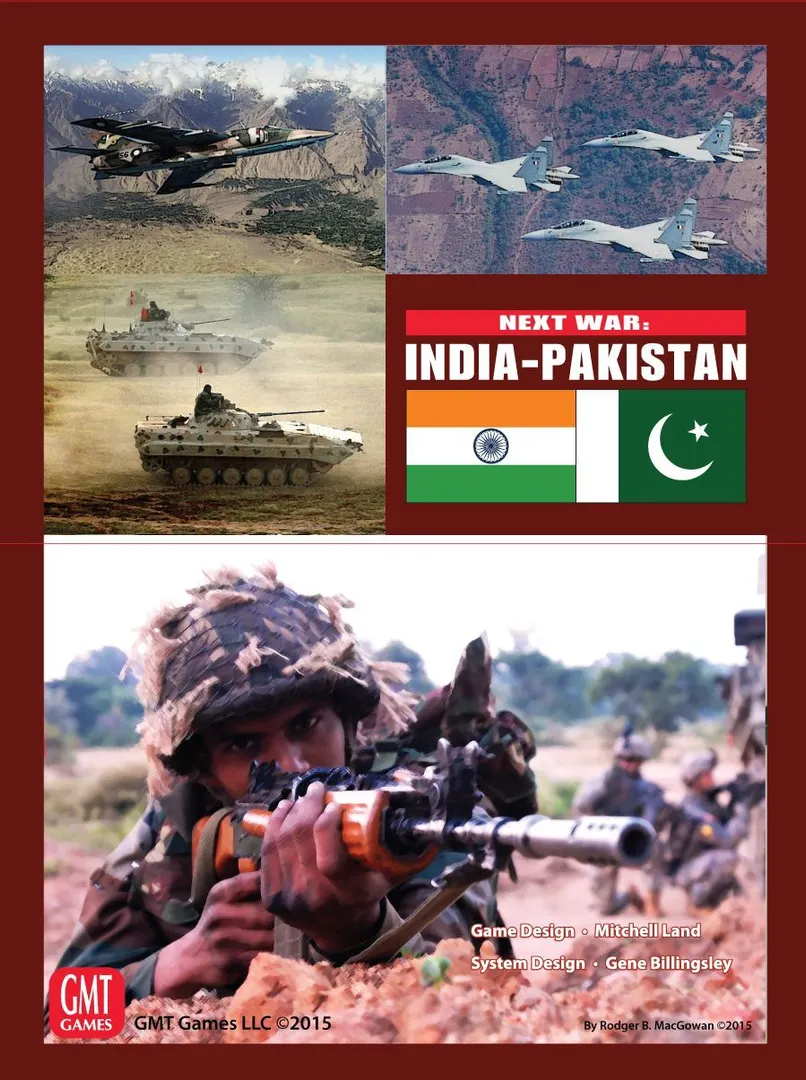
2015
Pomoc w zasadach gry Next War: India-Pakistan
Zrozumiałe wyjaśnienia tur, efektów kart i spornych sytuacji z odnośnikami do oficjalnych źródeł i zapisaną historią pytań.
Dla 2 graczy
Co chcesz wiedzieć?
Odpowiedzi pochodzą z oficjalnej instrukcji, ze stroną do sprawdzenia.
Next War: India-Pakistan to gra planszowa wydana w 2015 roku dla 2 graczy, z rozgrywką trwającą 240–480 minut i dla osób od 12 lat. Projekt gry: Gene Billingsley i Mitchell Land. Główne mechaniki: Dice Rolling, Grid Movement i Hexagon Grid.




Po angielsku
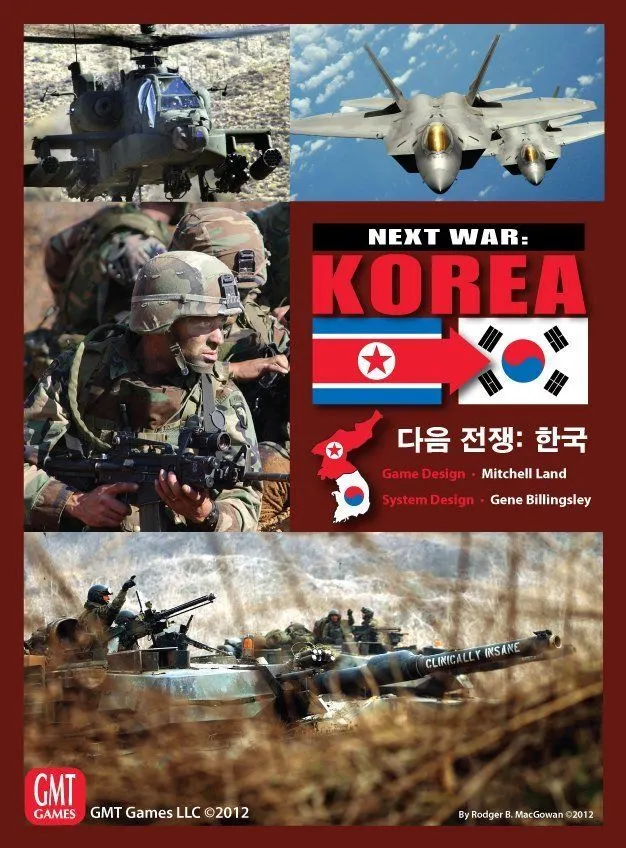
The ink was hardly dry on the documents following the partition of British India in 1947 before war broke out between India and Pakistan. Since the partition, four major wars and numerous smaller conflicts have been waged over much of the same ground. In 1947, 1965, 1971, and 1999 India and Pakistan fought in the mountains of Kashmir and on the plains of the Punjab region to the south. Today, both sides are armed with thousands of armored vehicles, hundreds of advanced aircraft, and dozens of nuclear weapons. With tensions high and both sides heavily armed, another conflict may be just a matter of time. Next War: India-Pakistan, the next volume in GMT's series of Next War games and a follow-on to Next War: Korea, allows players to fight a near future war between India and Pakistan. Due to the nature of a potential conflict, only a portion of the Indo-Pakistani border is featured so that the fighting centers around what it always has: the fate of the Indian state of Jammu & Kashmir. Special rules govern such things as the expanded role bridges play in the region play as well as the fact that both sides in the conflict are nuclear-armed nations. The People's Republic of China and the United States can make an appearance, but they might withdraw in the event of a nuclear exchange. The question is: will this war settle once and for all who will control northwest India? Note: the Next War series is not an introductory wargame. Rather, we have intended herein to create a system (and a series) that will allow detailed study of modern warfare in various venues as well as engaging gameplay. That said, the Standard Game rules encompass a fairly straightforward rule set that will, we think, be considered "easy to learn" by experienced wargamers. So, players who choose to play Standard Game scenarios can have a relatively quick game when that's what suits them. The real flavor of a war in the theatre, however, comes through in the Advanced Game, where you get much more control over airpower and can more clearly see each side's strengths and weaknesses. For players who want a "mini-monster game" experience, playing the Advanced Game Campaign Scenarios with some or all of the optional rules will definitely "deliver." Ownership of Next War: Korea will NOT be required to play. Units Ground units in Next War: India-Pakistan represent the brigades, support units, and divisions of the armies of the India, Pakistan, China, and the United States. All ground units are rated for their attack and defense strengths, movement capabilities, and unit efficiency. Air units represent fighter, bomber, and attack squadrons of the major combatants and are rated for All-Weather Capabilities as well as their range, average pilot skill, and their abilities in Air-to-Air Combat, Close Air Support, and Strike missions. Maps and Terrain The game's map represents the area in and around the Punjab district of Pakistan and the Indian state of Jammu & Kashmir at a scale of roughly 7.5 miles per hex. The map stretches from edge of The Great Indian Desert to just inside the Himalayas and encompasses portions of both sides of the border. Game System A game turn is generally composed of: Weather Determination. Bad weather can severely hamper air operations and can significantly slow ground operations. Initiative Determination and Air/Naval Phase, wherein Air Superiority levels and air availability are determined. Special Operations Phases in the Advanced Game allowing players to utilize their special operators in various recon and raid missions behind enemy lines. Strike Phases in the Advanced Game allowing players to launch air strikes, cruise missiles, artillery and tactical nuclear weapon strikes. One or more Movement and Combat Phases that allow both sides to move, react, and fight, with an advantage to the Initiative player on non-Contested turns Arrival of Reinforcements and Replacements Victory Determination Combat Combat resolution examines not only unit strengths but also unit efficiency (representing training, doctrine, and morale), as well as the terrain where the combat takes place. The CRT tends to be very bloody in nature, reflecting what we believe will be a degree of attritional warfare early due to the lethality of modern weapons. As in many games, casualties represent not only actual combat losses but also losses of unit cohesion brought about by the rapid pace with which modern armies are able to engage and exploit on the battlefield. Nukes In this installment, players will have the option, depending on game situation and a die roll to secure release authorization for and use tactical nuclear weapons in the playing area. Use of such weapons, however, could cause your international allies to leave the theater, so be careful! Scenarios There are several Standard Game scenarios. Some are small and focus on limited objectives while others are variations of a campaign game encompassing the entire map. In a break from the standard set in Next War: Korea(and its follow-on Next War: Taiwan), the scenarios in Next War: India-Pakistan posit specific at-start situations and objectives (or victory conditions). In some scenarios Pakistan is the aggressor while in others the Indian side is on the attack, in all cases there are varying levels of Chinese and United States intervention. The International Posture Matrix à la Flashpoint: Golan – The Fifth Arab-Israeli War is still present to allow players to experiment with a variety of intervention options for the US and PRC. In Next War: India-Pakistan, Jammu & Kashmir is once again aflame. Can you, as the Islamic Republic of Pakistan's commander, conquer Kashmir and hold it against the enemy? Can you, as the Republic of India's commander, attack and defeat the enemy without the conflict going nuclear? And what will happen in the international community while all this is going on? There’s only one way to find out... TIME SCALE 3.5 days per turn MAP SCALE 7.5 miles per hex UNIT SCALE Brigade / Division / Squadron NUMBER OF PLAYERS: Two (Optimal)
Według katalogu Next War: India-Pakistan obsługuje 2 graczy. To liczba graczy podana przez wydawcę, więc gra jest zaprojektowana dokładnie dla takiej liczby uczestników. Warianty dla grup innej wielkości, jeśli w ogóle istnieją, opisano w instrukcji twojego wydania; sprawdź ją uważnie, zanim przygotujesz inną konfigurację stołu.
Podany czas rozgrywki w Next War: India-Pakistan wynosi 240–480 minut. To szacunek wydawcy dla pełnej partii. Rzeczywisty czas zależy od grupy, liczby graczy i znajomości zasad: pierwsze partie zwykle trwają dłużej, a doświadczone grupy kończą szybciej. Przygotowanie gry i tłumaczenie zasad nie są wliczone w ten szacunek.
Katalog podaje dla Next War: India-Pakistan wiek od 12 lat. To zalecenie wydawcy, które uwzględnia wymagania dotyczące czytania, złożoność zasad i drobne elementy, a nie tylko tematykę. Młodsi gracze często mogą dołączyć z pomocą dorosłego; sprawdź zalecenie wiekowe swojego wydania i weź pod uwagę doświadczenie grupy z grami planszowymi.
Next War: India-Pakistan ma ocenę złożoności 4,1 na 5 według graczy BoardGameGeek, co czyni ją grą ciężką. Ocena pokazuje, ile znajomości zasad, planowania i podejmowania decyzji wymaga typowa rozgrywka. Cięższe gry wymagają dłuższego pierwszego tłumaczenia, dlatego przed wieczorem z grami warto skorzystać z przewodnika przygotowania.
Next War: India-Pakistan należy do tych kategorii: Wargame i Modern Warfare. Główne mechaniki to Dice Rolling, Grid Movement i Hexagon Grid. Kategorie opisują temat i świat gry, a mechaniki to, co gracze faktycznie robią w swojej turze. Każda mechanika prowadzi do strony katalogu z podobnymi grami, co pomaga znaleźć coś porównywalnego na kolejny wieczór.
Autorzy wymienieni przy Next War: India-Pakistan to: Gene Billingsley i Mitchell Land. Te informacje pochodzą z opublikowanych danych gry i wskazują osoby odpowiedzialne za jej projekt, a nie ilustratorów czy wydawców. Strony autorów w MeepleRules zbierają inne tytuły tych samych twórców, co pomaga, gdy gra ci się podoba i szukasz podobnych.
W katalogu Next War: India-Pakistan figuruje jako gra podstawowa. Można w nią grać samodzielnie, korzystając z elementów z pudełka, bez żadnego innego tytułu. Dodatki, jeśli istnieją, dokładają nową zawartość lub zasady i są wymienione w katalogu osobno, z odnośnikiem do tej gry podstawowej.