
- Pozycja w BGG
- BGG #2576
- Ocena BGG
- 7,9
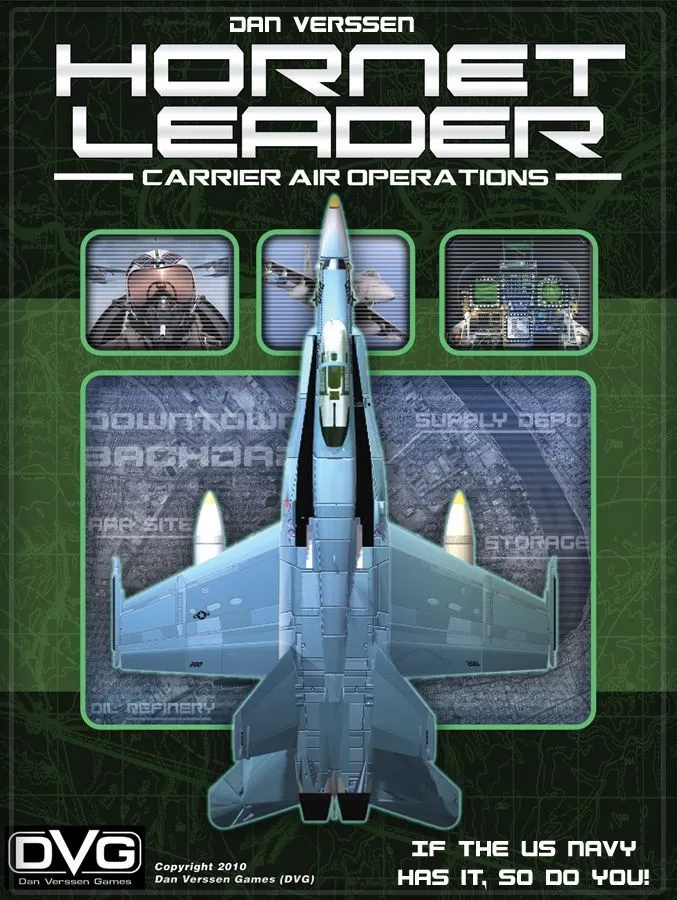
Hornet Leader: Carrier Air Operations
- 1 gracz
- 60 min
- Złożoność 2,8/5
- 2010
2010
Pomoc w zasadach gry Phantom Leader
Zrozumiałe wyjaśnienia tur, efektów kart i spornych sytuacji z odnośnikami do oficjalnych źródeł i zapisaną historią pytań.
Dla 1 gracza
Co chcesz wiedzieć?
Odpowiedzi pochodzą z oficjalnej instrukcji, ze stroną do sprawdzenia.
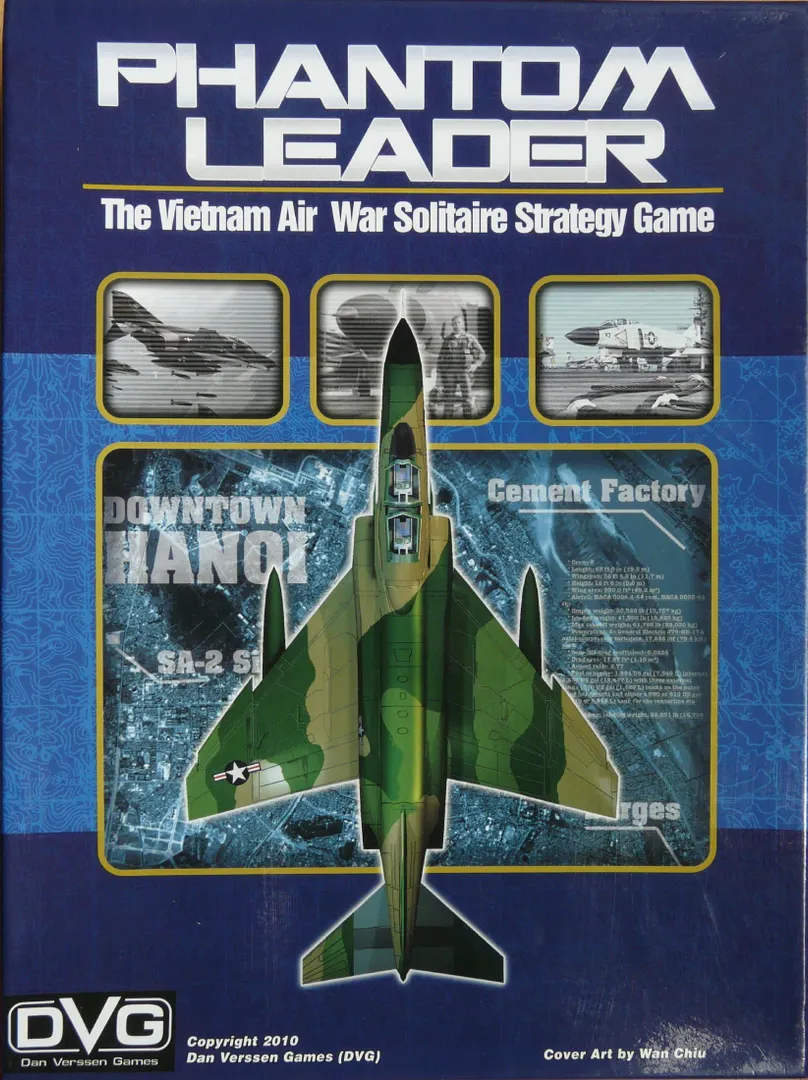
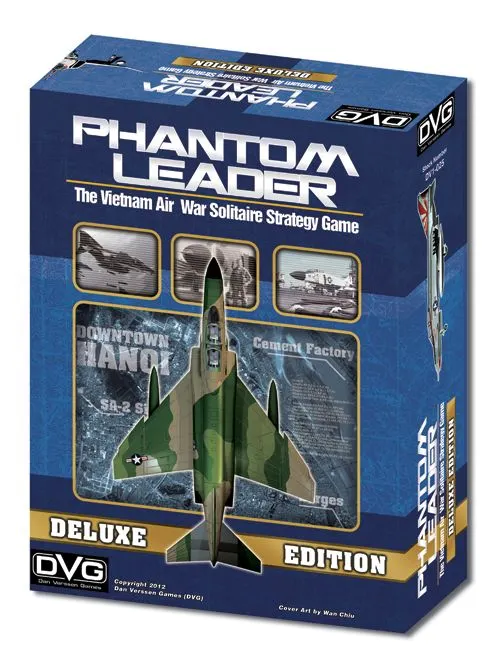
Phantom Leader to gra planszowa wydana w 2010 roku dla 1 gracza, z rozgrywką trwającą 30 minut i dla osób od 12 lat. Projekt gry: Dan Verssen. Główne mechaniki: Dice Rolling, Simulation i Open Drafting.



Po angielsku
Phantom Leader - Solitaire Description: Phantom Leader places you in command of a US Air Force or US Navy Tactical Fighter squadron in Vietnam between 1964 and 1972. You must not only destroy the targets but you must also balance the delicate political repercussions of your attacks. If you strike too hard, your air offensive might be put on hold, strike too light, and you’ll be blamed for losing the war. Welcome to the Vietnam Air War! Each of the campaigns can be played with either an Air Force or Navy squadron. The targets assigned to each service are different and change the complexion of the campaigns. Each campaign can be played with three different durations of: Skirmish, Conflict, or War. Each mission takes roughly 30 minutes to set-up, plan, and resolve. Each of your pilots has their own skills. Selecting the right pilots and weapons for a mission is vital to its success. As you fly missions, your pilots will gain experience and fatigue. With experience, their skills improve, but as their fatigue increases, their skills decrease and they might not be able to fly for several missions. For those of you familiar with our modern era Hornet Leader series of games, you might be wondering what’s different about Phantom Leader… The freedom of being able to select the best mission based on military objectives is something that is commonplace for today’s military. Back in Vietnam, the military was responsible for carrying out their orders, while at the same time being extremely limited in the weapons and tactics they were allowed to use to complete those orders. In many cases, the specific weapons, approach paths, and bombing altitudes were generated target-by-target at the White House. The mission specifics were then sent down the chain of command to the individual pilots flying the mission. As you can imagine, this was not the best way to run an air campaign. Every target has a Political value. If you destroy it, you move the Political counter to the right a number of spaces equal to its value. As the counter gets moved to the right, your future target choices are reduced to those that are less politically sensitive. Which target you choose not to attack is also important. You get to move the Political counter to the left a number of spaces equal its Political value. [this last sentence is not in fact true for the game, though it appears in the game blurb; confirmed by the author] This means that while you might like to flatten a big enemy target and rack up the victory points, it might be better for you to choose a pointless target and move the Political counter in your favor instead. Another difference is in combat power. For the last couple decades, the US Air Force and Navy have enjoyed air superiority due to training and technology. Such was not the case in the skies over Vietnam. The enemy had different, but just as capable, equipment. They also had the training and will to use it to its utmost. They soon became aware of the limitations placed on the US forces by the politicians, and used those limitations to their advantage. For example, at times, US pilots were not permitted to fire on enemy aircraft until they were visually identified. This negated any range advantage conveyed by the radar-homing AIM-7 Sparrow missiles. It was also a common limitation that enemy aircraft could only be attacked in the air. US pilots were not allowed to attack enemy airbases. US aircraft were also limited to flying predictable flight paths, at set times. This made setting up ambushes much easier for the enemy. So, while you might be a Hornet Leader ace, Vietnam is a whole different ballgame! Components: 110 Full color Cards 12 F-4 Phantom IIs (USAF) 8 F-105 Thunderchiefs (USAF) 2 F-105G Wild Weasels (USAF) 4 F-100 Super Sabers (USAF) 2 F-104A Starfighters (USAF) 1 EB-66 Destroyer (USAF) 8 F-4 Phantom IIs (USN) 6 A-4 Skyhawks (USN) 5 A-7 Corsair II (USN) 5 A-6 Intruders (USN) 4 F-8 Crusaders (USN) 1 EA-6A Electric Intruder (USN) 34 Targets 18 Special Events Full Color, 20-page Rulebook Full Color Double-sided Counter Sheet (176 x 5/8" counters) 6 Full Color Campaign Sheets War in the South (1965) USAF & USN Rolling Thunder (1967) USAF & USN Linebacker (1972) USAF & USN 3 Full Color Player Aid Cards Tactical Display Card Diplay Sheet Help Sheet 1 Ten-sided die 1 Player Log master (to be photocopied prior to play) Other Leader series games by Dan Verssen Re-implemented by: Phantom Leader: Deluxe Edition
Według katalogu Phantom Leader obsługuje 1 gracza. To liczba graczy podana przez wydawcę, więc gra jest zaprojektowana dokładnie dla takiej liczby uczestników. Warianty dla grup innej wielkości, jeśli w ogóle istnieją, opisano w instrukcji twojego wydania; sprawdź ją uważnie, zanim przygotujesz inną konfigurację stołu.
Podany czas rozgrywki w Phantom Leader wynosi 30 minut. To szacunek wydawcy dla pełnej partii. Rzeczywisty czas zależy od grupy, liczby graczy i znajomości zasad: pierwsze partie zwykle trwają dłużej, a doświadczone grupy kończą szybciej. Przygotowanie gry i tłumaczenie zasad nie są wliczone w ten szacunek.
Katalog podaje dla Phantom Leader wiek od 12 lat. To zalecenie wydawcy, które uwzględnia wymagania dotyczące czytania, złożoność zasad i drobne elementy, a nie tylko tematykę. Młodsi gracze często mogą dołączyć z pomocą dorosłego; sprawdź zalecenie wiekowe swojego wydania i weź pod uwagę doświadczenie grupy z grami planszowymi.
Phantom Leader ma ocenę złożoności 2,6 na 5 według graczy BoardGameGeek, co czyni ją grą raczej lekką. Ocena pokazuje, ile znajomości zasad, planowania i podejmowania decyzji wymaga typowa rozgrywka. Cięższe gry wymagają dłuższego pierwszego tłumaczenia, dlatego przed wieczorem z grami warto skorzystać z przewodnika przygotowania.
Phantom Leader należy do tych kategorii: Wargame, Modern Warfare i Aviation / Flight. Główne mechaniki to Dice Rolling, Simulation i Open Drafting. Kategorie opisują temat i świat gry, a mechaniki to, co gracze faktycznie robią w swojej turze. Każda mechanika prowadzi do strony katalogu z podobnymi grami, co pomaga znaleźć coś porównywalnego na kolejny wieczór.
Autorzy wymienieni przy Phantom Leader to: Dan Verssen. Te informacje pochodzą z opublikowanych danych gry i wskazują osoby odpowiedzialne za jej projekt, a nie ilustratorów czy wydawców. Strony autorów w MeepleRules zbierają inne tytuły tych samych twórców, co pomaga, gdy gra ci się podoba i szukasz podobnych.
W katalogu Phantom Leader figuruje jako gra podstawowa. Można w nią grać samodzielnie, korzystając z elementów z pudełka, bez żadnego innego tytułu. Dodatki, jeśli istnieją, dokładają nową zawartość lub zasady i są wymienione w katalogu osobno, z odnośnikiem do tej gry podstawowej.