
- Ocena BGG
- 7,0
Santiago de Cuba: El taxi
- 2–4 graczy
- 60 min
- Złożoność 1,5/5
- 2013
2011
Pomoc w zasadach gry Santiago de Cuba
Zrozumiałe wyjaśnienia tur, efektów kart i spornych sytuacji z odnośnikami do oficjalnych źródeł i zapisaną historią pytań.
Dla 2 graczy
Co chcesz wiedzieć?
Odpowiedzi pochodzą z oficjalnej instrukcji, ze stroną do sprawdzenia.
Santiago de Cuba to gra planszowa wydana w 2011 roku dla 2–4 graczy, z rozgrywką trwającą 40–75 minut i dla osób od 10 lat. Projekt gry: Michael Rieneck. Główne mechaniki: Track Movement, Dice Rolling i Memory.







Po angielsku
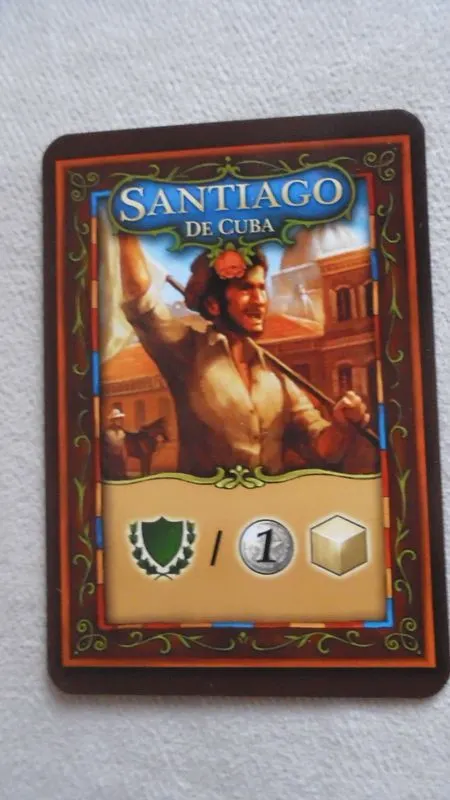
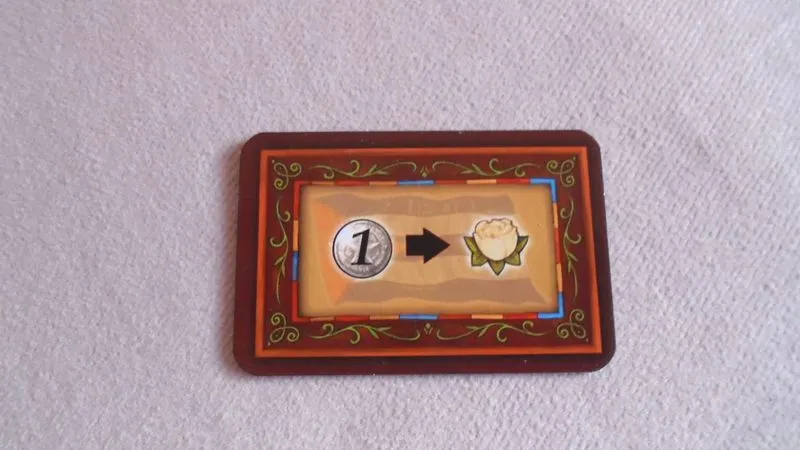
Welcome to Santiago, the second largest city in Cuba, home of legendary rum and birthplace of the revolution! The chaotic streets hum with the sounds of bustling crowds and busy commerce. Cargo ships constantly arrive and depart from the port. Demand is continuous, if unpredictable, for a supply of local products such as exotic fruits, sugar, rum, tobacco, and cigars. In Santiago de Cuba, your business card says "broker", but in reality you're a shady wheeler-dealer who arranges deals with the locals and with corruptible officials to move goods and meet the demand of those ever-present cargo ships – and your ability to procure these goods is only as reliable as your "connections". At the start of the game, nine locals – the Cubans – are randomly arranged on a path around Santiago, with the port being the tenth location on the circuit. Each Cuban has a different ability: e.g., give a player two tobacco, give a player a good of his choice, force opponents to give you something, give money or victory points (VPs), and seize a building or allow a player to use a previously seized building. What are these buildings? At the start of the game, twelve buildings are randomly placed on the game board in four color-coded groups (white, yellow, etc.) of three. As with the Cubans, these buildings give players a special ability when used: convert tobacco to cigars, change VPs to money or vica versa, increase the value of goods delivered to the ship, render a Cuban inactive for the next round, and so on. Players will deliver goods to seven ships throughout the course of the game. The demand for each ship is determined via a die roll; the active player rolls five dice – one for each type of good – then chooses four of the values rolled to represent demand for goods of the same color as the die. All players share a car and travel around the island together. On a turn, the active player can move the car to the next location on the path (whether Cuban or port) for free, or pay one peso for each spot moved beyond that. After taking a Cuban action, the player then must move his player piece to a building of the same color as the flower on that Cuban. If he takes an action in a building owned by someone else, that player earns 1 VP. (One Cuban allows a player to use the same building where his piece is currently located.) If a player moves to port, players take turns delivering all goods of one type to the ship to meet demand, adjusting the demand dice as needed. A player earns 2-4 VP for each good delivered; a player doesn't have to deliver goods. If the ship's demand isn't met after everyone delivers or passes, the VP bounty per good is increased by one and the ship remains in place – unless the value was already at 4 VP, in which case the ship sails. In this case, or when all the demand is met, a new ship comes into port with new demand values. After seven ships have sailed, the players earn 1 VP for every three goods still on hand, then tally their VPs. The player with the most VPs wins, with ties broken by goods remaining, then money. Each game poses new tactical challenges for the players, thanks to ever-changing combinations of buildings, Cuban inhabitants and demand for goods.
Według katalogu Santiago de Cuba obsługuje od 2 do 4 graczy. Ten zakres odpowiada liczbie graczy podanej przez wydawcę, więc grę można przygotować dla dowolnej grupy w jego granicach. Przygotowanie, niektóre zasady i punktacja mogą jednak różnić się w zależności od liczby graczy; dokładną konfigurację sprawdź w instrukcji swojego wydania.
Podany czas rozgrywki w Santiago de Cuba wynosi 40–75 minut. To szacunek wydawcy dla pełnej partii. Rzeczywisty czas zależy od grupy, liczby graczy i znajomości zasad: pierwsze partie zwykle trwają dłużej, a doświadczone grupy kończą szybciej. Przygotowanie gry i tłumaczenie zasad nie są wliczone w ten szacunek.
Katalog podaje dla Santiago de Cuba wiek od 10 lat. To zalecenie wydawcy, które uwzględnia wymagania dotyczące czytania, złożoność zasad i drobne elementy, a nie tylko tematykę. Młodsi gracze często mogą dołączyć z pomocą dorosłego; sprawdź zalecenie wiekowe swojego wydania i weź pod uwagę doświadczenie grupy z grami planszowymi.
Santiago de Cuba ma ocenę złożoności 2,2 na 5 według graczy BoardGameGeek, co czyni ją grą raczej lekką. Ocena pokazuje, ile znajomości zasad, planowania i podejmowania decyzji wymaga typowa rozgrywka. Cięższe gry wymagają dłuższego pierwszego tłumaczenia, dlatego przed wieczorem z grami warto skorzystać z przewodnika przygotowania.
Santiago de Cuba należy do tych kategorii: Economic. Główne mechaniki to Track Movement, Dice Rolling i Memory. Kategorie opisują temat i świat gry, a mechaniki to, co gracze faktycznie robią w swojej turze. Każda mechanika prowadzi do strony katalogu z podobnymi grami, co pomaga znaleźć coś porównywalnego na kolejny wieczór.
Autorzy wymienieni przy Santiago de Cuba to: Michael Rieneck. Te informacje pochodzą z opublikowanych danych gry i wskazują osoby odpowiedzialne za jej projekt, a nie ilustratorów czy wydawców. Strony autorów w MeepleRules zbierają inne tytuły tych samych twórców, co pomaga, gdy gra ci się podoba i szukasz podobnych.
W katalogu Santiago de Cuba figuruje jako gra podstawowa. Można w nią grać samodzielnie, korzystając z elementów z pudełka, bez żadnego innego tytułu. Dodatki, jeśli istnieją, dokładają nową zawartość lub zasady i są wymienione w katalogu osobno, z odnośnikiem do tej gry podstawowej.