
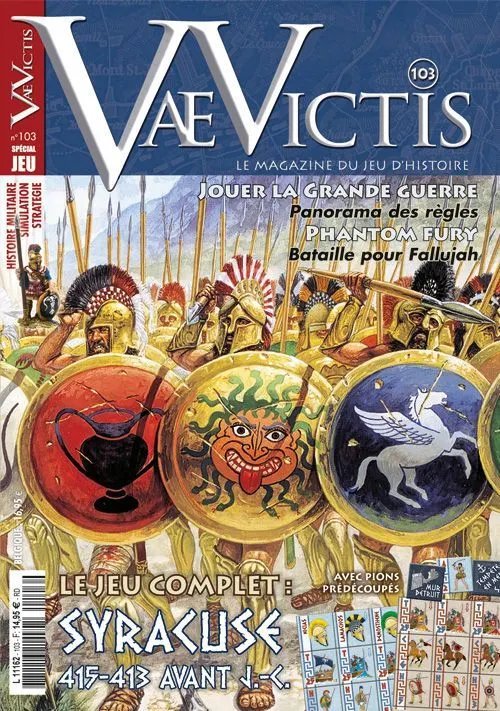
- Pozycja w BGG
- BGG #13 041
- Ocena BGG
- 7,6
Syracuse: 415-413 avant J.-C.
- 2 graczy
- 120 min
- Złożoność 2,1/5
- 2012
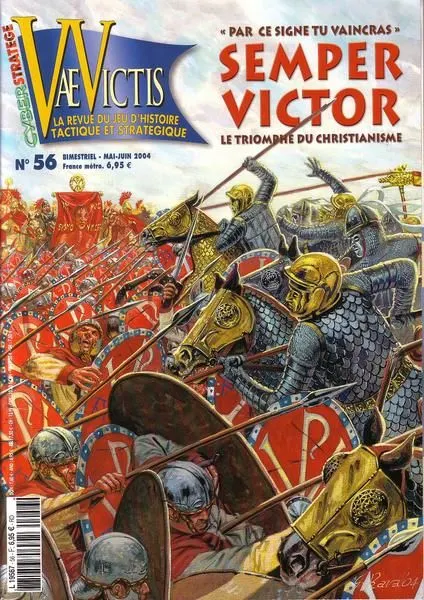
2004
Pomoc w zasadach gry Semper Victor
Zrozumiałe wyjaśnienia tur, efektów kart i spornych sytuacji z odnośnikami do oficjalnych źródeł i zapisaną historią pytań.
Dla 2 graczy
Co chcesz wiedzieć?
Odpowiedzi pochodzą z oficjalnej instrukcji, ze stroną do sprawdzenia.
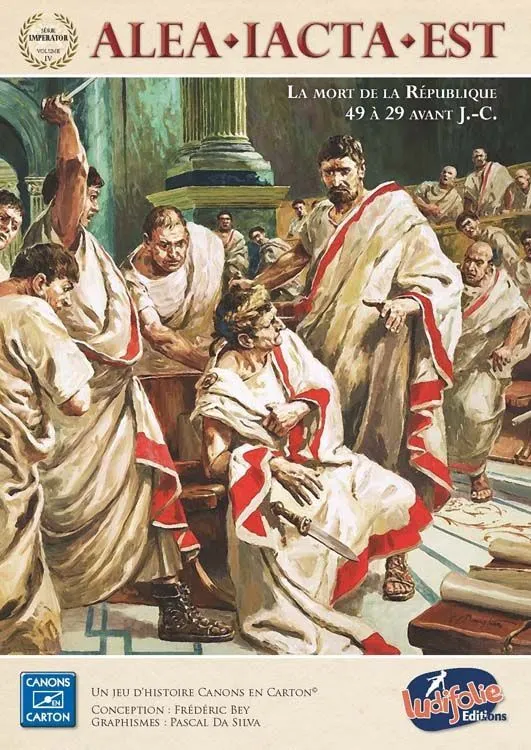
Semper Victor to gra planszowa wydana w 2004 roku dla 2 graczy, z rozgrywką trwającą 1200 minut i dla osób od 12 lat. Projekt gry: Frédéric Bey. Główne mechaniki: Area Movement i Dice Rolling.
Po angielsku
The second game in the series that includes Imperator and Ultimus Romanorum: La Chute de Rome, Semper Victor offers a grand strategic view of the Fourth Century Roman Empire. The full campaign opens with the abdication of Emperor Diocletian (305 A.D.) and continues to the death of Julian the Apostate (in the 360's or 370's - the date is variable). Scenarios cover shorter periods, such as the fateful war between Constantine the Great and Licinius (313-324). The map shows the Roman Empire in 305, divided into zones that, in turn, are grouped into 12 Dioceses, the Imperial administrative districts of that time. Surrounding the Empire are the zones of barbarian peoples and the rival Persian Empire. A turn is one year. Units have Points de Force (Strength Points) representing about 1,000 men each. Roman units come in three types: Ripenses, who cannot leave their home diocese, Pseudo-Comitatenses, whose ability to range far from home is limited, and Comitatenses, who can go anywhere in the Empire and beyond. The opposing sides are unusual and may puzzle players who know little or nothing about this era. One player (dubbed "Primus") represents the senior Emperor ("Primus Augustus") and his allies, who may include another Augustus, one or two Caesars (junior Emperors), other Roman generals, and even non-Roman peoples. The other player ("Secundus", misspelled "Secondus" in the rules) has his own set of Augusti, Caesars, generals and non-Romans. An important limitation is that each Augustus and Caesar must have a capital of his own, and only six capital cites are available at the beginning of the game. A seventh, Constantinople, may be constructed, though its advent is not a certainty. (Rome, by the way, is not one of the capitals; its political importance had long since faded.) In the course of play, Primus and Secundus may swap positions as the result of either a successful usurpation plotted by the Secundus or the death of the Primus Augustus without an Augustus or Caesar to succeed him. In general, it is better to be Primus than Secundus, but it isn't impossible for a perpetual Secundus to win. The Roman leaders are historical figures (38 in all), who enter the game at the same time as in actuality and run an increasing risk of death from natural causes if they aren't killed off sooner. Names are rendered in their French versions, e. g., "Constance Chlore" for Constantius Chlorus. A Leader is rated for "Capacité de Commandement" (number of units he can command), "Capacité Politique" (a variety of functions, such as determination of the initiative each turn), "Valeur Stratégique" (ability to evade combat plus other functions) and "Bonus Tactique" (useful in battles). Many Leaders are also marked as Christian or Pagan, though religion has much less of an impact than it did in real life. Very important to play are "stratagems", which make it possible to embark on a usurpation against the other player, assassinate rival Leaders, spread plagues, trigger barbarian uprisings, pacify barbarians already at war with the Empire, inspire desertions from enemy ranks, and much else. Turns have a variable number of movement/combat phases, determined by adding the valeurs stratégiques of the Primus Augustus and the highest rated Leader in the Secundus camp. The pace of the game thus depends on the quality of the current Leaders. Movement and combat are straightforward. Leaders, accompanied by a number of units up to their capacité de commandement, may move up to four zones, halting and fighting when they encounter enemies. Units without Leaders may move only one zone at a time. Battles are often bloody, but weakened or eliminated units quickly return to full strength. Players tally Victory Points at the end of each Turn. The list of achievements that garner VP's is long: victory in major battles (35 PF's or more engaged), control of Dioceses, defeat of non-Romans, presence of non-Roman troops in the other player's controlled territory, and so on. Players must mount and cut the game's counters themselves, which is a non-trivial task. As a minor annoyance, the counters are a bit too big for the zones on the map. The rules are in French, though English translations are easy to find.
Według katalogu Semper Victor obsługuje 2 graczy. To liczba graczy podana przez wydawcę, więc gra jest zaprojektowana dokładnie dla takiej liczby uczestników. Warianty dla grup innej wielkości, jeśli w ogóle istnieją, opisano w instrukcji twojego wydania; sprawdź ją uważnie, zanim przygotujesz inną konfigurację stołu.
Podany czas rozgrywki w Semper Victor wynosi 1200 minut. To szacunek wydawcy dla pełnej partii. Rzeczywisty czas zależy od grupy, liczby graczy i znajomości zasad: pierwsze partie zwykle trwają dłużej, a doświadczone grupy kończą szybciej. Przygotowanie gry i tłumaczenie zasad nie są wliczone w ten szacunek.
Katalog podaje dla Semper Victor wiek od 12 lat. To zalecenie wydawcy, które uwzględnia wymagania dotyczące czytania, złożoność zasad i drobne elementy, a nie tylko tematykę. Młodsi gracze często mogą dołączyć z pomocą dorosłego; sprawdź zalecenie wiekowe swojego wydania i weź pod uwagę doświadczenie grupy z grami planszowymi.
Semper Victor ma ocenę złożoności 2,8 na 5 według graczy BoardGameGeek, co czyni ją grą raczej lekką. Ocena pokazuje, ile znajomości zasad, planowania i podejmowania decyzji wymaga typowa rozgrywka. Cięższe gry wymagają dłuższego pierwszego tłumaczenia, dlatego przed wieczorem z grami warto skorzystać z przewodnika przygotowania.
Semper Victor należy do tych kategorii: Wargame i Ancient. Główne mechaniki to Area Movement i Dice Rolling. Kategorie opisują temat i świat gry, a mechaniki to, co gracze faktycznie robią w swojej turze. Każda mechanika prowadzi do strony katalogu z podobnymi grami, co pomaga znaleźć coś porównywalnego na kolejny wieczór.
Autorzy wymienieni przy Semper Victor to: Frédéric Bey. Te informacje pochodzą z opublikowanych danych gry i wskazują osoby odpowiedzialne za jej projekt, a nie ilustratorów czy wydawców. Strony autorów w MeepleRules zbierają inne tytuły tych samych twórców, co pomaga, gdy gra ci się podoba i szukasz podobnych.
W katalogu Semper Victor figuruje jako gra podstawowa. Można w nią grać samodzielnie, korzystając z elementów z pudełka, bez żadnego innego tytułu. Dodatki, jeśli istnieją, dokładają nową zawartość lub zasady i są wymienione w katalogu osobno, z odnośnikiem do tej gry podstawowej.