
- Pozycja w BGG
- BGG #8885
- Ocena BGG
- 8,0
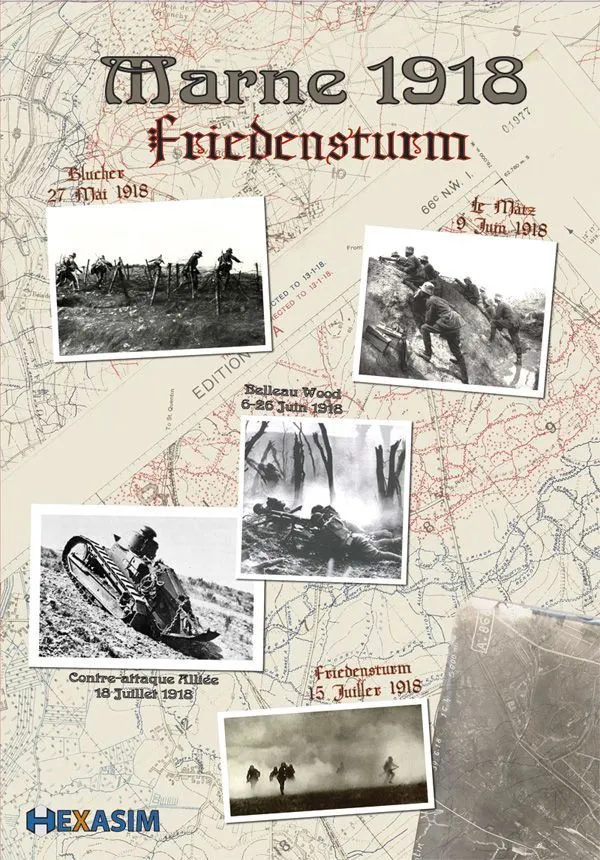
Marne 1918: Friedensturm
- 2 graczy
- 210–1200 min
- Złożoność 3,2/5
- 2006
2012
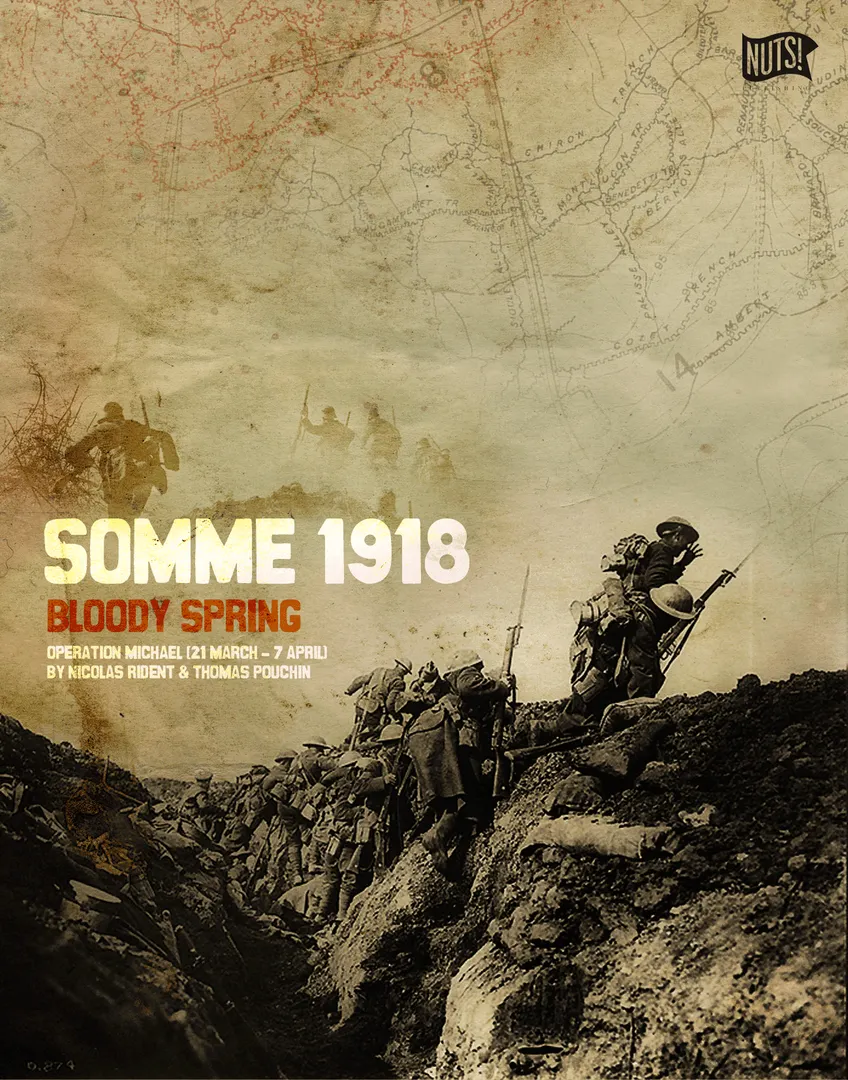
Pomoc w zasadach gry Somme 1918: Bloody Spring
Zrozumiałe wyjaśnienia tur, efektów kart i spornych sytuacji z odnośnikami do oficjalnych źródeł i zapisaną historią pytań.
Dla 2 graczy
Co chcesz wiedzieć?
Odpowiedzi pochodzą z oficjalnej instrukcji, ze stroną do sprawdzenia.
Somme 1918: Bloody Spring to gra planszowa wydana w 2012 roku dla 2 graczy, z rozgrywką trwającą 240 minut i dla osób od 14 lat. Projekt gry: Nicolas Rident i Thomas Pouchin. Główne mechaniki: Dice Rolling, Hexagon Grid i Simulation.





Po angielsku
Somme 1918 is the second game in a series that covers all of the offensives on the Western Front in 1918 and the Sequel to Marne 1918: Friedensturm. Somme 18 is different from Marne 1918 because it covers only one battle, Operation Michael, while Marne 1918 simulated a series of offensives, from Blucher to Friedensturm. The result is a more intense and nerve-wracking game that takes place over eight turns (from the end of March to mid-April), at least half of which are composed of three operational phases. Both players will face difficult challenges. The German player needs to re-create the historic breakthrough and has to put in every effort to reach Amiens. The Allied player has to resist succumbing to panic in the first turns in order to organize an effective defense, and then a counter-attack near the end of the game. While the basic rules in Somme 18 are identical to those in Marne 1918 (with the exception of the air rules, which have been completely revised), the advanced rules will be very different. The principal reason is the length of Operation Michael, about fifteen days, which does not give an opportunity for the campaign management rules of Marne 1918 to be used. So, all of the unit management tracks have disappeared and have been replaced by one table that manages the replacement and re-construction of units. Strategic movement has also been greatly simplified and adapted to the tempo of the game. Somme 1918 will of course be enriched by numerous specific rules, simulating the particularities of this battle. Petain’s Reticence: Simulates the French command’s lack of urgency in supporting their British allies. The arrival of French reinforcements without their artillery support, allowing a quicker deployment of troops coupled with a reduction in their value. Inter-Allied Cooperation: This will be extremely reduced at the beginning of the campaign. Evolution of the use of Stoss: The doctrine of using assault troops had been principally introduced by General von Hutier, in Russia and Italy. At the beginning of Operation Michael, the generals commanding the Second and Seventeenth armies used their Stosstruppen in frontal assaults, wasting these elite forces and provoking fury from Ludendorff. A rule thus simulates the evolution of this doctrine. The Doullens Conference: At the height of the German offensive, while the French Army under Petain prepared to cut its ties with the British, Haig accepted that he be placed under the command of Foch, finally creating an inter-Allied command. This rule simulates this conference, tied to German conquests. It also plays a part in obtaining victory points. In fact, this rule is really the heart of the game and we think that players will be pleased with the proposed system that will bring together the different parameters of this game. • Boxed game • 1 A1 single-sided maps • About 560 counters • 24 pages rules booklet in english • 2 player aids in english • Introductory historical booklet with design notes • 4 dice (from Nuts Publishing website)
Według katalogu Somme 1918: Bloody Spring obsługuje 2 graczy. To liczba graczy podana przez wydawcę, więc gra jest zaprojektowana dokładnie dla takiej liczby uczestników. Warianty dla grup innej wielkości, jeśli w ogóle istnieją, opisano w instrukcji twojego wydania; sprawdź ją uważnie, zanim przygotujesz inną konfigurację stołu.
Podany czas rozgrywki w Somme 1918: Bloody Spring wynosi 240 minut. To szacunek wydawcy dla pełnej partii. Rzeczywisty czas zależy od grupy, liczby graczy i znajomości zasad: pierwsze partie zwykle trwają dłużej, a doświadczone grupy kończą szybciej. Przygotowanie gry i tłumaczenie zasad nie są wliczone w ten szacunek.
Katalog podaje dla Somme 1918: Bloody Spring wiek od 14 lat. To zalecenie wydawcy, które uwzględnia wymagania dotyczące czytania, złożoność zasad i drobne elementy, a nie tylko tematykę. Młodsi gracze często mogą dołączyć z pomocą dorosłego; sprawdź zalecenie wiekowe swojego wydania i weź pod uwagę doświadczenie grupy z grami planszowymi.
Somme 1918: Bloody Spring ma ocenę złożoności 3,6 na 5 według graczy BoardGameGeek, co czyni ją grą średnio złożoną. Ocena pokazuje, ile znajomości zasad, planowania i podejmowania decyzji wymaga typowa rozgrywka. Cięższe gry wymagają dłuższego pierwszego tłumaczenia, dlatego przed wieczorem z grami warto skorzystać z przewodnika przygotowania.
Somme 1918: Bloody Spring należy do tych kategorii: Wargame i World War I. Główne mechaniki to Dice Rolling, Hexagon Grid i Simulation. Kategorie opisują temat i świat gry, a mechaniki to, co gracze faktycznie robią w swojej turze. Każda mechanika prowadzi do strony katalogu z podobnymi grami, co pomaga znaleźć coś porównywalnego na kolejny wieczór.
Autorzy wymienieni przy Somme 1918: Bloody Spring to: Nicolas Rident i Thomas Pouchin. Te informacje pochodzą z opublikowanych danych gry i wskazują osoby odpowiedzialne za jej projekt, a nie ilustratorów czy wydawców. Strony autorów w MeepleRules zbierają inne tytuły tych samych twórców, co pomaga, gdy gra ci się podoba i szukasz podobnych.
W katalogu Somme 1918: Bloody Spring figuruje jako gra podstawowa. Można w nią grać samodzielnie, korzystając z elementów z pudełka, bez żadnego innego tytułu. Dodatki, jeśli istnieją, dokładają nową zawartość lub zasady i są wymienione w katalogu osobno, z odnośnikiem do tej gry podstawowej.