

- Pozycja w BGG
- BGG #34
- Ocena BGG
- 8,1
Root
- 2–4 graczy
- 60–90 min
- Złożoność 3,8/5
- 2018
2016
Pomoc w zasadach gry Spheres of Influence: Struggle for Global Supremacy
Zrozumiałe wyjaśnienia tur, efektów kart i spornych sytuacji z odnośnikami do oficjalnych źródeł i zapisaną historią pytań.
Dla 2 graczy
Co chcesz wiedzieć?
Odpowiedzi pochodzą z oficjalnej instrukcji, ze stroną do sprawdzenia.
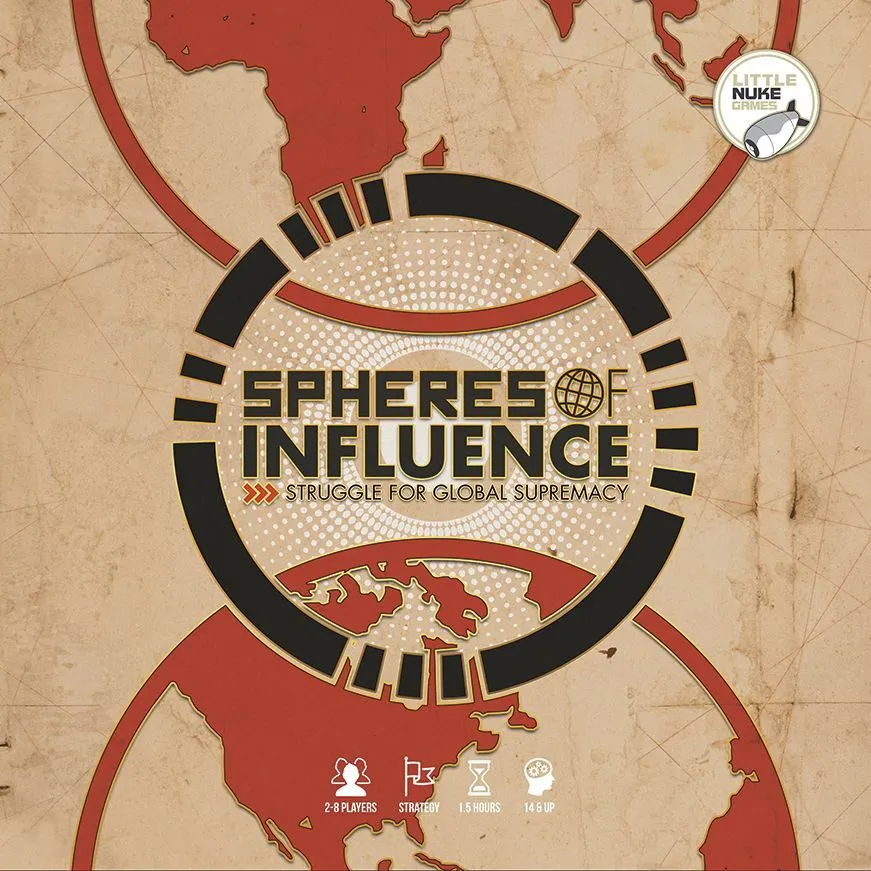
Spheres of Influence: Struggle for Global Supremacy to gra planszowa wydana w 2016 roku dla 2–8 graczy, z rozgrywką trwającą 90 minut i dla osób od 14 lat. Projekt gry: Josh Lamont. Główne mechaniki: Dice Rolling, Point to Point Movement i Area Majority / Influence.






Po angielsku
Spheres of Influence: Struggle for Global Supremacy is a 2-8 player free-for-all light wargame, set on a modern world map. Players will take control of one of the games 8 mighty factions as they compete over the world's spheres of influence, capitals and oil reserves. Will a mighty caliphate rise to power? Will the communist curtain once again fall? Or will western democracy sweep the world? In games with fewer than 5 players, each player will control 1-4 factions simultaneously, coordinating their efforts against the other players' coalitions. Each faction will begin the game with only a single, semi-randomly determined territory under its control. From this one space, factions will aggressively expand. The gameplay of Spheres of Influence is divided into a set number of rounds, with each round being split into 2 phases: the mobilization phase and the turn phase. During the mobilization phase, factions take turns placing units based on how powerful they are. During this phase, the global turn deck is also formed. This deck will be used to determine the turn order and frequency of action for each faction during the upcoming turn phase. To form it, each faction contributes a number of their turn cards (based on the number of oil fields they control) to a single, shared deck of turn cards. This deck is then shuffled and place down on the table. During the turn phase, one at a time the top card of the turn deck is revealed. Whichever faction's card was just flipped, that faction takes a turn, performing a single action with its units on a single space (moving, attacking, annexing or passing). Once that action is complete, that turn ends and the next turn card is revealed, with the process repeating itself. This makes turns both fast (with many turns lasting only a couple of seconds) and suspenseful, since none of the factions know precisely when their turns will be. It also ensures more incremental game developments - factions cannot sweep across all of Asia in a single turn and players can respond to attacks or betrayals much sooner. Once the last turn card in the global turn deck has been revealed, a round ends and another round begins. Combat is resolved by a simple dice mechanic fused with a "situational" modifier that loosely simulates the increased difficulty of attacking a defended coastline, breaking a naval blockade, or striking a fortified position. Along the way, powerful special cards can be played, allowing players to strike with submarines, deploy heavy armor, paradrop troops around enemy defenses, and launch devastating nuclear attacks. Games have either 5 or 6 rounds depending on the number of factions. Once the final round is complete, the faction who controls the most spheres of influence wins the game for its owner. Games typically last about an hour and a half, and experienced players can sometimes finish in just a single hour.
Według katalogu Spheres of Influence: Struggle for Global Supremacy obsługuje od 2 do 8 graczy. Ten zakres odpowiada liczbie graczy podanej przez wydawcę, więc grę można przygotować dla dowolnej grupy w jego granicach. Przygotowanie, niektóre zasady i punktacja mogą jednak różnić się w zależności od liczby graczy; dokładną konfigurację sprawdź w instrukcji swojego wydania.
Podany czas rozgrywki w Spheres of Influence: Struggle for Global Supremacy wynosi 90 minut. To szacunek wydawcy dla pełnej partii. Rzeczywisty czas zależy od grupy, liczby graczy i znajomości zasad: pierwsze partie zwykle trwają dłużej, a doświadczone grupy kończą szybciej. Przygotowanie gry i tłumaczenie zasad nie są wliczone w ten szacunek.
Katalog podaje dla Spheres of Influence: Struggle for Global Supremacy wiek od 14 lat. To zalecenie wydawcy, które uwzględnia wymagania dotyczące czytania, złożoność zasad i drobne elementy, a nie tylko tematykę. Młodsi gracze często mogą dołączyć z pomocą dorosłego; sprawdź zalecenie wiekowe swojego wydania i weź pod uwagę doświadczenie grupy z grami planszowymi.
Spheres of Influence: Struggle for Global Supremacy ma ocenę złożoności 2,4 na 5 według graczy BoardGameGeek, co czyni ją grą raczej lekką. Ocena pokazuje, ile znajomości zasad, planowania i podejmowania decyzji wymaga typowa rozgrywka. Cięższe gry wymagają dłuższego pierwszego tłumaczenia, dlatego przed wieczorem z grami warto skorzystać z przewodnika przygotowania.
Spheres of Influence: Struggle for Global Supremacy należy do tych kategorii: Wargame, Territory Building i Negotiation. Główne mechaniki to Dice Rolling, Point to Point Movement i Area Majority / Influence. Kategorie opisują temat i świat gry, a mechaniki to, co gracze faktycznie robią w swojej turze. Każda mechanika prowadzi do strony katalogu z podobnymi grami, co pomaga znaleźć coś porównywalnego na kolejny wieczór.
Autorzy wymienieni przy Spheres of Influence: Struggle for Global Supremacy to: Josh Lamont. Te informacje pochodzą z opublikowanych danych gry i wskazują osoby odpowiedzialne za jej projekt, a nie ilustratorów czy wydawców. Strony autorów w MeepleRules zbierają inne tytuły tych samych twórców, co pomaga, gdy gra ci się podoba i szukasz podobnych.
W katalogu Spheres of Influence: Struggle for Global Supremacy figuruje jako gra podstawowa. Można w nią grać samodzielnie, korzystając z elementów z pudełka, bez żadnego innego tytułu. Dodatki, jeśli istnieją, dokładają nową zawartość lub zasady i są wymienione w katalogu osobno, z odnośnikiem do tej gry podstawowej.