

- Pozycja w BGG
- BGG #6033
- Ocena BGG
- 6,5
Conquistador: The Age of Exploration – 1495-1600
- 1–5 graczy
- 360–420 min
- Złożoność 3,2/5
- 1976
2004
Pomoc w zasadach gry Suleiman the Magnificent
Zrozumiałe wyjaśnienia tur, efektów kart i spornych sytuacji z odnośnikami do oficjalnych źródeł i zapisaną historią pytań.
Dla 2 graczy
Co chcesz wiedzieć?
Odpowiedzi pochodzą z oficjalnej instrukcji, ze stroną do sprawdzenia.
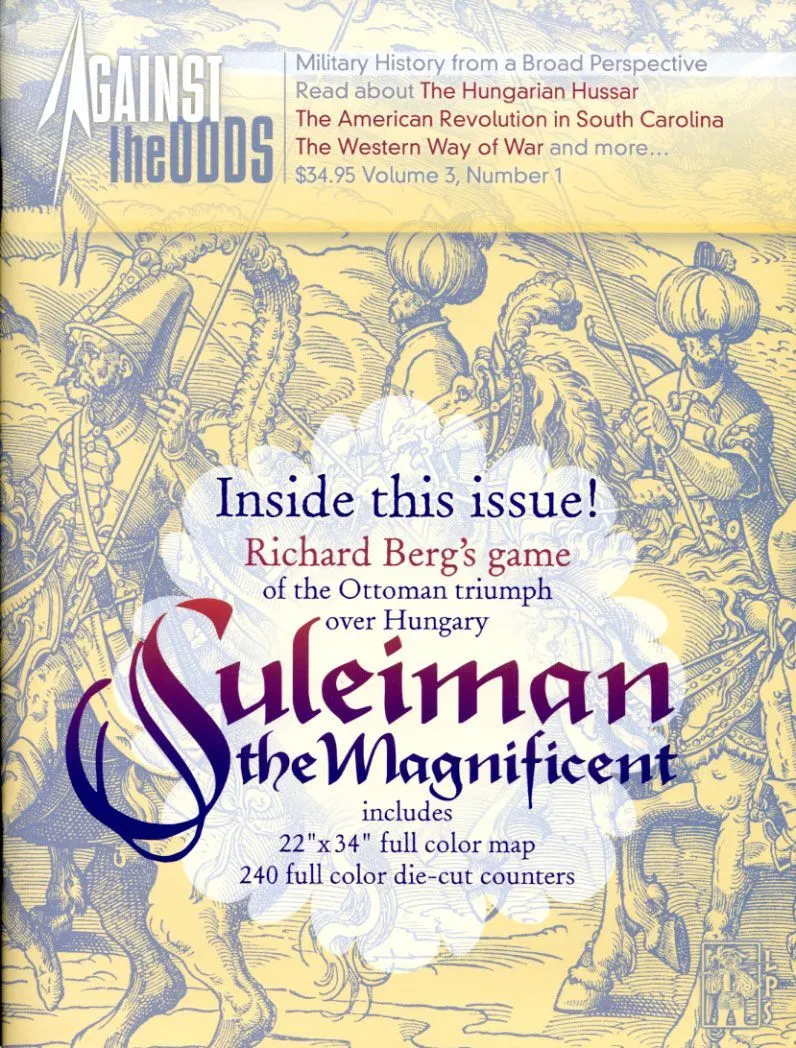
Suleiman the Magnificent to gra planszowa wydana w 2004 roku dla 2 graczy i z rozgrywką trwającą 120 minut. Projekt gry: Richard H. Berg. Główne mechaniki: Dice Rolling, Grid Movement i Hexagon Grid.






Po angielsku
Suleiman the Magnificent is a game covering the massive battle on August 29th, 1526 between the Ottoman Empire and the army of the Kingdom of Hungary that eventually resulted in the fall of the latter kingdom and the disappearance of Hungary as an independent country for 400 years. The Hungarians numbered around 35,000 (including artillerist), the Ottomans, about 60,000. While there is much disagreement about numbers at this battle, all sources agree that the Ottomans did outnumber the Hungarians significantly. The Hungarian front line was stretched rather thinly to match, or attempt to match, the frontage that would be presented by the Ottomans. The Hungarians had, as was the practice for the last 200 years in European warfare, dug a trench in front of their front line infantry and artillery to give them a defense advantage. The actual battle, which started at around 3:00 PM, lasted but a few hours, maybe less. Each combat unit represents about 750 men. The map scale is about 225 yards per hex and depicts the flat and, because of the proximity of the oft-overflowing Danube, somewhat soft and, in many places, slippery battlefield at Mohacs. Suleiman the Magnificent is an accessible, fast-playing, fun game of low complexity. Optional rules include the politically charged issue that has reverberated down over the centuries, that many of the contingents of allies called in by Hungarian King Lajos did not arrive in time for the battle. Some were never going to do so; some were held back - specifically the charge leveled at Johann Szapolyai, Voivode of Transylvania because of his ambitions for the Hungarian throne (which he did get after Lajos' death and some deals reached with Suleiman).
Według katalogu Suleiman the Magnificent obsługuje 2 graczy. To liczba graczy podana przez wydawcę, więc gra jest zaprojektowana dokładnie dla takiej liczby uczestników. Warianty dla grup innej wielkości, jeśli w ogóle istnieją, opisano w instrukcji twojego wydania; sprawdź ją uważnie, zanim przygotujesz inną konfigurację stołu.
Podany czas rozgrywki w Suleiman the Magnificent wynosi 120 minut. To szacunek wydawcy dla pełnej partii. Rzeczywisty czas zależy od grupy, liczby graczy i znajomości zasad: pierwsze partie zwykle trwają dłużej, a doświadczone grupy kończą szybciej. Przygotowanie gry i tłumaczenie zasad nie są wliczone w ten szacunek.
Suleiman the Magnificent ma ocenę złożoności 2,8 na 5 według graczy BoardGameGeek, co czyni ją grą raczej lekką. Ocena pokazuje, ile znajomości zasad, planowania i podejmowania decyzji wymaga typowa rozgrywka. Cięższe gry wymagają dłuższego pierwszego tłumaczenia, dlatego przed wieczorem z grami warto skorzystać z przewodnika przygotowania.
Suleiman the Magnificent należy do tych kategorii: Wargame, Renaissance i Pike and Shot. Główne mechaniki to Dice Rolling, Grid Movement i Hexagon Grid. Kategorie opisują temat i świat gry, a mechaniki to, co gracze faktycznie robią w swojej turze. Każda mechanika prowadzi do strony katalogu z podobnymi grami, co pomaga znaleźć coś porównywalnego na kolejny wieczór.
Autorzy wymienieni przy Suleiman the Magnificent to: Richard H. Berg. Te informacje pochodzą z opublikowanych danych gry i wskazują osoby odpowiedzialne za jej projekt, a nie ilustratorów czy wydawców. Strony autorów w MeepleRules zbierają inne tytuły tych samych twórców, co pomaga, gdy gra ci się podoba i szukasz podobnych.
W katalogu Suleiman the Magnificent figuruje jako gra podstawowa. Można w nią grać samodzielnie, korzystając z elementów z pudełka, bez żadnego innego tytułu. Dodatki, jeśli istnieją, dokładają nową zawartość lub zasady i są wymienione w katalogu osobno, z odnośnikiem do tej gry podstawowej.