
- Pozycja w BGG
- BGG #9960
- Ocena BGG
- 6,1
Totopoly
- 2–6 graczy
- 90 min
- Złożoność 1,8/5
- 1938
1970
Pomoc w zasadach gry The Home Stretch
Zrozumiałe wyjaśnienia tur, efektów kart i spornych sytuacji z odnośnikami do oficjalnych źródeł i zapisaną historią pytań.
Co chcesz wiedzieć?
Odpowiedzi pochodzą z oficjalnej instrukcji, ze stroną do sprawdzenia.
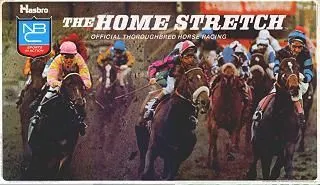
The Home Stretch to gra planszowa wydana w 1970 roku dla 2–20 graczy, z rozgrywką trwającą 60 minut i dla osób od 8 lat. Główne mechaniki: Auction / Bidding, Roll / Spin and Move i Grid Movement.








Po angielsku
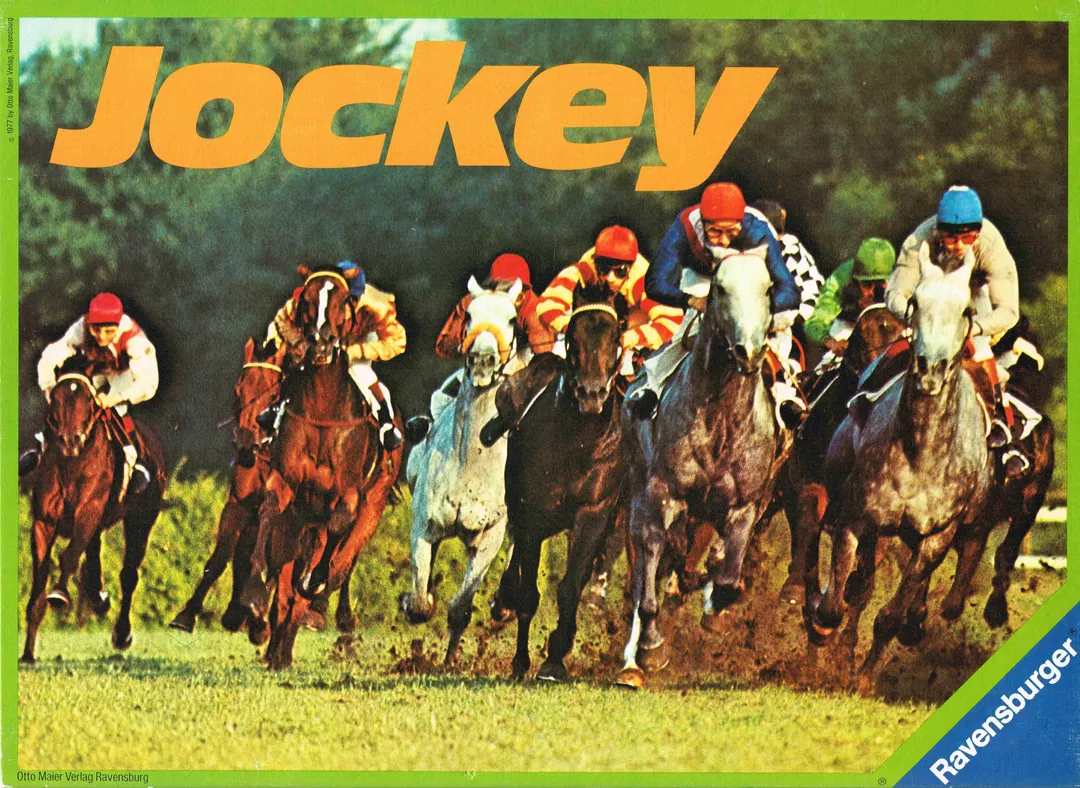
Horse racing game released by Hasbro and NBC (Yes, the US Television company) in a format nearly identical to the 3M plastic "wrap-around" boards. The Home Stretch is a horse racing game. The players represent the owners and jockeys of the horses in the race and the people betting on the race. To start the game, each player is given a certain amount of cash. This money is used to bid on horses. Each horse is represented by an "Ownership Card" which shows the horse's name, stable and "Speed". Speed is used to determine the likelihood of gaining an "Advantage" during the race. Bidding for each horse lasts three rounds and the high bidder gets the horse. Once the horses have been assigned their starting positions are determined and the Ownership Cards are placed in the "Readout Machine". This is a tray which holds the cards and will be used to determine movement. After all the horses are in the tray "Odds Cards" are placed below each Ownership Card. Odds Cards will determine the actual movement of each horse. Players may now make wagers on any horse they choose. Wagers may be made on any number of horses and may be made for Win, Place or Show. The player records their bets on a "Betting Slip" and places it face down on the board, then pays the total amount of the bets. To run the race the spinner is used to generate a random number. This number is used on the Readout Machine to determine the number of spaces moved and the "Diagonal Allowance" for each horse. Each Odds card has a column of numbers for total movement and a second column for Diagonal allowance. The Diagonal Allowance is the number of diagonal moves the horse may make and is therefore the number of times the horse can change lanes. The horse must use all of its movement but does not have to use all of its allowed lane changes. The spinner's random number determines which row of numbers on the Odds cards will be used in the current round for moving the horses along the track. Sometimes the spinner will indicate "Advantage". When this happens an Advantage card is drawn. Advantage Cards each show the name of one horse and that horse is allowed a free move of 6 with a diagonal allowance of 2. Other horses may not move. The better a horse's speed, the more Advantage Cards that horse has in the deck. The race continues until all of the horses have crossed the finish line. If more than one horse crosses the line in the same turn the horse which moves the furtherest past the finish line is the winner. The second and third place horse is determined the same way. Once all the horses have crossed the finish line the betting slips are revealed and winning wagers are paid. The players then set up the horses and the Readout Machine for the next race. Ownership of the horses remains the same but the starting order and Odds Cards change. A total of six races are run. The player with the most cash at the end of all six races is the winner. This is a very good game. Players can spend a good deal of money buying the best horses at the start of the game, but they then have less cash to place bets with. Meanwhile, other players can bet on their horses anyway. Also, the randomness of the appearance of the Advantage Cards mean that a good horse can have a bad showing and the slowest horse may come from behind to win. There is nothing to prevent a player from betting on another horse and racing theirs badly to influence the outcome but the other players may be doing the same thing and the fact that six races are run means that no one is likely to try it more than once (though it may show up as a race 6 strategy). A very interesting game.
Według katalogu The Home Stretch obsługuje od 2 do 20 graczy. Ten zakres odpowiada liczbie graczy podanej przez wydawcę, więc grę można przygotować dla dowolnej grupy w jego granicach. Przygotowanie, niektóre zasady i punktacja mogą jednak różnić się w zależności od liczby graczy; dokładną konfigurację sprawdź w instrukcji swojego wydania.
Podany czas rozgrywki w The Home Stretch wynosi 60 minut. To szacunek wydawcy dla pełnej partii. Rzeczywisty czas zależy od grupy, liczby graczy i znajomości zasad: pierwsze partie zwykle trwają dłużej, a doświadczone grupy kończą szybciej. Przygotowanie gry i tłumaczenie zasad nie są wliczone w ten szacunek.
Katalog podaje dla The Home Stretch wiek od 8 lat. To zalecenie wydawcy, które uwzględnia wymagania dotyczące czytania, złożoność zasad i drobne elementy, a nie tylko tematykę. Młodsi gracze często mogą dołączyć z pomocą dorosłego; sprawdź zalecenie wiekowe swojego wydania i weź pod uwagę doświadczenie grupy z grami planszowymi.
The Home Stretch ma ocenę złożoności 1,0 na 5 według graczy BoardGameGeek, co czyni ją grą lekką. Ocena pokazuje, ile znajomości zasad, planowania i podejmowania decyzji wymaga typowa rozgrywka. Cięższe gry wymagają dłuższego pierwszego tłumaczenia, dlatego przed wieczorem z grami warto skorzystać z przewodnika przygotowania.
The Home Stretch należy do tych kategorii: Animals, Racing i Sports. Główne mechaniki to Auction / Bidding, Roll / Spin and Move i Grid Movement. Kategorie opisują temat i świat gry, a mechaniki to, co gracze faktycznie robią w swojej turze. Każda mechanika prowadzi do strony katalogu z podobnymi grami, co pomaga znaleźć coś porównywalnego na kolejny wieczór.
W katalogu The Home Stretch figuruje jako gra podstawowa. Można w nią grać samodzielnie, korzystając z elementów z pudełka, bez żadnego innego tytułu. Dodatki, jeśli istnieją, dokładają nową zawartość lub zasady i są wymienione w katalogu osobno, z odnośnikiem do tej gry podstawowej.