
- Pozycja w BGG
- BGG #11 349
- Ocena BGG
- 6,0
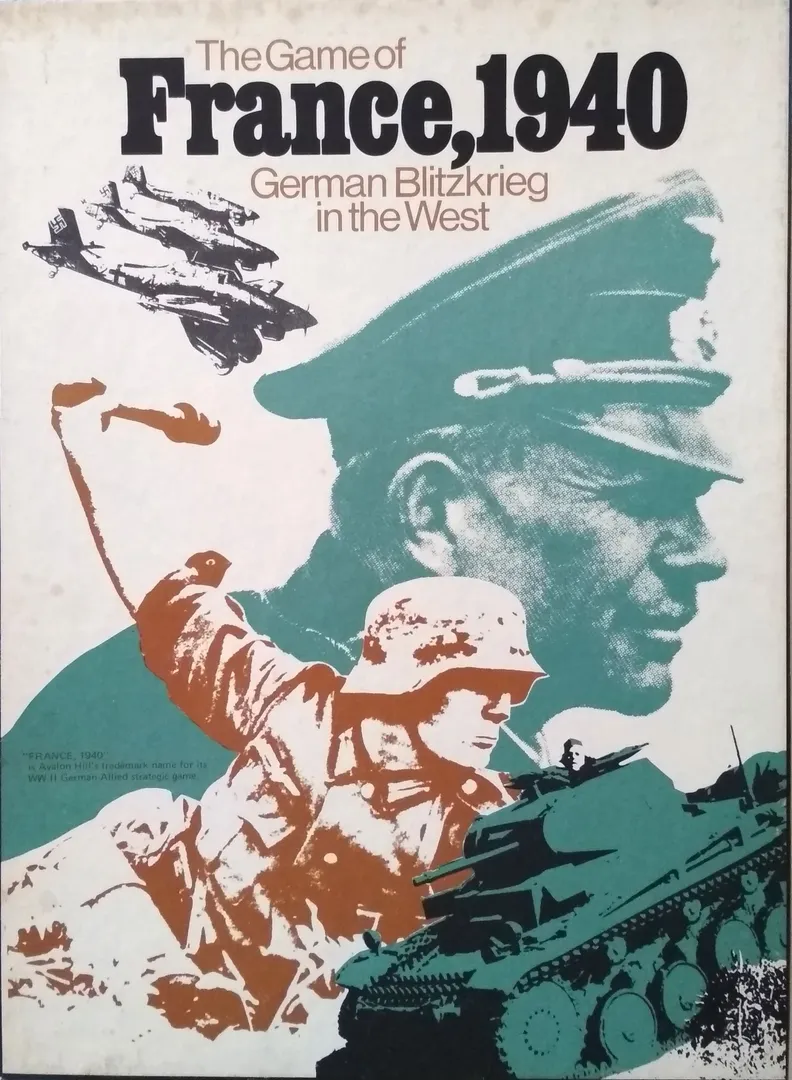
The Game of France, 1940: German Blitzkrieg in the West
- 2 graczy
- 180 min
- Złożoność 2,7/5
- 1971
1972
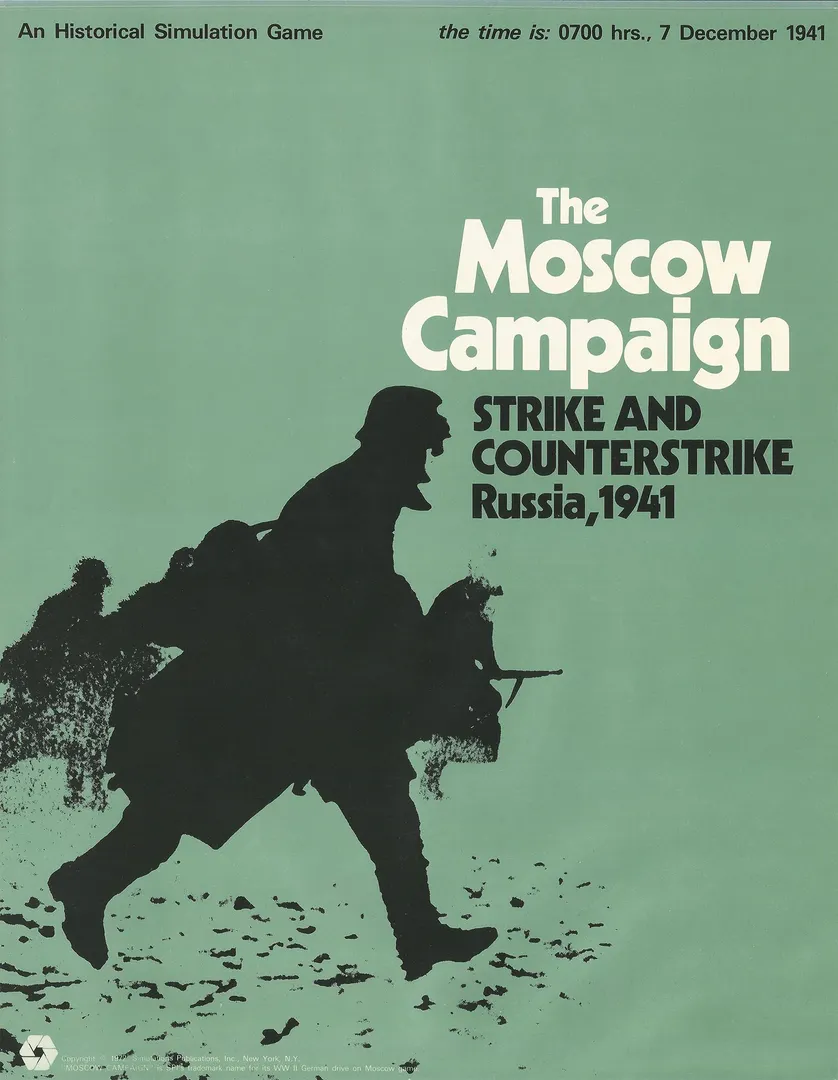
Pomoc w zasadach gry The Moscow Campaign: Strike and Counterstrike Russia, 1941
Zrozumiałe wyjaśnienia tur, efektów kart i spornych sytuacji z odnośnikami do oficjalnych źródeł i zapisaną historią pytań.
Dla 2 graczy
Co chcesz wiedzieć?
Odpowiedzi pochodzą z oficjalnej instrukcji, ze stroną do sprawdzenia.
The Moscow Campaign: Strike and Counterstrike Russia, 1941 to gra planszowa wydana w 1972 roku dla 2 graczy, z rozgrywką trwającą 120 minut i dla osób od 12 lat. Projekt gry: Jim Dunnigan. Główne mechaniki: Dice Rolling, Grid Movement i Hexagon Grid.



Po angielsku
The Moscow Campaign; Strike and Counterstrike Russia, 1941, is the successor to SPI's earlier treatment of roughly the same events, The Battle of Moscow (originally published in Strategy & Tactics magazine #24). The Moscow Campaign covers the final German drives on the Russian capital and the first Soviet counteroffensive. The scale is 6 miles per hex and three days per turn. Units (blue Germans and brown Soviets) are predominantly divisions. The Soviets have a few corps, and some German mechanized divisions are replaced by kampfgruppen if eliminated in combat. Though they have "historical" designations, the formations are pretty generic. They display combat factors, movement allowances and NATO symbols. Most formidable are the German 6-8 panzer divisions; most common are the lowly Soviet 1-4 infantry. Games can begin as early as September 30, 1941, and end as late as December 31st. A variety of starting points, ending points and German orders of battle produce 24 scenarios, four lasting all 31 turns, the rest - centered on the German offensives in early October and late November and the Soviet riposte at the end of the year - 8 turns each. The four-color map is functional though not an aesthetic gem. It shows cities, rivers, railroads, forests, swamps, lakes, Soviet fortifications and scenario start lines. Players alternate turns, each having a movement phase, combat phase and second movement phase for mechanized units. Zones of control are "semi-active" (requiring extra movement points to enter or leave but not mandating combat between adjacent enemies). The stacking limit is three units of any size per hex. The Combat Results Table has the classic Eliminate, Exchange, Retreat outcomes. Overruns during movement are also possible, though they require 11 to 1 odds. Germans must trace supply lines to railroads that have been converted by Eisenbahn Bautruppen, Soviets to unconverted rail lines that run to the north, south or east of the map. Lack of supply halves movement and combat factors but doesn't, by itself, result in elimination. Weather changes historically. Rain, mud and full winter successively erode movement allowances and combat strengths. There are no air or command rules. Victory points are awarded for destroying enemy units and for geographical objectives (possession of Moscow for either side, proximity to Moscow for the Germans, pushing units west of the start line for the Soviets). When published, this was one of SPI's largest and most sophisticated games. Game Scale: Game Turn: 2 days Hex: 6 miles / 9.6 kilometers Units: Brigade to Corps Game Inventory: One 22 x 34" four-color mapsheet One single-side printed countersheet (400 1/2" counters) One 10-page foldout Moscow Campaign folder One 6-sided die Solitaire Suitability: Medium Complexity Level: Medium Players: 2 or more Playing Time: 2-4 hours
Według katalogu The Moscow Campaign: Strike and Counterstrike Russia, 1941 obsługuje 2 graczy. To liczba graczy podana przez wydawcę, więc gra jest zaprojektowana dokładnie dla takiej liczby uczestników. Warianty dla grup innej wielkości, jeśli w ogóle istnieją, opisano w instrukcji twojego wydania; sprawdź ją uważnie, zanim przygotujesz inną konfigurację stołu.
Podany czas rozgrywki w The Moscow Campaign: Strike and Counterstrike Russia, 1941 wynosi 120 minut. To szacunek wydawcy dla pełnej partii. Rzeczywisty czas zależy od grupy, liczby graczy i znajomości zasad: pierwsze partie zwykle trwają dłużej, a doświadczone grupy kończą szybciej. Przygotowanie gry i tłumaczenie zasad nie są wliczone w ten szacunek.
Katalog podaje dla The Moscow Campaign: Strike and Counterstrike Russia, 1941 wiek od 12 lat. To zalecenie wydawcy, które uwzględnia wymagania dotyczące czytania, złożoność zasad i drobne elementy, a nie tylko tematykę. Młodsi gracze często mogą dołączyć z pomocą dorosłego; sprawdź zalecenie wiekowe swojego wydania i weź pod uwagę doświadczenie grupy z grami planszowymi.
The Moscow Campaign: Strike and Counterstrike Russia, 1941 ma ocenę złożoności 2,1 na 5 według graczy BoardGameGeek, co czyni ją grą raczej lekką. Ocena pokazuje, ile znajomości zasad, planowania i podejmowania decyzji wymaga typowa rozgrywka. Cięższe gry wymagają dłuższego pierwszego tłumaczenia, dlatego przed wieczorem z grami warto skorzystać z przewodnika przygotowania.
The Moscow Campaign: Strike and Counterstrike Russia, 1941 należy do tych kategorii: Wargame i World War II. Główne mechaniki to Dice Rolling, Grid Movement i Hexagon Grid. Kategorie opisują temat i świat gry, a mechaniki to, co gracze faktycznie robią w swojej turze. Każda mechanika prowadzi do strony katalogu z podobnymi grami, co pomaga znaleźć coś porównywalnego na kolejny wieczór.
Autorzy wymienieni przy The Moscow Campaign: Strike and Counterstrike Russia, 1941 to: Jim Dunnigan. Te informacje pochodzą z opublikowanych danych gry i wskazują osoby odpowiedzialne za jej projekt, a nie ilustratorów czy wydawców. Strony autorów w MeepleRules zbierają inne tytuły tych samych twórców, co pomaga, gdy gra ci się podoba i szukasz podobnych.
W katalogu The Moscow Campaign: Strike and Counterstrike Russia, 1941 figuruje jako gra podstawowa. Można w nią grać samodzielnie, korzystając z elementów z pudełka, bez żadnego innego tytułu. Dodatki, jeśli istnieją, dokładają nową zawartość lub zasady i są wymienione w katalogu osobno, z odnośnikiem do tej gry podstawowej.