

- Pozycja w BGG
- BGG #11 796
- Ocena BGG
- 8,4
SEEKRIEG 5
- 2–10 graczy
- 120 min
- Złożoność 4,1/5
- 2004
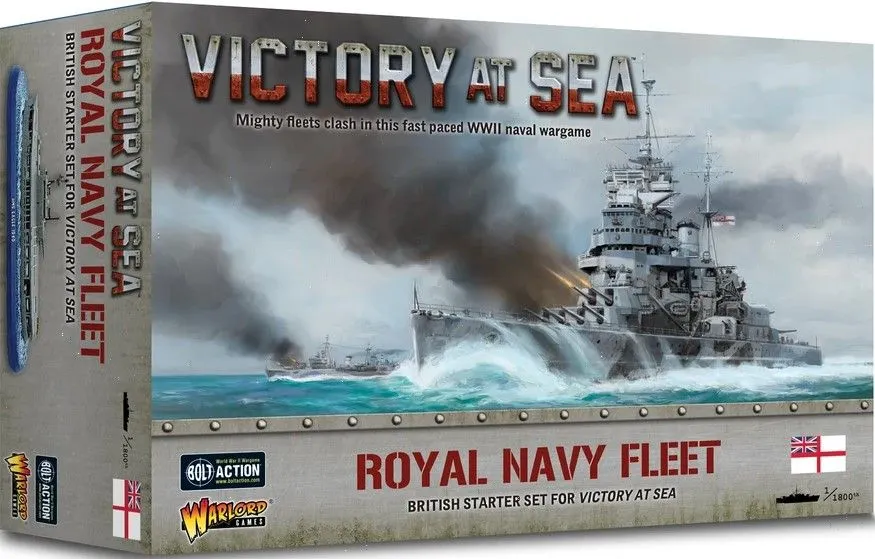
Pomoc w zasadach gry Victory at Sea: Royal Navy fleet
Zrozumiałe wyjaśnienia tur, efektów kart i spornych sytuacji z odnośnikami do oficjalnych źródeł i zapisaną historią pytań.
Co chcesz wiedzieć?
Odpowiedzi pochodzą z oficjalnej instrukcji, ze stroną do sprawdzenia.
Victory at Sea: Royal Navy fleet to dodatek do gry Victory at Sea: Battle for the Pacific wydany w 2020 roku dla 2 graczy i dla osób od 10 lat. Główne mechaniki: Dice Rolling, Simulation i Measurement Movement.


Po angielsku
The Royal Navy of Great Britain was the world’s greatest navy at the outbreak of the Second World War. However, Britain went to war with mainly First World War-vintage vessels. Since the Royal Navy already possessed many powerful units, construction of the most modern designs was limited. This meant that at the outbreak of World War Two Britain had far more battleships than most other nations, but they had smaller guns than those built to the most modern ships. Though the main battle force was kept concentrated in home waters, task forces were assigned to many distant areas, but the Royal Navy could not be strong everywhere. Although badly stretched, the Royal Navy lived up to its traditional ‘can do!’ ethos, fighting hard in all theatres. In addition to the battleship forces, the Royal Navy maintained a handful of fast battlecruisers – some of them quite old – and aircraft carriers. These were backed up by a strong cruiser force and light forces including destroyers, motor torpedo boats (MTBs) and motor gunboats (MGBs). As the war went on, aircraft carriers became increasingly important and air defences were steadily improved on all ships. Yet the big guns of the battleships and cruisers played a vital role in many theatres of war. British capital ships saw action in the Arctic and the Atlantic against German commerce raiders, in the Mediterranean against Italian forces, and ventured into the Pacific in an ill-fated attempt to stem the Japanese advance. Though the great fleet actions planned for and desired by the architects of the Royal Navy did not materialise during World War Two, the Royal Navy adapted well to the war it was destined to fight and emerged with great honour. Contents: 8 Model Ships ‣ 1 HMS Eagle 1940 ‣ 1 HMS Duke of York 1943 ‣ 1 HMS Neptune 1941 ‣ 1 HMS Belfast 1942 ‣ 1 HMS Dido 1940 ‣ 3 Tribal-class Destroyers 4 Fairey Swordfish Flights Ship Cards Damage Sliders —description from the publisher
Według katalogu Victory at Sea: Royal Navy fleet obsługuje 2 graczy. To liczba graczy podana przez wydawcę, więc gra jest zaprojektowana dokładnie dla takiej liczby uczestników. Warianty dla grup innej wielkości, jeśli w ogóle istnieją, opisano w instrukcji twojego wydania; sprawdź ją uważnie, zanim przygotujesz inną konfigurację stołu.
Katalog podaje dla Victory at Sea: Royal Navy fleet wiek od 10 lat. To zalecenie wydawcy, które uwzględnia wymagania dotyczące czytania, złożoność zasad i drobne elementy, a nie tylko tematykę. Młodsi gracze często mogą dołączyć z pomocą dorosłego; sprawdź zalecenie wiekowe swojego wydania i weź pod uwagę doświadczenie grupy z grami planszowymi.
Victory at Sea: Royal Navy fleet należy do tych kategorii: Wargame, Miniatures i Nautical. Główne mechaniki to Dice Rolling, Simulation i Measurement Movement. Kategorie opisują temat i świat gry, a mechaniki to, co gracze faktycznie robią w swojej turze. Każda mechanika prowadzi do strony katalogu z podobnymi grami, co pomaga znaleźć coś porównywalnego na kolejny wieczór.
W katalogu Victory at Sea: Royal Navy fleet figuruje jako dodatek do Victory at Sea: Battle for the Pacific. Dodatki dokładają nową zawartość, zasady lub scenariusze do gry podstawowej i zwykle nie nadają się do samodzielnej gry, więc do korzystania z niego potrzebujesz gry Victory at Sea: Battle for the Pacific. Sprawdź, czy twoje wydanie gry Victory at Sea: Battle for the Pacific jest zgodne, bo niektóre dodatki zmieniano między wydaniami.