

- Pozycja w BGG
- BGG #11 796
- Ocena BGG
- 8,4
SEEKRIEG 5
- 2–10 graczy
- 120 min
- Złożoność 4,1/5
- 2004
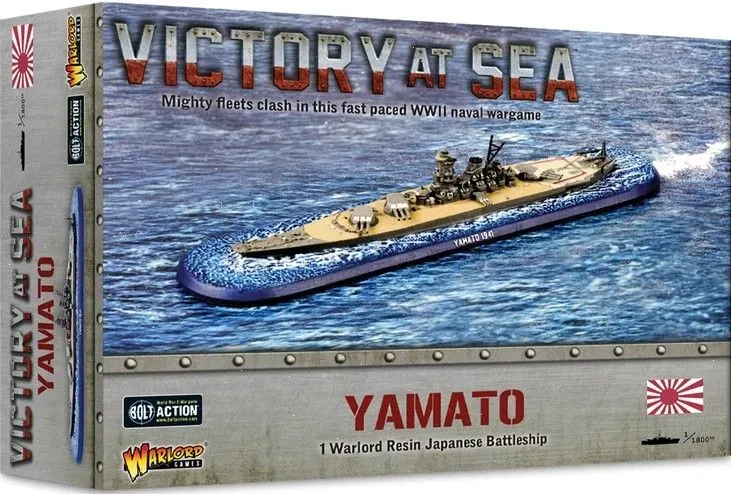
Pomoc w zasadach gry Victory at Sea: Yamato
Zrozumiałe wyjaśnienia tur, efektów kart i spornych sytuacji z odnośnikami do oficjalnych źródeł i zapisaną historią pytań.
Co chcesz wiedzieć?
Odpowiedzi pochodzą z oficjalnej instrukcji, ze stroną do sprawdzenia.
Victory at Sea: Yamato to dodatek do gry Victory at Sea: Battle for the Pacific wydany w 2020 roku dla 2 graczy i dla osób od 10 lat. Główne mechaniki: Dice Rolling, Simulation i Measurement Movement.


Po angielsku
Yamato (大和, "Great Harmony") and her sister ship, Musashi, were constructed shortly before the outbreak of World War II. They were the heaviest and most powerfully armed battleships ever constructed; armed with nine 18.1” Type 94 main guns – the largest guns ever mounted on a warship. The battleship’s design was an answer to the numerically dominant US Navy – Imperial Japan’s primary threat in the Pacific. Though laid down in 1937 the battleship was not actually commissioned until late 1941, a week after fated attack on Pearl Harbour. She served as the flagship of the Combined Fleet. It was from her bridge that Admiral Isoroku Yamamoto directed the fleet at Midway in June 1942, though this proved a disastrous defeat for the Japanese. She was thereafter replaced by the Musashi as flagship and spent the larger part of 1943 and 44 moving between ports in a responsive role. October 1944 was the only occasion on which Yamato fired her main guns in anger, at the Battle of Leyte Gulf. Yamato had been tasked with repelling American forces invading the Phillipines. Though success lay within Japanese grasp, such was the ferocity of a counterattack of a light escort carrier group of the U.S. Navy’s Task Force 77 that the Japanese enacted a retreat, falsely believing they faced a much larger carrier force. By early in 1945, Naval superiority in the Pacific belonged firmly to the US Navy. In an effort to delay the Allies’ advance, Yamato was dispatched to Okinawa in April 1945, with no expectation to ever return. Her orders were to beach herself and fight until destroyed. This was not allowed to occur when, on 7 April 1945 when she was sunk by US carrier-based bombers and torpedo bombers, with the loss of the majority of her complement. Contents: 1 Model Ship ‣ Yamato 1 Ship Card Damage Sliders —description from the publisher
Według katalogu Victory at Sea: Yamato obsługuje 2 graczy. To liczba graczy podana przez wydawcę, więc gra jest zaprojektowana dokładnie dla takiej liczby uczestników. Warianty dla grup innej wielkości, jeśli w ogóle istnieją, opisano w instrukcji twojego wydania; sprawdź ją uważnie, zanim przygotujesz inną konfigurację stołu.
Katalog podaje dla Victory at Sea: Yamato wiek od 10 lat. To zalecenie wydawcy, które uwzględnia wymagania dotyczące czytania, złożoność zasad i drobne elementy, a nie tylko tematykę. Młodsi gracze często mogą dołączyć z pomocą dorosłego; sprawdź zalecenie wiekowe swojego wydania i weź pod uwagę doświadczenie grupy z grami planszowymi.
Victory at Sea: Yamato należy do tych kategorii: Wargame, Miniatures i Nautical. Główne mechaniki to Dice Rolling, Simulation i Measurement Movement. Kategorie opisują temat i świat gry, a mechaniki to, co gracze faktycznie robią w swojej turze. Każda mechanika prowadzi do strony katalogu z podobnymi grami, co pomaga znaleźć coś porównywalnego na kolejny wieczór.
W katalogu Victory at Sea: Yamato figuruje jako dodatek do Victory at Sea: Battle for the Pacific. Dodatki dokładają nową zawartość, zasady lub scenariusze do gry podstawowej i zwykle nie nadają się do samodzielnej gry, więc do korzystania z niego potrzebujesz gry Victory at Sea: Battle for the Pacific. Sprawdź, czy twoje wydanie gry Victory at Sea: Battle for the Pacific jest zgodne, bo niektóre dodatki zmieniano między wydaniami.