

- Место в рейтинге BGG
- BGG #3 750
- Оценка BGG
- 6,8
City of Remnants
- 2–4 игрока
- 90 мин
- Сложность 3,1/5
- 2013
2011
Помощник по правилам Aquileia
Понятные объяснения ходов, эффектов карт и спорных ситуаций со ссылками на официальные источники и сохранённой историей вопросов.
Для 3 игроков
Что хотите уточнить?
Отвечаю по официальным правилам и показываю страницу для проверки.
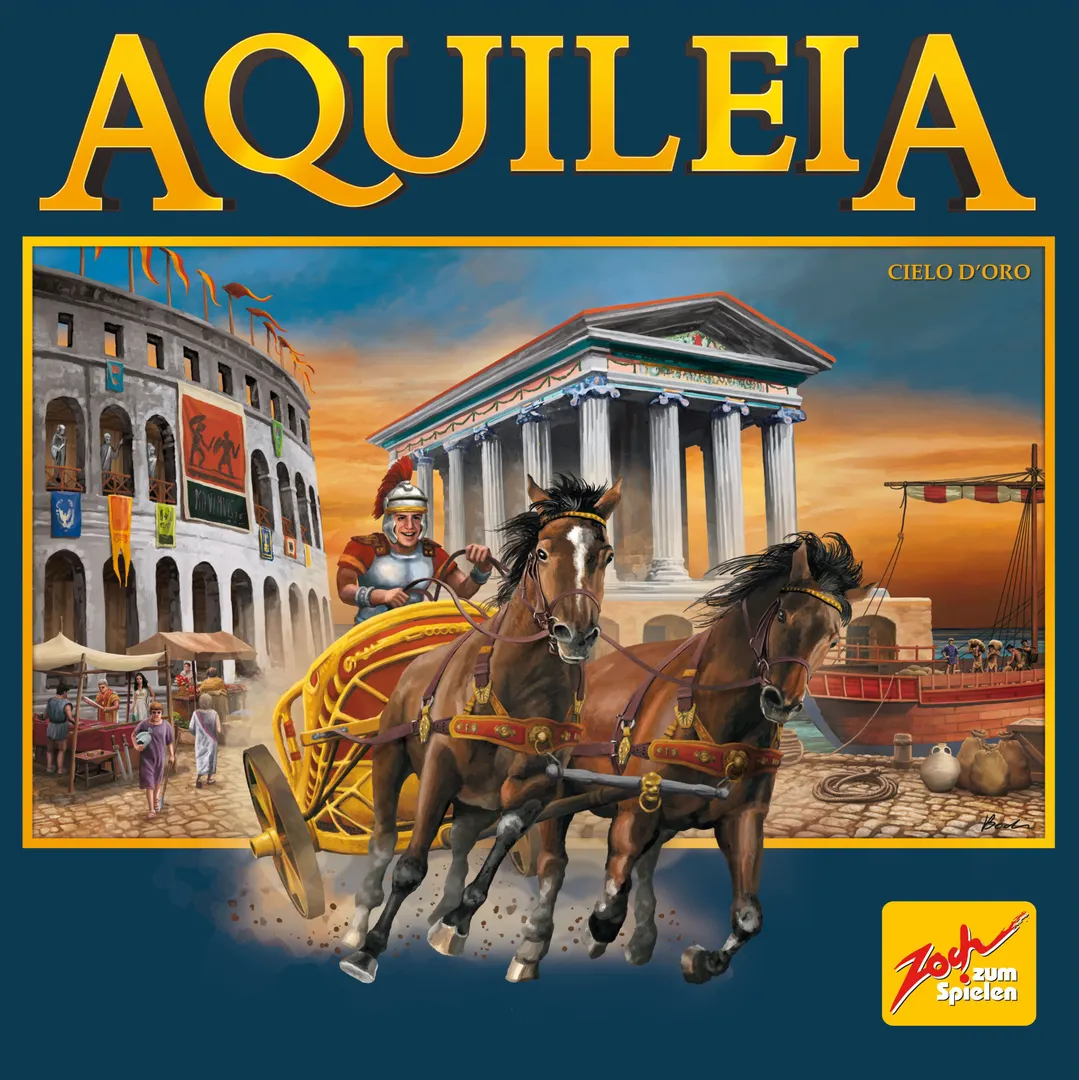
«Aquileia» — настольная игра 2011 года: для 3–5 игроков, 90 минут на партию и возраст от 12 лет. Авторы игры — Cielo d'Oro; основные механики — Hand Management, Auction / Bidding и Dice Rolling.






На английском
Aquileia, the second most important city of the Roman Empire, had been originally founded as an outpost against the Barbarian invaders. From its military origin comes the peculiar quadrilateral structure divided by the main streets. Later, the city developed to become an important political and cultural center and a prosperous trading city, especially for precious goods, thanks to its convenient and efficient river port. Important monuments such as the Gladiator Arena, the horse-racing Stadium, and the famous theater were built, as well as craftsmen's workshops, patrician villas which completed the architectural network of the city. In Aquileia, players want to become the most powerful figure in the city by trading and building. Each player, representing a wealthy Aquileian patrician, owns a certain number of henchmen (pawns) which he uses for these main activities: sports playing, culture, trading, and building. Each activity can bring expenses, earnings and sometimes victory points (VPs). Each round begins with a placement phase in which players take turns placing their henchmen on action spaces and their tiebreaker disc on the tiebreaker track. Placing the tiebreaker is mandatory; placing henchmen is not (but you probably want to place them). Once everyone has passed or placed all of their tokens, players resolve the action spaces in numerical order: The Mercatus allows players to buy weapons, arms and slave cards, collect money through a die roll, claim four blue dice for use with the Arena and Stadium, and trade one currency for another. (This is the only way to make change, and some actions require specific currencies; if you must pay bronze and have only silver and gold, then you cannot take that action!) At the Arena, players compare fighting strength, with that number determined by the starting strength on the action space claimed, the roll of three dice and the playing of slave and weapon cards. The winner gets three bronze coins and either double his strength in VPs or a slave card. The second and third best players receive lesser rewards. The Stadium is similar to the Arena, with the horse cards coming into play and the winner receiving gold or silver coins and his choice of two laurel cards; laurel cards deliver 3-10 VPs or are a multiplier for endgame scoring. The Theatrum brings a bid for a dual-colored laurel card, with players needing to ante and raise in particular currencies. In the Forum, players build villas and private banks, sometimes scoring points for doing so when they pay the specific costs with the proper coins. Finally, the Portus gives players a chance to activate their buildings, thereby earning them VPs or money. After six rounds, the game ends and players score VPs for their hidden point cards and the product of their villas' values times laurel cards of a matching color. (For example, a total of 8 points of blue villas and three blue villa cards equals 24 points.) The player with the most victory points wins.
По данным каталога, «Aquileia» рассчитана на 3–5 игроков. Этот диапазон соответствует числу игроков, указанному издателем, поэтому игру можно подготовить для любого состава в его пределах. Подготовка, отдельные правила и подсчёт очков всё же могут зависеть от числа игроков; точную конфигурацию проверьте в правилах своего издания.
В каталоге для «Aquileia» указано время партии 90 минут — это оценка издателя для полной партии. Фактическая длительность зависит от состава, числа игроков и знакомства с правилами: первые партии обычно идут дольше, опытные компании заканчивают быстрее. Подготовка и объяснение правил в эту оценку не входят.
В каталоге для «Aquileia» указан возраст от 12 лет. Это рекомендация издателя: она учитывает необходимость чтения, сложность правил и мелкие компоненты, а не только тему. Младшие игроки часто могут участвовать с помощью взрослого; проверьте возрастную рекомендацию на своём издании и учтите опыт вашей компании в настольных играх.
Сложность «Aquileia» — 2,9 из 5 по оценкам игроков BoardGameGeek, это игра ниже средней сложности. Оценка отражает, сколько знания правил, планирования и решений требует типичная партия. Сложные игры дольше объяснять в первый раз, поэтому перед игровым вечером пригодится руководство по подготовке.
Категории игры «Aquileia»: Economic, Dice и Ancient. Основные механики: Hand Management, Auction / Bidding и Dice Rolling. Категории описывают тему и сеттинг игры, а механики — то, что игроки на самом деле делают в свой ход. Каждая механика ведёт в раздел каталога с похожими играми, и так проще найти что-то подобное для следующей партии.
В каталоге авторами «Aquileia» указаны: Cielo d'Oro. Эти данные взяты из опубликованной информации об игре и называют людей, ответственных за её дизайн, а не иллюстраторов или издателей. Страницы авторов на MeepleRules собирают другие игры тех же авторов — это удобно, когда игра понравилась и хочется найти похожие.
В каталоге «Aquileia» отмечена как самостоятельная игра. В неё можно играть отдельно, используя компоненты из коробки, и никакая другая игра для этого не нужна. Дополнения, если они существуют, добавляют новый контент или правила и указаны в каталоге отдельно со ссылкой на эту базовую игру.