
- Место в рейтинге BGG
- BGG #14 917
- Оценка BGG
- 7,1
Taĉmento
- 1–2 игрока
- 5–10 мин
- Сложность 1,5/5
- 2023
2025
Помощник по правилам Iwo Jima: Hell On Earth
Понятные объяснения ходов, эффектов карт и спорных ситуаций со ссылками на официальные источники и сохранённой историей вопросов.
Для 1 игрока
Что хотите уточнить?
Отвечаю по официальным правилам и показываю страницу для проверки.
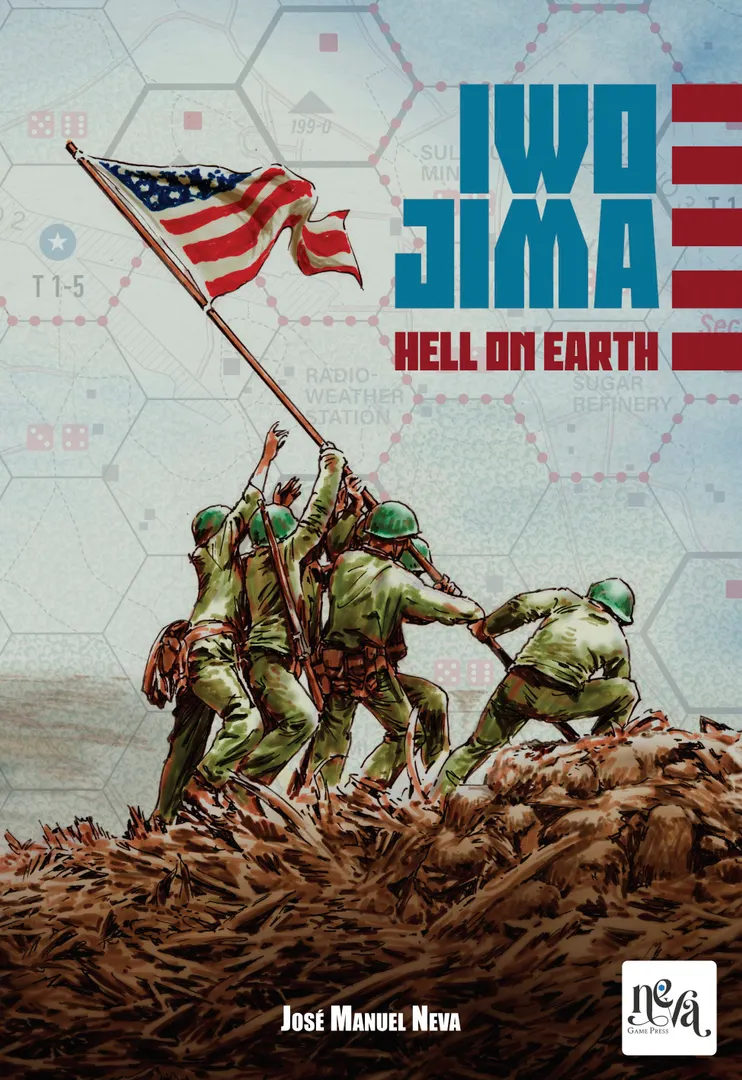
«Iwo Jima: Hell On Earth» — настольная игра 2025 года: для 1 игрока, 90–120 минут на партию и возраст от 14 лет. Авторы игры — José Manuel Neva; основные механики — Dice Rolling, Variable Set-up и Hexagon Grid.


На английском
THE HISTORICAL CONTEXT The Battle of Iwo Jima, a pivotal momentin the Pacific Theater of World War II, stands as a testament to the indomitable spirit of the human will and the immense cost of victory. This brutal conflict, fought between the United States Marine Corps and the Imperial Japanese Army, unfolded on the small volcanic island of Iwo Jima, a mere 660 miles south of Tokyo. From February 19 to March 26, 1945, American forces waged a relentless assault against a well-fortified enemy, determined to seize control of the island’s strategic airfields. Iwo Jima was crucial to the Allied war effort, serving as a vital base for fighter planes escorting long-range bombers on missions to the Japanese mainland. The battle was marked by fierce resistance from the Japanese defenders, who had meticulously constructed a network of underground tunnels and fortifications.The Marines faced relentless attacks, as they fought their way across the island’s rugged terrain. The iconic image of Marines raising the American flag atop Mount Suribachi became a symbol of American determination and sacrifice. The Battle of Iwo Jima was one of the bloodiest battles in Marine Corps history, with thousands of American and Japanese soldiers losing their lives. The island’s volcanic ash and the intense fighting conditions made it a grueling ordeal for both sides. Despite the heavy casualties, the Marines ultimately achieved their objective, securing Iwo Jima and bringing the United States one step closer to victory in the Pacific War. GAMEPLAY AT A GLANCE In “Iwo Jima: Hell on Earth,” your mission as the commander of US forces is to conquer the island of Iwo Jima to secure its three airfields and the iconic Mount Suribachi. The game simulates the 36-day battle in nine turns, with each turn representing approximately four days. Objective and how to win: Victory is determined at the end of Turn 9 by calculating your Victory Points (VPs). You earn VPs by: Eliminating Japanese units, Capturing key objectives on time, Japanese surrender. You can lose VPs if: You play too many Special Orders and/or You suffer too many US casualties. Your final VP score will give you an assessment of your performance, ranging from a “pen-pushing job” (1 or less to 5 VP) to an “incredible victory” (19-20 VP) Sequence of play: The game is played over nine turns, and each turn follows the sequence below: 1. Weather Phase: A die is rolled to determine the weather conditions for the turn, which can affect bombardment points and unit movement. Turn 1 always has “Good Weather”. 2. Bombardment Phase: Both US and Japanese forces bombard enemy units. First, each side’s bombardment points (BP) are determined, which can be modified by weather or airfield control. Then bombardments are resolved, US first, then Japanese, by selecting targets and rolling dice to determine hits. 3. First Movement Phase: US units can attempt to recover from retreat markers (rally) and then move across the map, choosing between normal or strategic movement. 4. First Attack Phase: US units that have not performed a previous action can conduct a Reconnaissance-in-Force (Recon) or an Assault against adjacent Japanese units. They can also provide Combat Support to an assault. During assaults, hidden Japanese units will reveal their response, which may include a Banzai Attack or a Redeployment. The combat ratio is calculated, and results are applied. 5. Raid Phase (Japanese): Japanese forces react with limited attacks, carrying out raids against nearby US units. 6. Second Movement Phase: This phase is a repeat of the First Movement Phase for US units. 7. Second Attack Phase: Similar to the First Attack Phase, US units can perform Reconnaissance or Assaults. At the end of this phase, all situation markers are removed. 8. Command Phase (Skipped on Turn 9): US units attempt to rally again with a +1 modifier. Command Points (CPs) are gained by rolling a die, which can be spent on reinforcements, unit deployment, or to obtain special command markers. The Japanese side also resolves a limited command step, where their single-step units can attempt to gain a step or perform a Banzai attack. 9. Organization Phase: The turn marker is advanced. US units on the turn track can move to the Reserve Area or recover steps. Reaction markers are put into the red bag, and Command markers can be drawn if the turn space is highlighted. At the end of Turn 9, the player’s performance is assessed based on criteria such as Japanese units eliminated, capture of key objectives, special order markers played, and US casualties. Key decision/challenges: US units have a dual role, acting as both direct assault regiments and providing various combat support types (Flamethrowers, Tank, Artillery). This requires careful planning to combine their direct combat strength with support for optimal attacks. Assaults against hidden Japanese units are resolved using a chit-pull system: Intelligence markers are drawn to determine Japanese defense, support, and unpredictable “Banzai” attacks or “Redeployments” via tunnels. This random element ensures high replayability, making each game fresh. The game is designed to be very difficult to achieve a significant victory, reflecting the brutal historical battle. WHAT’S IN THE BOX? 1 Mounted Map 120 Counters 2 6-sided dice 4 Player Aid Sheets 2 Cloth bags 1 Rulebook —description from the publisher
По данным каталога, «Iwo Jima: Hell On Earth» рассчитана на 1 игрока. Это число игроков, указанное издателем, то есть игра задумана ровно для такого количества участников. Варианты для другого состава, если они есть, описаны в правилах вашего издания; проверьте их, прежде чем готовить другую конфигурацию.
В каталоге для «Iwo Jima: Hell On Earth» указано время партии 90–120 минут — это оценка издателя для полной партии. Фактическая длительность зависит от состава, числа игроков и знакомства с правилами: первые партии обычно идут дольше, опытные компании заканчивают быстрее. Подготовка и объяснение правил в эту оценку не входят.
В каталоге для «Iwo Jima: Hell On Earth» указан возраст от 14 лет. Это рекомендация издателя: она учитывает необходимость чтения, сложность правил и мелкие компоненты, а не только тему. Младшие игроки часто могут участвовать с помощью взрослого; проверьте возрастную рекомендацию на своём издании и учтите опыт вашей компании в настольных играх.
Сложность «Iwo Jima: Hell On Earth» — 2,3 из 5 по оценкам игроков BoardGameGeek, это игра ниже средней сложности. Оценка отражает, сколько знания правил, планирования и решений требует типичная партия. Сложные игры дольше объяснять в первый раз, поэтому перед игровым вечером пригодится руководство по подготовке.
Категории игры «Iwo Jima: Hell On Earth»: Wargame и World War II. Основные механики: Dice Rolling, Variable Set-up и Hexagon Grid. Категории описывают тему и сеттинг игры, а механики — то, что игроки на самом деле делают в свой ход. Каждая механика ведёт в раздел каталога с похожими играми, и так проще найти что-то подобное для следующей партии.
В каталоге авторами «Iwo Jima: Hell On Earth» указаны: José Manuel Neva. Эти данные взяты из опубликованной информации об игре и называют людей, ответственных за её дизайн, а не иллюстраторов или издателей. Страницы авторов на MeepleRules собирают другие игры тех же авторов — это удобно, когда игра понравилась и хочется найти похожие.
В каталоге «Iwo Jima: Hell On Earth» отмечена как самостоятельная игра. В неё можно играть отдельно, используя компоненты из коробки, и никакая другая игра для этого не нужна. Дополнения, если они существуют, добавляют новый контент или правила и указаны в каталоге отдельно со ссылкой на эту базовую игру.