- Оценка BGG
- 9,0
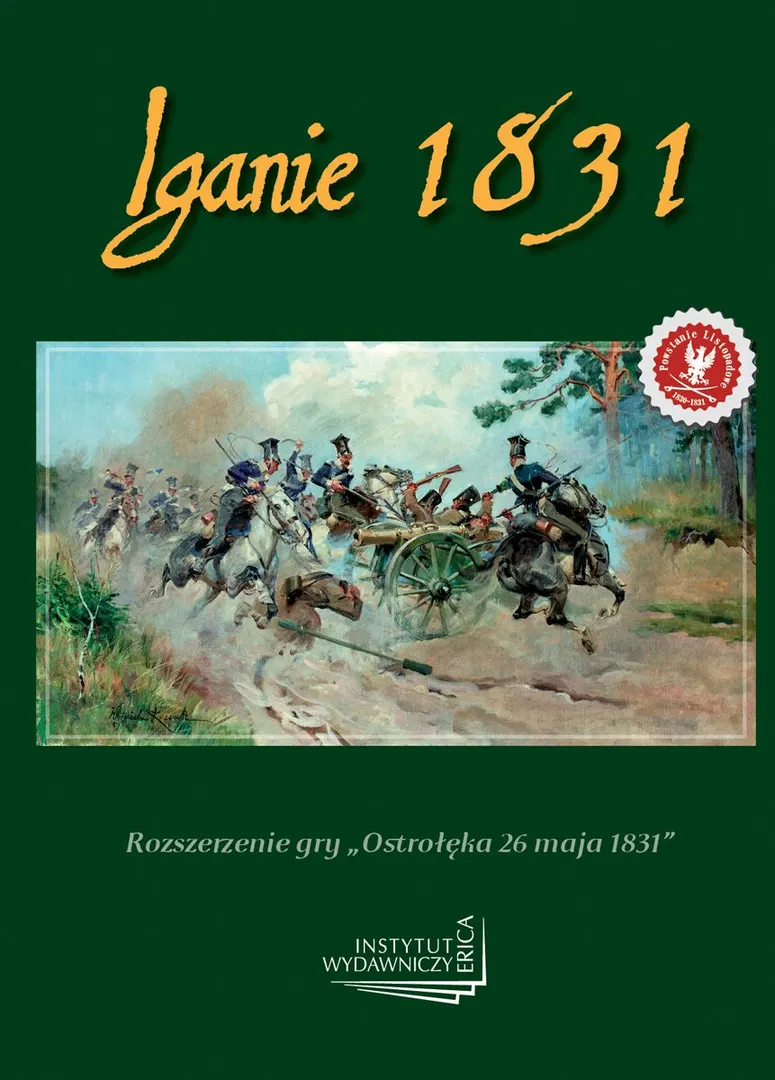
Iganie 1831
- 2 игрока
- 150–240 мин
- Сложность 3,4/5
- 2018
2015
Помощник по правилам Ostroleka 26 maja 1831
Понятные объяснения ходов, эффектов карт и спорных ситуаций со ссылками на официальные источники и сохранённой историей вопросов.
Что хотите уточнить?
Отвечаю по официальным правилам и показываю страницу для проверки.
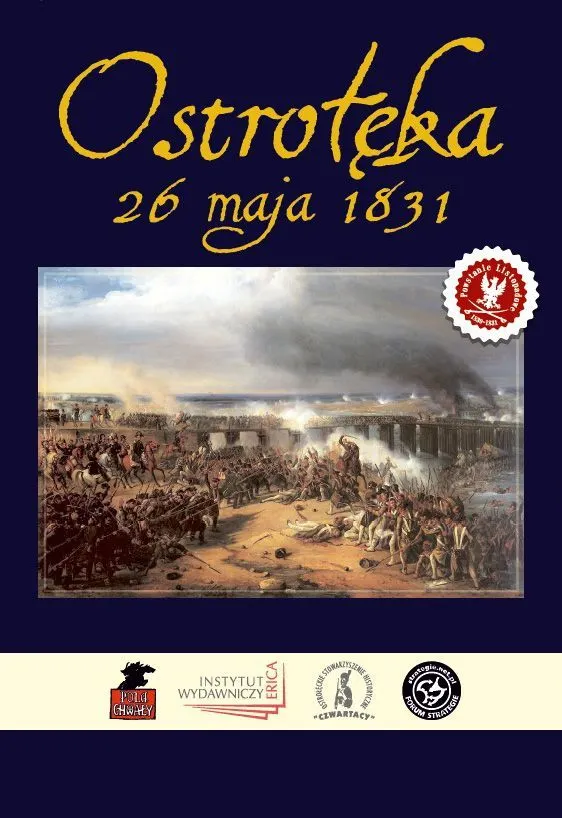
«Ostroleka 26 maja 1831» — настольная игра 2015 года: для 2–4 игроков, 180–600 минут на партию и возраст от 16 лет. Авторы игры — Ryszard Kita; основные механики — Dice Rolling, Hexagon Grid и Variable Phase Order.






На английском
Ostrołęka 26 maja 1831 covers the battle of Ostrołęka, one of the largest engagements of Poland’s November Uprising. It was fought between Polish army commanded by general Jan Skrzynecki and Russian army commanded by field marshal Ivan Diebitsch. The battle was the final part of the operation of Polish army against Russian Imperial Guard. The meeting near Ostrołęka was a bit suprising for both sides, especially for Poles who didn’t expect such quick appearance of Russian forces near their positions. Polish army was divided into two parts. The first part was situated on the eastern bank of the river Narew. The second, larger part was put on the western bank of the river. In Ostrołęka there were two bridges connecting both banks of the river (one of them was pontoon bridge). The first part of the battle was fought on the eastern bank of Narew. Polish forces tried to slow down an assault of Russians and withdraw to the western bank. Unfortunately, in consequence of earlier orders, one of Polish infantry brigades commanded by general Bogusławski was stayed to defend town Ostrołęka (situated on the eastern bank of the river), and there attacked by overwhelming Russians and partially routed, partially destroyed. Russians took control over Ostrołęka at noon. Then some Russian grenadier battalions decided to cross the river through the bridges to create a bridgehead for further operations. So started the second part of the battle. Polish main army began attacks to destroy Russian bridgehead and both brigdes to prevent main body of Russian army to cross the river. There were few attacks. At first they were not properly coordinated. Russian small forces on the bridgehead was supported by powerful artillery situated on the eastern bank of the river which was higher than western bank and allowed crossing fire (Russians formed two great batteries, one to the north and one to the south of Ostrołęka, and were shooting over own units on the western bank). In the later afternoon Polish attacks became more coordinated. Russians tried to gain more terrain, but it moved them out of the range of their supporting artillery and encouraged Polish army to make last, most powerful attack, which was stopped near to the river. The battle ended a famous charge of Polish horse artillery battery commanded by lt. col. J. Bem, which caused great chaos in the Russian forces and discouraged Russians to make general cavalry attack on Polish army in the end of the battle as they were used to do in the Napoleonic Wars. When battle ended, both sides had similar casualties (about 6 000 killed, wounded etc.). The battle is considered Polish army defeat because it left the battlefield and during the night and the next day started retreat, not chased by Russians who first weren’t sure they had won. The main effect of the battle for Poles was the fall of morale of soldiers and the upper command, which allowed Russians to take initiative in the later part of Polish-Russian War. Ostrołęka 26 maja 1831 contains three scenarios, with one made to introduce players to the system and two historical ones, showing both parts of the battlle. The game is quite complex, tending to show full spectrum of tactic of the Napoleonic and Post-Napoleonic period, but in reasonably easy way. Basic game mechanic is similar to Igo/Ugo movement, but with two phases of movement: for cavalry and infantry, and two combat phases: for cavalry and infantry. Horse artillery is generally attached to cavalry and foot artillery is attached to infantry. Additional rules offer another movement systems but rather designed for further battles based on this rules, not for that one. Rules offer many possible reaction activities for non-active player during opposite player phase. Another rules feature is an unique combat calculation system based on traditional odds ratio but originally modified. The rules focuse on simulating cooperation of three kinds of weapon (infantry, cavalry and artillery) on the battlefield and showing different formations (column, line, square, skirmish, buildings defense). The playing time varies depending on the scenario, from 2-3 hours to whole day. It also depends on the players – the longest scenario can be finished very quickly by autowin. Components: - One mapsheet 96 x 68 cm - Nine sheets of die-cut counters (978 counters totally, most of them are markers) - One sheet of additional counters - One rulebook and scenariobook (both in one book) - Three dices (D6) - Six sheets with tables and player aids - One sheet with units tables (alternative way of marking units loses)
По данным каталога, «Ostroleka 26 maja 1831» рассчитана на 2–4 игроков. Этот диапазон соответствует числу игроков, указанному издателем, поэтому игру можно подготовить для любого состава в его пределах. Подготовка, отдельные правила и подсчёт очков всё же могут зависеть от числа игроков; точную конфигурацию проверьте в правилах своего издания.
В каталоге для «Ostroleka 26 maja 1831» указано время партии 180–600 минут — это оценка издателя для полной партии. Фактическая длительность зависит от состава, числа игроков и знакомства с правилами: первые партии обычно идут дольше, опытные компании заканчивают быстрее. Подготовка и объяснение правил в эту оценку не входят.
В каталоге для «Ostroleka 26 maja 1831» указан возраст от 16 лет. Это рекомендация издателя: она учитывает необходимость чтения, сложность правил и мелкие компоненты, а не только тему. Младшие игроки часто могут участвовать с помощью взрослого; проверьте возрастную рекомендацию на своём издании и учтите опыт вашей компании в настольных играх.
Сложность «Ostroleka 26 maja 1831» — 3,9 из 5 по оценкам игроков BoardGameGeek, это сложная игра. Оценка отражает, сколько знания правил, планирования и решений требует типичная партия. Сложные игры дольше объяснять в первый раз, поэтому перед игровым вечером пригодится руководство по подготовке.
Категории игры «Ostroleka 26 maja 1831»: Wargame и Post-Napoleonic. Основные механики: Dice Rolling, Hexagon Grid и Variable Phase Order. Категории описывают тему и сеттинг игры, а механики — то, что игроки на самом деле делают в свой ход. Каждая механика ведёт в раздел каталога с похожими играми, и так проще найти что-то подобное для следующей партии.
В каталоге авторами «Ostroleka 26 maja 1831» указаны: Ryszard Kita. Эти данные взяты из опубликованной информации об игре и называют людей, ответственных за её дизайн, а не иллюстраторов или издателей. Страницы авторов на MeepleRules собирают другие игры тех же авторов — это удобно, когда игра понравилась и хочется найти похожие.
В каталоге «Ostroleka 26 maja 1831» отмечена как самостоятельная игра. В неё можно играть отдельно, используя компоненты из коробки, и никакая другая игра для этого не нужна. Дополнения, если они существуют, добавляют новый контент или правила и указаны в каталоге отдельно со ссылкой на эту базовую игру.