
- Место в рейтинге BGG
- BGG #27 487
- Оценка BGG
- 5,5
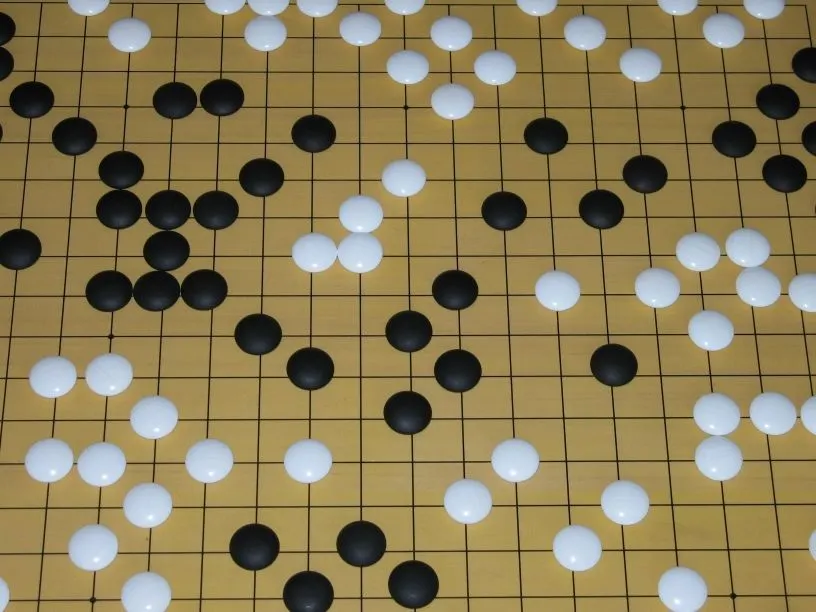
Oust
- 2 игрока
- 20–60 мин
- Сложность 2,8/5
- 2007
1993
Помощник по правилам Tanbo
Понятные объяснения ходов, эффектов карт и спорных ситуаций со ссылками на официальные источники и сохранённой историей вопросов.
Для 2 игроков
Что хотите уточнить?
Отвечаю по официальным правилам и показываю страницу для проверки.
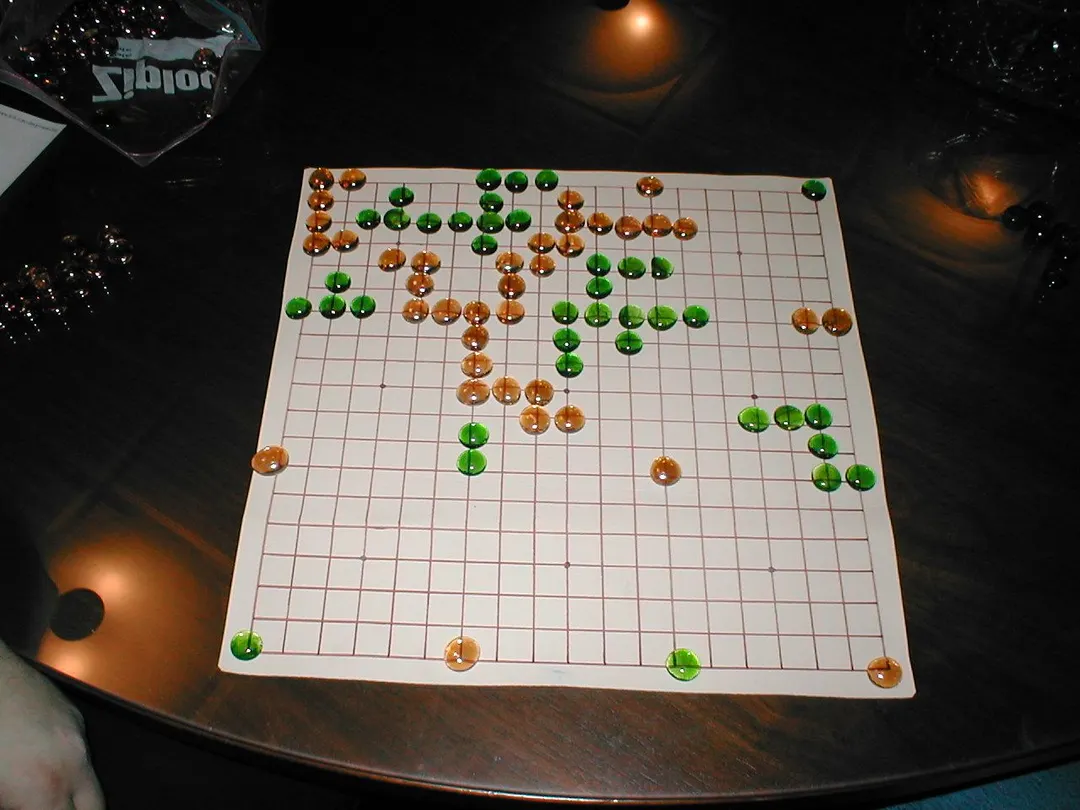
«Tanbo» — настольная игра 1993 года: для 2–4 игроков, 30–90 минут на партию и возраст от 5 лет. Авторы игры — Mark Steere; основные механики — Tile Placement, Square Grid и Enclosure.
На английском
Tanbo (Japanese for "rice paddy") is played on a grid of size 7x7, 11x11, 15x15... Or 5x7, 7x9, 9x11, 11x13... The board is initially populated with black and white stones, thoroughly interspersed, with one empty point (intersection) between stones. The two players, Black and White, take turns placing stones of their own color onto unoccupied points on the board, one stone per turn, starting with Black. You must place your stone orthogonally (horizontally or vertically) adjacent to exactly one of your on-board stones. [All relevant adjacencies here are orthogonal.] Roots and captures A "root" is root-like, monocolored group, which could be a single stone. The game begins with a fixed number of roots. Roots cannot merge together, and new roots cannot be created. The "current root" is the root which you enlarged during your current turn. A root is “bounded” if it’s so tightly surrounded that it doesn’t have room to grow. There are no legal placements available that would enlarge the root. [More technically, there is no unoccupied point which is adjacent to exactly one stone in a bounded root and which is not adjacent to any other stones of the bounded root's color.] If your placement has bounded your current root, you must immediately remove your current root from the board, concluding your turn. If your placement has not bounded your current root, but has bounded other roots, of either or both colors, you must immediately remove all of the roots that were so bounded, concluding your turn. Object of the game The goal is to annihilate your opponent. When all of the roots of one color have been removed, the player of the other color wins. You can win on either player's turn. Design notes Tanbo was the second game I ever designed, back in 1993. It originally had a much sparser initial position, having only 16 stones on a size 19 board. Now in 2026, I'm re-releasing Tanbo, with a much denser initial position, but otherwise exactly the same rules. This creates more fluid, less stilted gameplay. Tanbo is a classic. It's been bastardized, butchered, and debased. But never equaled.
По данным каталога, «Tanbo» рассчитана на 2–4 игроков. Этот диапазон соответствует числу игроков, указанному издателем, поэтому игру можно подготовить для любого состава в его пределах. Подготовка, отдельные правила и подсчёт очков всё же могут зависеть от числа игроков; точную конфигурацию проверьте в правилах своего издания.
В каталоге для «Tanbo» указано время партии 30–90 минут — это оценка издателя для полной партии. Фактическая длительность зависит от состава, числа игроков и знакомства с правилами: первые партии обычно идут дольше, опытные компании заканчивают быстрее. Подготовка и объяснение правил в эту оценку не входят.
В каталоге для «Tanbo» указан возраст от 5 лет. Это рекомендация издателя: она учитывает необходимость чтения, сложность правил и мелкие компоненты, а не только тему. Младшие игроки часто могут участвовать с помощью взрослого; проверьте возрастную рекомендацию на своём издании и учтите опыт вашей компании в настольных играх.
Сложность «Tanbo» — 2,8 из 5 по оценкам игроков BoardGameGeek, это игра ниже средней сложности. Оценка отражает, сколько знания правил, планирования и решений требует типичная партия. Сложные игры дольше объяснять в первый раз, поэтому перед игровым вечером пригодится руководство по подготовке.
Категории игры «Tanbo»: Abstract Strategy. Основные механики: Tile Placement, Square Grid и Enclosure. Категории описывают тему и сеттинг игры, а механики — то, что игроки на самом деле делают в свой ход. Каждая механика ведёт в раздел каталога с похожими играми, и так проще найти что-то подобное для следующей партии.
В каталоге авторами «Tanbo» указаны: Mark Steere. Эти данные взяты из опубликованной информации об игре и называют людей, ответственных за её дизайн, а не иллюстраторов или издателей. Страницы авторов на MeepleRules собирают другие игры тех же авторов — это удобно, когда игра понравилась и хочется найти похожие.
В каталоге «Tanbo» отмечена как самостоятельная игра. В неё можно играть отдельно, используя компоненты из коробки, и никакая другая игра для этого не нужна. Дополнения, если они существуют, добавляют новый контент или правила и указаны в каталоге отдельно со ссылкой на эту базовую игру.