
- Місце в рейтингу BGG
- BGG #8 692
- Оцінка BGG
- 6,9
Stalingrad Pocket: The Wehrmacht's Greatest Disaster
- 1–2 гравці
- 180–900 хв
- Складність 2,6/5
- 1992
2008
Допомога з правилами Last Stand: The Battle for Moscow 1941-42
Зрозумілі пояснення ходів, ефектів карт і спірних ситуацій із посиланнями на офіційні джерела та збереженою історією запитань.
Що ви хочете дізнатися?
Відповіді ґрунтуються на офіційній книзі правил із зазначенням сторінки для перевірки.
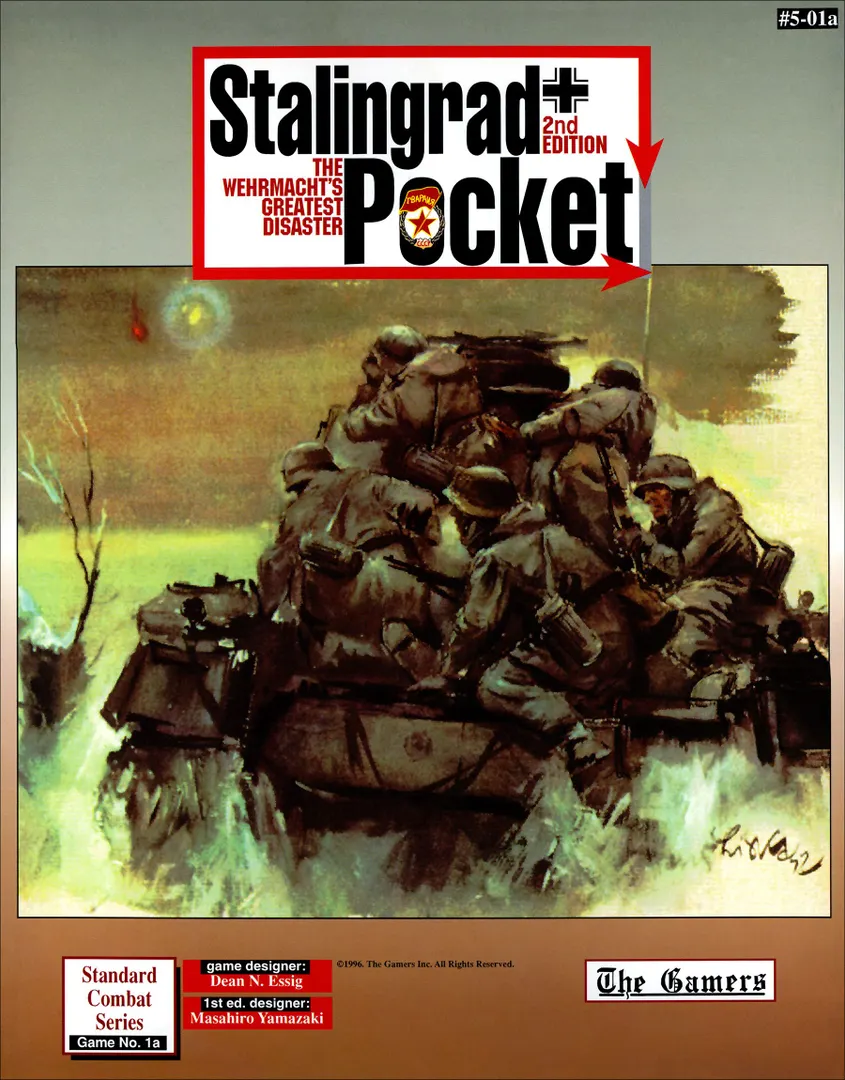
«Last Stand: The Battle for Moscow 1941-42» — настільна гра, видана у 2008 році: для 1–2 гравців, 180–600 хвилин на партію і вік від 18 років. Автори гри — Masahiro Yamazaki; основні механіки — Dice Rolling, Grid Movement і Hexagon Grid.





Англійською
The Last Stand at Moscow simulates German winter offensive to capture Moscow. One map 59,4×84,1cm (23x33 inches) 17.2 km/hex [10.69 miles/hex] 386 counters Unit scale II, X, XX, XXX, KG 10 days/Turn; Oct 1941 to Jan 1942 In October 1941, the German Army launched Operation Typhoon - the last major German offensive of the year. In an all-out attempt to defeat Russia and end World War Two, the Germans managed to see the spires of the Kremlin as their high water mark for both this battle and for the war. Over two million men fought in this desperate battle that would decide the war and the future of mankind. Masahiro Yamazaki, the designer of the MMP games Red Star Rising and Stalingrad Pocket has designed his greatest game on this great conflict- Last Stand; The Battle for Moscow 1941-1942. Using all the tricks in his designer’s bag, Mas has made this titanic struggle playable but without sacrificing a great sense of history. Offering 3 scenarios to show different aspects of the campaign, and a unique way of showing the plight of the Soviet morale as a nation faces possible complete military defeat, all in a manageable size, Last Stand is a game that has no competitor. As seen in Mas’ other games, Last Stand features an interesting sequence of play: A.) German Player Turn ) Supply Phase a.) Weather b.) Reinforcement/Supply Placement c.) Receive Air Points d.) Combat Unit Supply Check e.) Isolated Attrition Check f.) Supply Unit Removal (Snow Turns) g.) Soviet Morale Chit Pull (if applicable) ) Movement Phase a.) Unit Movement/Overrun b.) Supply Unit Consumption ) Combat Phase a.) Resolve Combat b.) Remove Supply Units in Expend Mode ) Soviet Reaction Phase (The Soviet Player is allowed to move and overrun with eligible Mechanized units) ) Exploitation Movement (all German units may move again with one half of their movement allowance) B.) Soviet Player Turn ) Supply Phase a.) Reinforcement HQ and Combat Unit Placement b.) Receive Air Points c.) Combat Unit Supply Check d.) Isolated Attrition Check e.) Red Army Morale Check ) Katyusha Gun Phase a.) Katyusha movement b.) Katyusha Fire ) Movement Phase ) German Reaction Phase (Like the Soviets in his reaction phase, but with different parameters, the German player may conduct reaction move with his eligible Mechanized units). ) Combat Phase a.) Ski Unit placement b.) Resolve Attacks ) Exploitation Movement (identical to the German Phase) In addition, the game features unknown unit strengths for the Soviet Units, variable and shifting victory conditions, Soviet Army morale breakdown, German variable supply consumption, and of course, substantial weather effects as General Winter arrives as a reinforcement for the Soviet cause. Perhaps the most unique aspect of Last Stand is the Victory Conditions. As the game begins, neither player knows what they must accomplish to win the game. As the game progresses and the Germans advance towards Moscow, the Germans will find out what it takes to win. Soviet Morale will continue to fall until the Soviets can strike back - and when they do, the damage is healed twofold - but defeat can happen at any moment. Last Stand features three scenarios of different lengths to give players options depending on how much time they have to play. Scenario One - the Soviet Counterblow This scenario covers only the great Soviet Counterattack that pushed the Germans to the brink of defeat in the late Winter 1942. Playing time is about 3-4 hours. Scenario Two - The Germans Attack This scenario covers the German attack to defeat the Soviets before winter comes. Playing time is about 5-6 hours. Scenario Three - the Campaign Game This scenario covers the entire offensive and the Soviet counterattack. Combining both scenario one and two together, this has a playing time of about 10 hours. Last Stand components: One 34 by 22 map 560 ½" counters 32 page full color rulebook 2 player aids Game Details: Solitaire Rating: very good to excellent Complexity: Medium Playing Time: 3-10 hours Scenarios: 3 Game scale: Units are divisions, turns are ten days, and hexes are 17.2 kilometers [10.69 miles] across.
За даними каталогу, Last Stand: The Battle for Moscow 1941-42 розрахована на 1–2 гравців. Цей діапазон указує видавець, тож гру можна підготувати для будь-якої кількості учасників у його межах. Підготовка, правила та підрахунок очок можуть відрізнятися залежно від кількості гравців, тому точні вказівки шукайте в правилах свого видання.
Зазначена тривалість партії в Last Stand: The Battle for Moscow 1941-42 — 180–600 хвилин. Це оцінка видавця для повної партії. Фактична тривалість залежить від компанії, кількості гравців і знання правил: перші партії зазвичай довші, а досвідчені гравці часто завершують швидше. Час на підготовку та пояснення правил у цю оцінку не входить.
У каталозі для Last Stand: The Battle for Moscow 1941-42 зазначено вік від 18 років. Це рекомендація видавця, яка враховує необхідність читати, складність правил і дрібні компоненти, а не лише тематику. Молодші гравці часто можуть долучитися за допомогою дорослого, тому перевірте вікову рекомендацію на своєму виданні та врахуйте досвід вашої компанії в настільних іграх.
Гравці BoardGameGeek оцінили складність Last Stand: The Battle for Moscow 1941-42 у 2,8 із 5, тож це гра помірно легкої складності. Оцінка відображає, скільки знань правил, планування та обмірковування рішень зазвичай потребує партія. Для складніших ігор закладайте більше часу на перше пояснення та скористайтеся посібником із підготовки перед ігровим вечором.
Last Stand: The Battle for Moscow 1941-42 належить до таких категорій: Wargame і World War II. Основні механіки: Dice Rolling, Grid Movement і Hexagon Grid. Категорії описують тематику та світ гри, а механіки — те, що гравці роблять під час своїх ходів. Кожна механіка веде до добірки схожих ігор у каталозі, щоб було легше знайти щось подібне.
Автори гри Last Stand: The Battle for Moscow 1941-42: Masahiro Yamazaki. Ці відомості взято з опублікованих даних про гру. Тут зазначено людей, які розробили гру, а не її ілюстраторів чи видавців. На сторінках авторів у MeepleRules зібрано інші їхні ігри — це допомагає знайти щось подібне до гри, яка вам сподобалася.
У каталозі Last Stand: The Battle for Moscow 1941-42 зазначена як базова гра. У неї можна грати самостійно, використовуючи компоненти з коробки, без інших ігор. Доповнення, якщо вони є, додають нові матеріали або правила. Їх наведено в каталозі окремо з посиланням на цю базову гру.


