- Місце в рейтингу BGG
- BGG #6 445
- Оцінка BGG
- 6,7
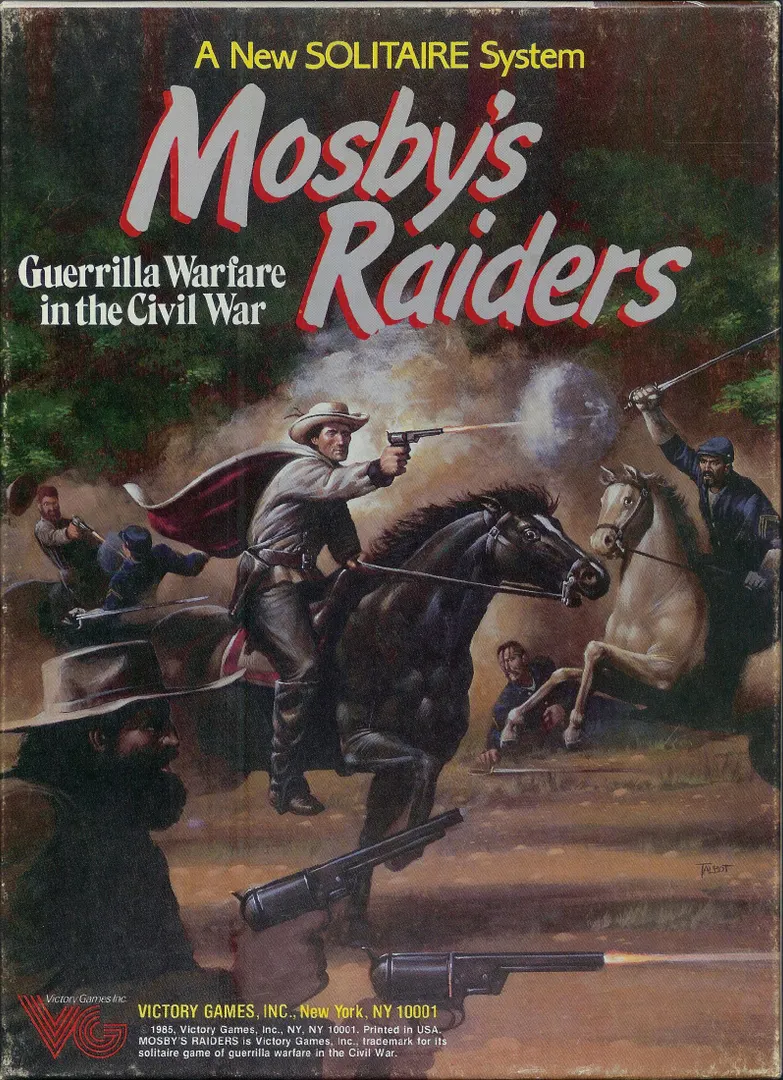
Mosby's Raiders: Guerilla Warfare in the Civil War
- 1 гравець
- 120 хв
- Складність 2,5/5
- 1985
1983
Допомога з правилами The Civil War 1861-1865
Зрозумілі пояснення ходів, ефектів карт і спірних ситуацій із посиланнями на офіційні джерела та збереженою історією запитань.
Що ви хочете дізнатися?
Відповіді ґрунтуються на офіційній книзі правил із зазначенням сторінки для перевірки.
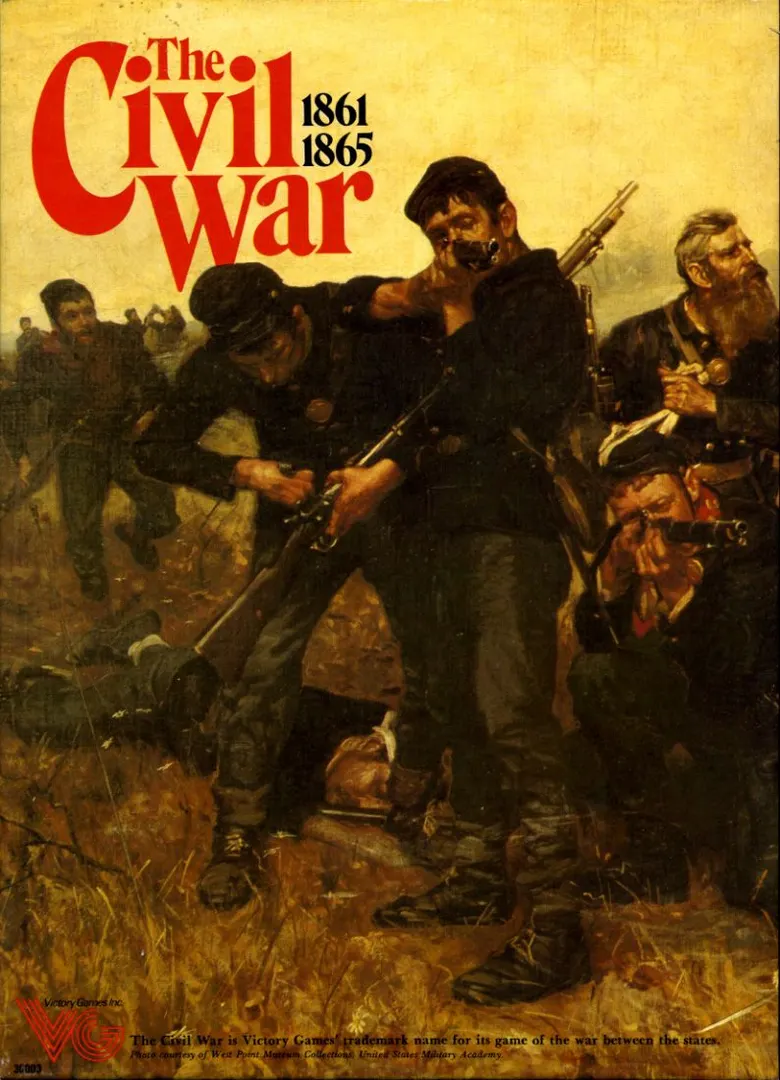
«The Civil War 1861-1865» — настільна гра, видана у 1983 році: для 1–2 гравців, 120–1200 хвилин на партію і вік від 12 років. Автори гри — Eric Lee Smith; основні механіки — Dice Rolling, Variable Set-up і Grid Movement.





Англійською
This sprawling rendition of the American Civil War tries to fit in everything, from Grant and Lee down to Indian raids in the Western territories. It also includes the most extensive treatment of naval and riverine warfare of any strategic Civil War game. The map covers the theater of the war from the Eastern seaboard to the middle of Texas at 25 miles per hex. An optional second map extends to New Mexico. There are five turns per year, four of two months each and a four-month Winter turn. Each turn consists of an indefinite number of "pulses" and may last a long, long time. Troops are represented by generic Strength Points (about 5,000 men per SP, or one or two ironclads with escorting naval vessels). The key concepts in the game are Theaters, Command Points, Pulses and Leaders. There are three Theaters: East, West and Trans-Mississippi. Players must prioritize them each turn as primary, secondary and tertiary. These designations are made a turn in advance, requiring a modest degree of foresight. Higher priority Theaters receive larger allocations of Command Points and thus will see more activity. Command Points are needed to perform most of the game's functions, such as moving SP's, consolidating SP's into Armies, constructing fortifications, adding naval SP's, sacking unwanted generals, etc. Players obtain them by dice rolls at the start of each turn. In addition to CP's assigned to individual theaters, they receive an allotment of "discretionary" CP's that can be used in any Theater. The Union also gets Naval CP's. Additional CP's may be generated during a turn, as noted below. Each turn is divided into an indefinite number of Pulses. To begin a Pulse, each player rolls two dice. The difference between the results is the number of actions each must take in that Pulse (high roller first). Actions may be used to expend Command Points, to muster SP reinforcements or to bring inew or newly promoted Leaders into play. If the dice rolls are equal, either the turn ends immediately or each player receives additional Command Points. The likelihood of an immediate end rises with the number of tied rolls and is a certainty on the fourth tie. If the turn doesn't end in this fashion, it continues until all Command Points have been used and available reinforcements and Leaders entered. While Strength Points are abstract, the game includes more than 60 historical Leaders, who enter play at about the time that they rose to prominence in real life. Each Leader has a rank (one to four stars) and ratings for Initiative, Tactical Combat and Army Command. Many begin at lower ranks and can be promoted. Sherman, for instance, has a single star when he appears but can rise to four. Like Presidents Lincoln and Davis in real life, players don't have absolute control over promotions, nor does every Leader perform better at a higher rank. A Leader's rank determines the number of SP's he can command - up to two for a one star, up to six for higher ranks. Assigning as many SP's as permitted to a Leader (preferably a capable one) is economical, since he can move his entire force by expending Command Points equal to his Initiative. (Lower Initiative numbers are better in this game.) Without Leaders, SP's cost one CP each to move, rendering them all but static. Better yet are Armies, which can be as large as 25 SP's and must be commanded by a three or four star Leader. (Each Army has its own maximum size, based on its historical counterpart.) The game has much more: an elaborate combat resolution procedure, somewhat less elaborate supply rules, a naval system that is a game in itself, cavalry, railroads, militia, neutral states and a chrome-laden option to add the Far West map and Theater. Players gain Victory Points primarily by capturing major enemy and neutral cities and winning neutral states to their side. The South also gets VP's for successful commerce raiding and for isolating or capturing Washington, D.C. It wins at once if it captures Washington at a moment when it has more VP's than the North. Otherwise, VP's are checked in November 1864 and April 1865, when the game comes to a definitive end. For those who lack time or patience for the full war, scenarios are provided with the historical setups as of the start of 1862, 1863 and 1864. The Civil War isn't the biggest game ever produced on that dreadful conflict, but it is certainly among the most ambitious in its scope and degree of detail. Includes 520 counters.
За даними каталогу, The Civil War 1861-1865 розрахована на 1–2 гравців. Цей діапазон указує видавець, тож гру можна підготувати для будь-якої кількості учасників у його межах. Підготовка, правила та підрахунок очок можуть відрізнятися залежно від кількості гравців, тому точні вказівки шукайте в правилах свого видання.
Зазначена тривалість партії в The Civil War 1861-1865 — 120–1200 хвилин. Це оцінка видавця для повної партії. Фактична тривалість залежить від компанії, кількості гравців і знання правил: перші партії зазвичай довші, а досвідчені гравці часто завершують швидше. Час на підготовку та пояснення правил у цю оцінку не входить.
У каталозі для The Civil War 1861-1865 зазначено вік від 12 років. Це рекомендація видавця, яка враховує необхідність читати, складність правил і дрібні компоненти, а не лише тематику. Молодші гравці часто можуть долучитися за допомогою дорослого, тому перевірте вікову рекомендацію на своєму виданні та врахуйте досвід вашої компанії в настільних іграх.
Гравці BoardGameGeek оцінили складність The Civil War 1861-1865 у 3,8 із 5, тож це складна гра. Оцінка відображає, скільки знань правил, планування та обмірковування рішень зазвичай потребує партія. Для складніших ігор закладайте більше часу на перше пояснення та скористайтеся посібником із підготовки перед ігровим вечором.
The Civil War 1861-1865 належить до таких категорій: Wargame, Civil War і Post-Napoleonic. Основні механіки: Dice Rolling, Variable Set-up і Grid Movement. Категорії описують тематику та світ гри, а механіки — те, що гравці роблять під час своїх ходів. Кожна механіка веде до добірки схожих ігор у каталозі, щоб було легше знайти щось подібне.
Автори гри The Civil War 1861-1865: Eric Lee Smith. Ці відомості взято з опублікованих даних про гру. Тут зазначено людей, які розробили гру, а не її ілюстраторів чи видавців. На сторінках авторів у MeepleRules зібрано інші їхні ігри — це допомагає знайти щось подібне до гри, яка вам сподобалася.
У каталозі The Civil War 1861-1865 зазначена як базова гра. У неї можна грати самостійно, використовуючи компоненти з коробки, без інших ігор. Доповнення, якщо вони є, додають нові матеріали або правила. Їх наведено в каталозі окремо з посиланням на цю базову гру.
