
- Оцінка BGG
- 6,4
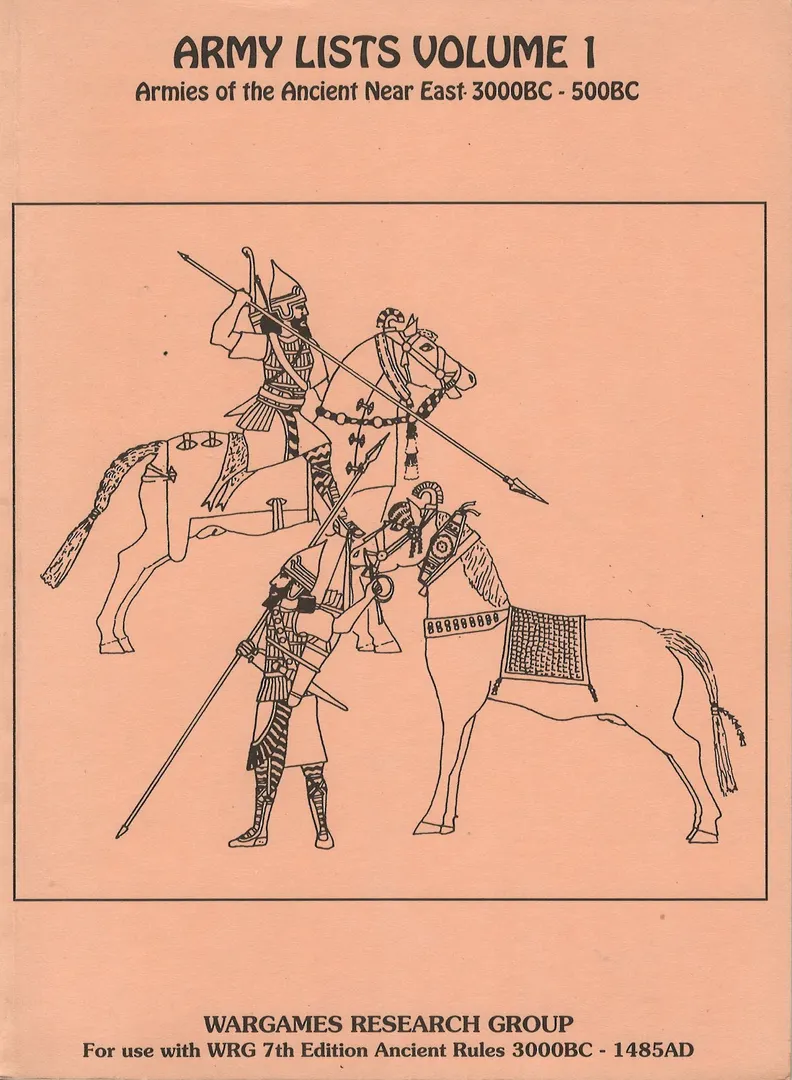
Army Lists Book One: 3000 BC – 75 AD
- 2 гравці
- 120 хв
- Складність 2,0/5
- 1981
1980
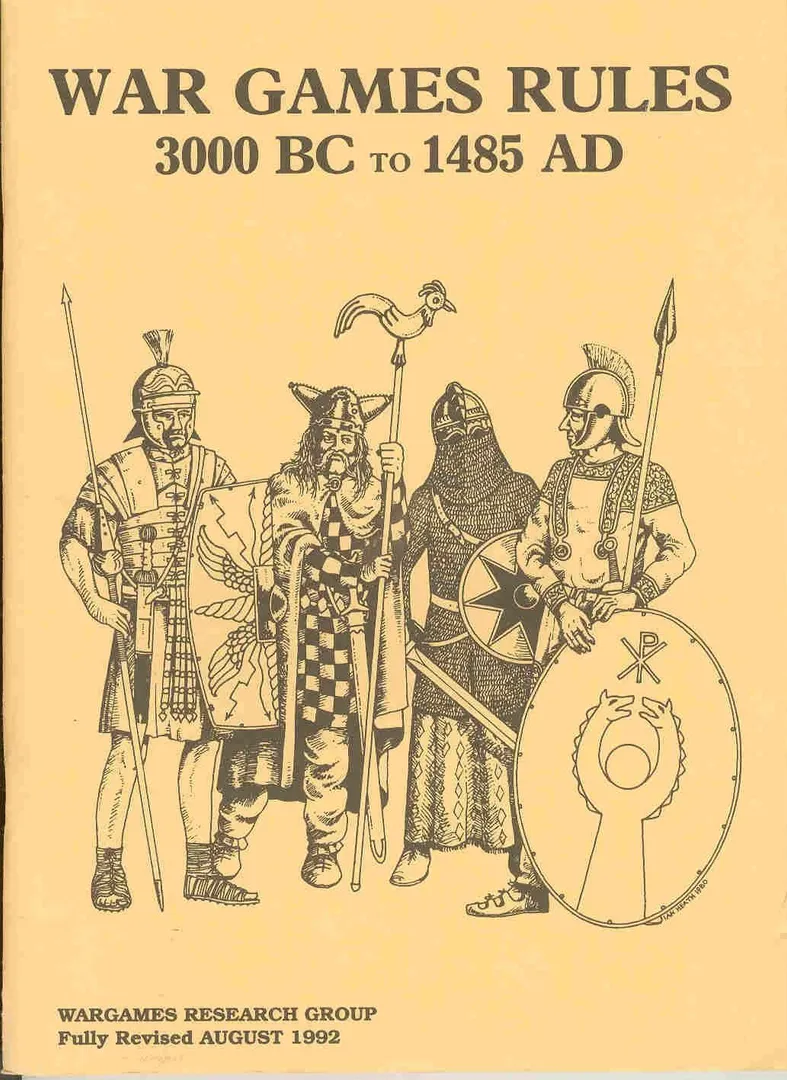
Допомога з правилами War Games Rules 3000 BC to 1485 AD
Зрозумілі пояснення ходів, ефектів карт і спірних ситуацій із посиланнями на офіційні джерела та збереженою історією запитань.
Для 2 гравців
Що ви хочете дізнатися?
Відповіді ґрунтуються на офіційній книзі правил із зазначенням сторінки для перевірки.
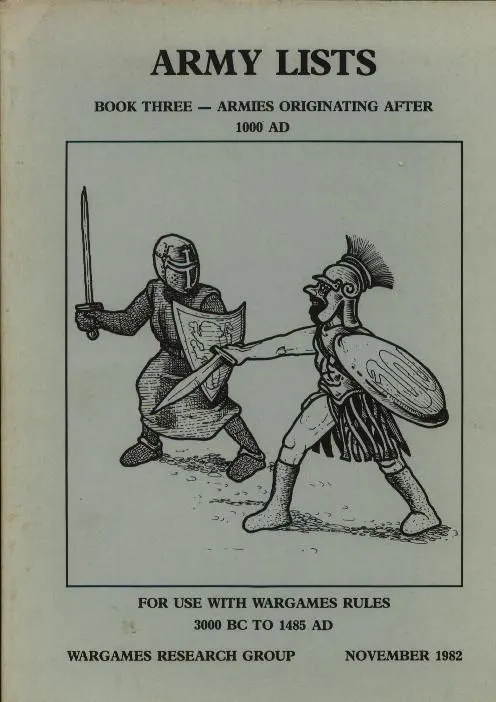
«War Games Rules 3000 BC to 1485 AD» — настільна гра, видана у 1980 році: для 2 гравців, 120–180 хвилин на партію і вік від 12 років. Автори гри — Philip C. Barker; основні механіки — Dice Rolling, Paper-and-Pencil і Simulation.
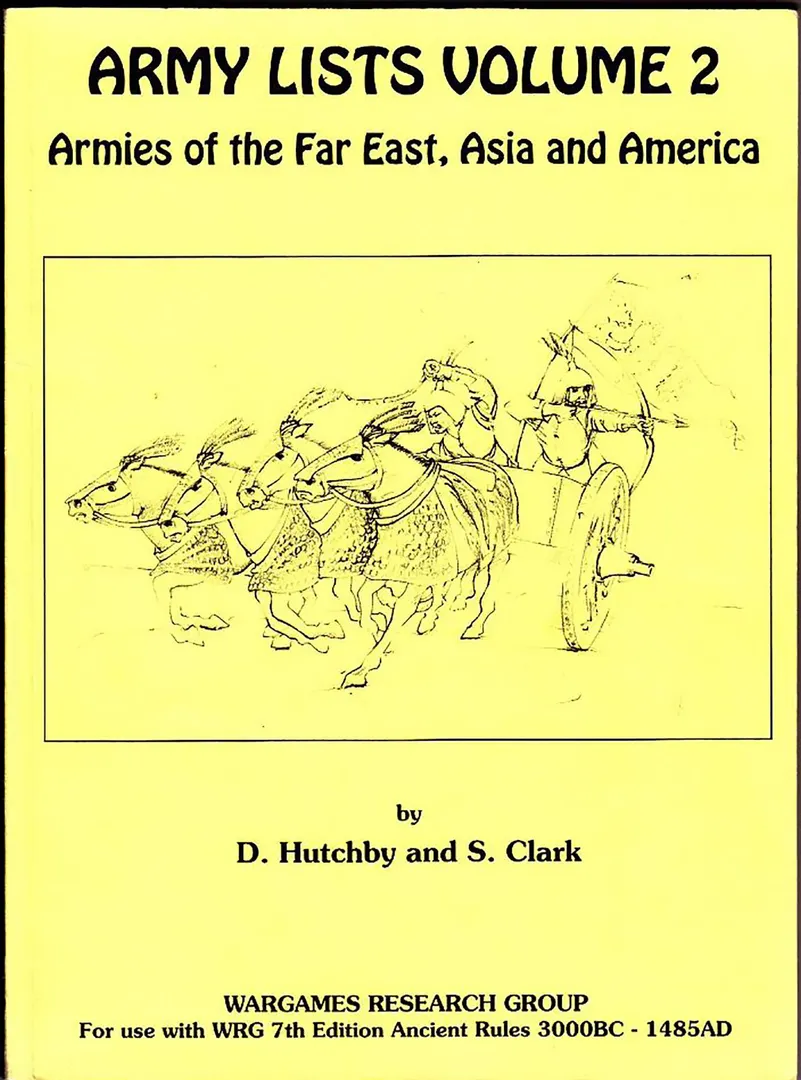


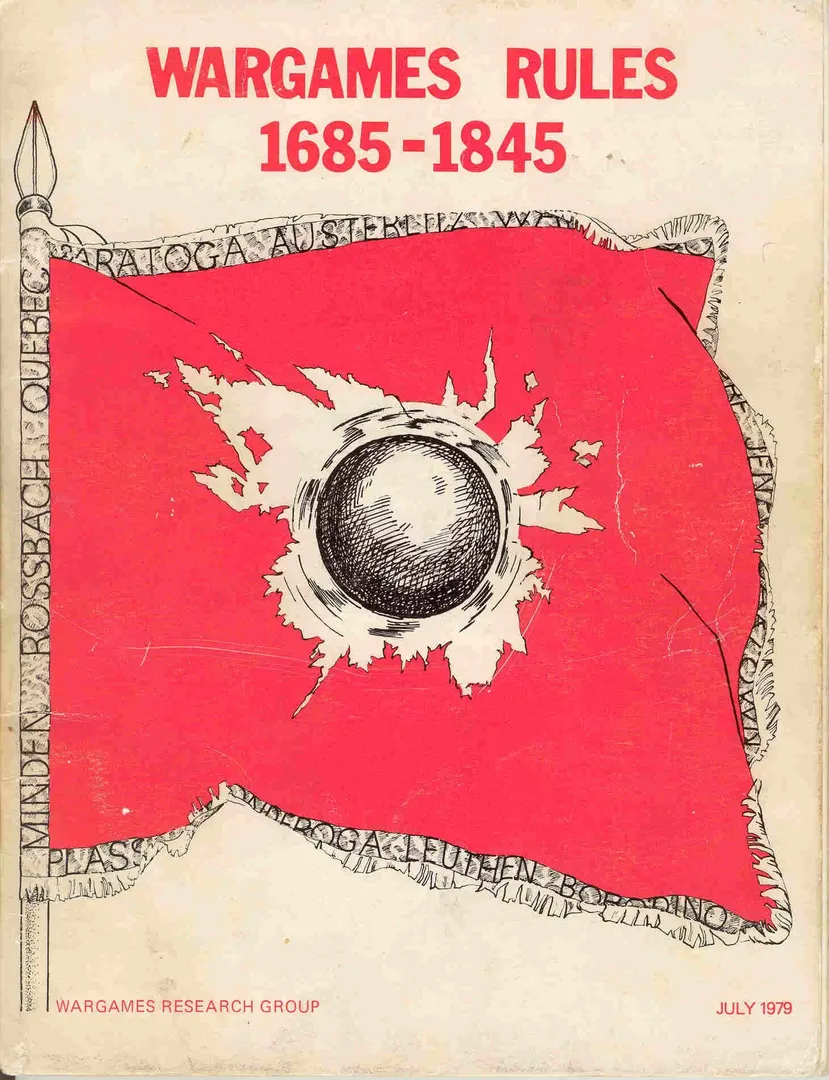


Англійською
From the Intro to the 7th edition rules The first edition of our original ancient rules appeared in 1969, and their adopted for the British National Wargames Championships of that year. Despite competition from many would be rival sets, succeeding editions have been used in every important convention worldwide since then, and are used by an overwhelming majority of ancient wargamers. Their mechanisms have become a wargames standard used for every conceivable historical period, including some for which WE consider then unsuitable! The seventh edition went to the printers in late 1985, and in the seven years since has almost completely taken over from previous editions. Feedback from play by several thousand customers has made it possible to provide free update sheets available in return for a stamped addressed envelope or international reply coupon. A few of the amendments blocked minor loopholes, most clarify meanings and some incorporate goal ideas for improvements suggested and justified by players. All such changes to date are incorporated into the text of this printing of the rule book as Version 7.5. Seventh was a revolutionary, rather than evolutionary, change from previous editions. It places much more emphasis on realism, the problems of command, terrain and natural conditions, and seeks to distract players from excessive pre—occupation with weapon and amour differences important only if “all things are equal”. It is the function of the general to ensure that things are NEVER equal! We also take the view that a putative difference in weapon characteristics that cannot be shown to have influenced tactics in, or the result of, at least one historical battle is likely to be spurious. The tendency sung rule writers to show off their knowledge rather than produce the simplest realistic simulation is natural but unhelpful. The unanimous conclusion of the users is that seventh is far more realistic than other sets and greatly widens the gap between good and poor tacticians. They applaud the end of the "fire work display” with units whizzing off in all directions without getting in each other’s way the increased mobility out of and the reduced maneuverability in proximity to the enemy the need to take conditions, terrain and the chance of a surprise into account when planning, the way the fatigue rules force a proper use of reserves, the way rebased troops no longer fall over in the box, and not least, the discomfiture of rule lawyers. Since its introduction, seventh has been used in the great majority of tournaments around the world, and even passed the fearsome test of the Milton Keynes 36 hour sleepless marathon event. Tournaments normally use the full rules with terrain choice, weather, unusual deployments and unreliable generals without these causing any difficulty or complaint of unfairness. A public demonstration game at Northern Militaire with one player per side each using 3,600 points of 25mm figures on a 6 foot x 4 foot table with plenty of terrain finished with a decisive win in something over two hours. This implies that increased realism has not been achieved at the cost of “playability”. Gums now play ‘inch quicker. The major difficulty faced by players transferring from the previous editions is one of imagination. It DOES help to plan as if you wore commanding a real army rather than trying to analyze the rules to deduce goal tactics. Cannon mistakes are to leave cavalry at the rear of a marching column instead of scouting in front, keeping the general safe instead of in a position to see, letting an unreliable general continue disobedience instead of correcting him, ignoring terrain difficulties when deploying, with consequent traffic jams when moving out, accepting waver tests instead of avoiding then like the plague, deploying front and rear lines too close so that they became entangled, and leaving front line units to become exhausted or be overwhelmed instead of reinforcing or withdrawing then in goal tine. Victory with seventh edition goes to the player who has best learned the skills of real historical generals, not he with most grasp of the minutiae of the rules. Finally, although 7th is simpler than its predecessor and much simpler than its rivals, it is necessarily complex and needs large numbers of figures, a full sized table, and two or mare hours to play. For those occasions for which it will not suit, we recommend our other rule set for the period, the very successful “De Bellis Antiquitatis”. DBA allows much quicker games with far fewer figures on a 24” square terrain, incorporates a campaign systen and army lists, and is especially suitable for beginners, the young, jaded elders, large multi-player gases and odd moments
Кількість гравців для War Games Rules 3000 BC to 1485 AD за даними каталогу: 2 гравці. Це кількість, яку вказує видавець, тож гра розрахована саме на стільки учасників. Варіанти для іншої кількості гравців, якщо вони є, описано в правилах вашого видання. Перевірте їх, перш ніж готувати гру для іншого складу.
Зазначена тривалість партії в War Games Rules 3000 BC to 1485 AD — 120–180 хвилин. Це оцінка видавця для повної партії. Фактична тривалість залежить від компанії, кількості гравців і знання правил: перші партії зазвичай довші, а досвідчені гравці часто завершують швидше. Час на підготовку та пояснення правил у цю оцінку не входить.
У каталозі для War Games Rules 3000 BC to 1485 AD зазначено вік від 12 років. Це рекомендація видавця, яка враховує необхідність читати, складність правил і дрібні компоненти, а не лише тематику. Молодші гравці часто можуть долучитися за допомогою дорослого, тому перевірте вікову рекомендацію на своєму виданні та врахуйте досвід вашої компанії в настільних іграх.
Гравці BoardGameGeek оцінили складність War Games Rules 3000 BC to 1485 AD у 3,6 із 5, тож це гра середньої складності. Оцінка відображає, скільки знань правил, планування та обмірковування рішень зазвичай потребує партія. Для складніших ігор закладайте більше часу на перше пояснення та скористайтеся посібником із підготовки перед ігровим вечором.
War Games Rules 3000 BC to 1485 AD належить до таких категорій: Wargame, Miniatures і Medieval. Основні механіки: Dice Rolling, Paper-and-Pencil і Simulation. Категорії описують тематику та світ гри, а механіки — те, що гравці роблять під час своїх ходів. Кожна механіка веде до добірки схожих ігор у каталозі, щоб було легше знайти щось подібне.
Автори гри War Games Rules 3000 BC to 1485 AD: Philip C. Barker. Ці відомості взято з опублікованих даних про гру. Тут зазначено людей, які розробили гру, а не її ілюстраторів чи видавців. На сторінках авторів у MeepleRules зібрано інші їхні ігри — це допомагає знайти щось подібне до гри, яка вам сподобалася.
У каталозі War Games Rules 3000 BC to 1485 AD зазначена як базова гра. У неї можна грати самостійно, використовуючи компоненти з коробки, без інших ігор. Доповнення, якщо вони є, додають нові матеріали або правила. Їх наведено в каталозі окремо з посиланням на цю базову гру.