- Місце в рейтингу BGG
- BGG #15 627
- Оцінка BGG
- 7,7
Kalypso
- 1–4 гравці
- 45–60 хв
- Складність 2,0/5
- 2026

2016
Допомога з правилами Warsaw: City of Ruins
Зрозумілі пояснення ходів, ефектів карт і спірних ситуацій із посиланнями на офіційні джерела та збереженою історією запитань.
Що ви хочете дізнатися?
Відповіді ґрунтуються на офіційній книзі правил із зазначенням сторінки для перевірки.
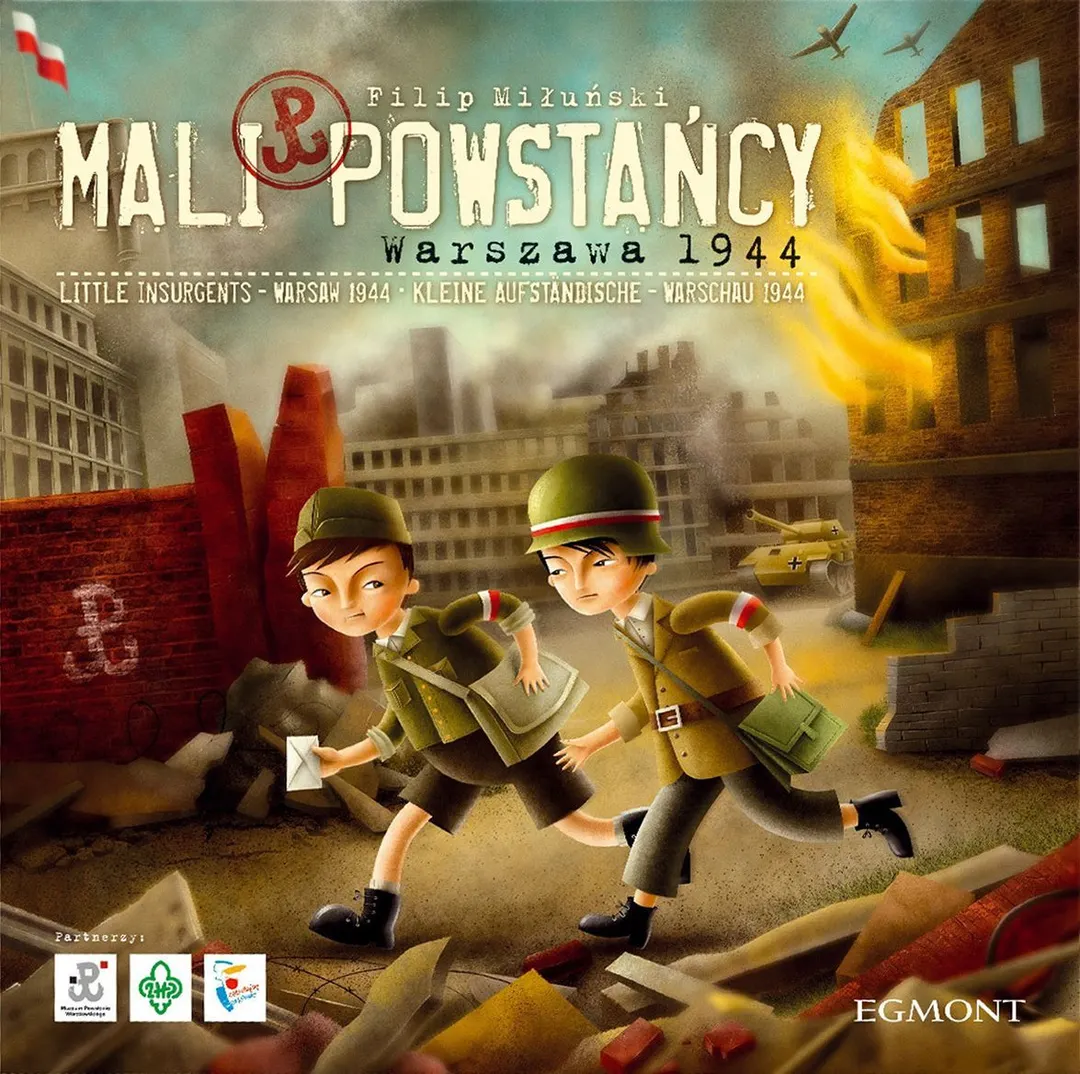
«Warsaw: City of Ruins» — настільна гра, видана у 2016 році: для 2–4 гравців, 60 хвилин на партію і вік від 10 років. Автори гри — Filip Miłuński; основні механіки — Tile Placement, Simultaneous Action Selection і Pattern Building.






Англійською
Warsaw is a unique city. It is said that it "survived its own death", and there is truth in this. Poland's capital was largely destroyed during the Second World War, and its reconstruction was an exceptional urban development process. Warsaw is a combination of elegant buildings from Saxon times, architecture from between the World Wars, socialist blocks, and modern buildings. Walking through the streets of Warsaw's Wola district, one can see this diversity at a glance. Modern glass office buildings stand next to pre-war automotive garages, and concrete block buildings touch elegant older houses, which show the signs of time's decay. Some call it a spatial mess, while others see in it the residents' determination. Both views are right because that's how Warsaw is. Maybe not the most beautiful, but strong and determined. Nothing reflects the city's character more than its diverse buildings. In Warsaw: City of Ruins, players jointly build Warsaw over six epochs, from when Warsaw first became the capital at the end of the 16th century through modern times. Each player creates their own district of the city. At the end of each of the six epochs, districts give income and victory points to their owners. After six rounds, whoever has the most points wins. In more detail, each epoch consists of a construction phase and an income phase, with wars at the end of the third and fourth epochs. During the construction phase of an epoch, players shuffle the city tiles with the current epoch's number, then deal several tiles to each player. Each player chooses one of the tiles, then places it face down onto the table. All players simultaneously reveal their selected tiles, and each player chooses one of two possible actions: Discard their tile to the box and take three coins from the bank. Pay the tile's cost in coins and build the tile in their district. Instead of placing a tile on an empty space, a player may choose to build on top of an existing tile. Simply place the new tile directly onto an existing tile, covering it completely. As a result, the new tile's price is reduced by the price of the older tile that it covers. A player's district can never be larger than a 3×4 or 4×3 rectangle of tiles. Each city tile is divided into four quarters, and each quarter has its own type of building, so a tile can have 1-4 different kinds of buildings. Public buildings and milestones are always separate individual areas, even if they are adjacent to each other. They also occupy an entire tile. During the income phase, milestones are placed, and players receive coins and victory points.
За даними каталогу, Warsaw: City of Ruins розрахована на 2–4 гравців. Цей діапазон указує видавець, тож гру можна підготувати для будь-якої кількості учасників у його межах. Підготовка, правила та підрахунок очок можуть відрізнятися залежно від кількості гравців, тому точні вказівки шукайте в правилах свого видання.
Зазначена тривалість партії в Warsaw: City of Ruins — 60 хвилин. Це оцінка видавця для повної партії. Фактична тривалість залежить від компанії, кількості гравців і знання правил: перші партії зазвичай довші, а досвідчені гравці часто завершують швидше. Час на підготовку та пояснення правил у цю оцінку не входить.
У каталозі для Warsaw: City of Ruins зазначено вік від 10 років. Це рекомендація видавця, яка враховує необхідність читати, складність правил і дрібні компоненти, а не лише тематику. Молодші гравці часто можуть долучитися за допомогою дорослого, тому перевірте вікову рекомендацію на своєму виданні та врахуйте досвід вашої компанії в настільних іграх.
Гравці BoardGameGeek оцінили складність Warsaw: City of Ruins у 2,2 із 5, тож це гра помірно легкої складності. Оцінка відображає, скільки знань правил, планування та обмірковування рішень зазвичай потребує партія. Для складніших ігор закладайте більше часу на перше пояснення та скористайтеся посібником із підготовки перед ігровим вечором.
Warsaw: City of Ruins належить до таких категорій: Economic і City Building. Основні механіки: Tile Placement, Simultaneous Action Selection і Pattern Building. Категорії описують тематику та світ гри, а механіки — те, що гравці роблять під час своїх ходів. Кожна механіка веде до добірки схожих ігор у каталозі, щоб було легше знайти щось подібне.
Автори гри Warsaw: City of Ruins: Filip Miłuński. Ці відомості взято з опублікованих даних про гру. Тут зазначено людей, які розробили гру, а не її ілюстраторів чи видавців. На сторінках авторів у MeepleRules зібрано інші їхні ігри — це допомагає знайти щось подібне до гри, яка вам сподобалася.
У каталозі Warsaw: City of Ruins зазначена як базова гра. У неї можна грати самостійно, використовуючи компоненти з коробки, без інших ігор. Доповнення, якщо вони є, додають нові матеріали або правила. Їх наведено в каталозі окремо з посиланням на цю базову гру.


