

- BGG-Rang
- BGG #5.232
- BGG-Bewertung
- 8,0
18OE: On the Rails of the Orient Express
- 2–8 Spieler
- 720 Min.
- Komplexität 4,5/5
- 2014
2011
Regelhilfe für 1865: Sardinia
Verständliche Erklärungen zu Spielzügen, Karteneffekten und strittigen Situationen mit Verweisen auf offizielle Quellen und gespeichertem Fragenverlauf.
Für 2 Personen
Was möchtest du wissen?
Antworten stammen aus dem offiziellen Regelheft, mit Seitenangabe zum Nachprüfen.
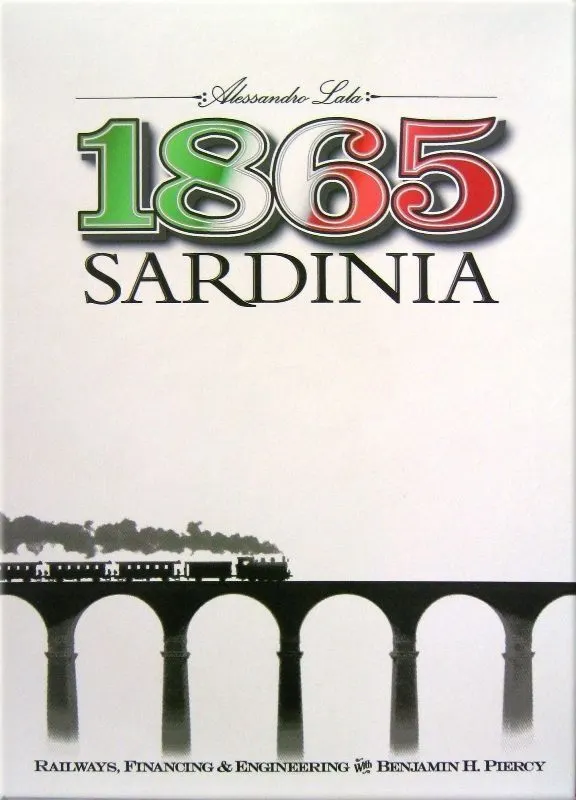
1865: Sardinia ist ein Brettspiel aus dem Jahr 2011 für 2–4 Personen, mit 240 Minuten pro Partie und ab 14 Jahren. Entwickelt wurde es von Alessandro Lala; die wichtigsten Mechaniken sind Auction / Bidding, Tile Placement und Network and Route Building.


Auf Englisch
1865 Sardinia is a board game belonging to the 18xx series for 2-4 players and set on the Sardinia island (and Corsica). Players play the role of 19th century entrepreneurs investing in the construction as well as the financial and operational management of railways. Selling and buying shares on the stock market, seeking new sources of funding, laying track and placing stations, running trains and paying dividends are all basic elements of 18xx games. In addition, 1865 Sardinia has several features that make it different from other 18xx titles. The most important distinctions are: a traffic based system that makes calculating company's revenues easier and faster foreign investors (Dragons) trade in certificates in addition to human players an absorption mechanism that allows companies to acquire each other Other interesting points: before phase 5, all companies start as minor companies with 40%/20%/20%/20% shares converting a company from minor to major requires a direct route from a company base to a historical destination city private companies become 2 trains when transferred to a company and also provide extra traffic buying trains from bank makes the share price jump up the last 2, 3, and 4 train comes with a discount withholding money in company doesn't reduce the share price tiles can be replaced with another tile of same color, provided the current connections are retained bankrupt players are given enough loans to keep them in game, loans are then deducted from final score in the end Dragons during stock rounds, the Dragons will also trade each stock round begins with a Dragon and Dragons also play between each player dragons are interested in company's rank, an indicator based on the sum of trains phase and tokens on board, followed on a special table on the board dragons will immediately sell certificates in companies ranked red and will buy certificates ranked green, according to a fairly simple and consistent algorithm. players can buy shares from Dragons, but must pay a premium for well-ranked shares share prices are adjusted down when shares are sold by Dragons or the company president Traffic system when a company places a station marker, it gets to collect traffic chips from the board along the route mines also produce traffic chips, but diminish in value as the game proceeds each traffic chip is worth $10 in revenue revenues are the smaller value of total revenue in traffic chips and train capacity available phase 2 trains, for example, have 8 capacity each, so if company has two of those for 16 capacity and 14 traffic chips, it will make $140 in revenue, while adding three chips would increase the revenue to $160 because the capacity hits the roof at that point
Laut Katalog unterstützt 1865: Sardinia 2–4 Personen. Diese Spanne entspricht der vom Verlag angegebenen Spielerzahl, das Spiel lässt sich also für jede Gruppengröße innerhalb dieser Spanne aufbauen. Aufbau, einzelne Regeln und Wertungsdetails können je nach Personenzahl trotzdem abweichen; prüfe daher die genaue Konfiguration in der Anleitung deiner Ausgabe.
Die angegebene Spieldauer für 1865: Sardinia beträgt 240 Minuten. Das ist die Schätzung des Verlags für eine vollständige Partie. Die tatsächliche Dauer hängt von der Gruppe, der Personenzahl und der Regelkenntnis ab: Erste Partien dauern meist länger, erfahrene Gruppen sind oft schneller fertig. Aufbau und Regelerklärung sind in dieser Schätzung nicht enthalten.
Im Katalog wird 1865: Sardinia ab 14 Jahren empfohlen. Das ist die Empfehlung des Verlags und berücksichtigt Leseanforderungen, Regelkomplexität und Kleinteile, nicht nur das Thema. Jüngere Kinder können oft mit Hilfe eines Erwachsenen mitspielen; beachte die Altersangabe deiner Ausgabe und die Brettspielerfahrung deiner Gruppe.
1865: Sardinia hat bei BoardGameGeek eine Komplexitätswertung von 3,9 von 5 und gilt damit als schweres Spiel. Die Wertung zeigt, wie viel Regelwissen, Planung und Entscheidungen eine typische Partie verlangt. Schwerere Spiele brauchen bei der ersten Erklärung mehr Zeit, daher hilft vor dem Spieleabend eine Vorbereitungsanleitung.
1865: Sardinia gehört zu diesen Kategorien: Economic, Trains und Transportation. Die wichtigsten Mechaniken sind Auction / Bidding, Tile Placement und Network and Route Building. Kategorien beschreiben Thema und Setting eines Spiels, Mechaniken dagegen, was die Spielenden in ihrem Zug tatsächlich tun. Jede Mechanik führt zu einer Katalogseite mit ähnlichen Spielen, falls du etwas Vergleichbares suchst.
Als Autoren von 1865: Sardinia sind angegeben: Alessandro Lala. Diese Angaben stammen aus den veröffentlichten Spieldaten und nennen die für das Spieldesign verantwortlichen Personen, nicht die Illustratoren oder Verlage. Die Autorenseiten auf MeepleRules sammeln weitere Titel derselben Autoren – praktisch, wenn dir ein Spiel gefällt und du ähnliche Spiele suchst.
Im Katalog ist 1865: Sardinia als Grundspiel aufgeführt. Es lässt sich eigenständig mit dem Material aus der Schachtel spielen und benötigt keinen weiteren Titel. Erweiterungen, sofern es welche gibt, ergänzen neues Material oder neue Regeln und sind im Katalog separat mit einem Verweis auf dieses Grundspiel aufgeführt.