
- BGG-Rang
- BGG #25.458
- BGG-Bewertung
- 6,2
Defeat Into Victory: The Final Campaigns in Burma
- 2 Spieler
- 180 Min.
- Komplexität 3,5/5
- 2012
2013
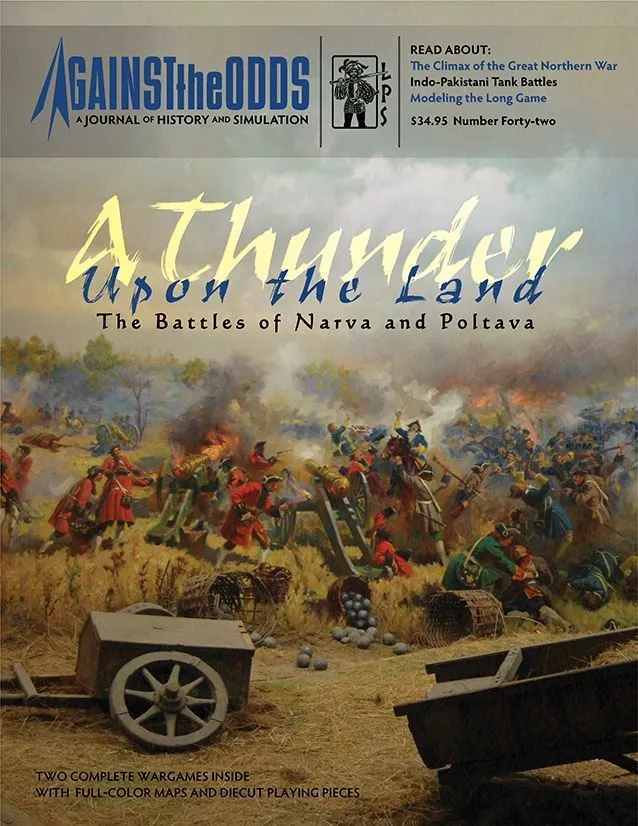
Regelhilfe für A Thunder Upon the Land: The Battles of Narva and Poltava
Verständliche Erklärungen zu Spielzügen, Karteneffekten und strittigen Situationen mit Verweisen auf offizielle Quellen und gespeichertem Fragenverlauf.
Für 1 Person
Was möchtest du wissen?
Antworten stammen aus dem offiziellen Regelheft, mit Seitenangabe zum Nachprüfen.
A Thunder Upon the Land: The Battles of Narva and Poltava ist ein Brettspiel aus dem Jahr 2013 für 1–2 Personen, mit 240 Minuten pro Partie und ab 14 Jahren. Entwickelt wurde es von Paul Rohrbaugh und Lembit Tohver; die wichtigsten Mechaniken sind Dice Rolling, Hexagon Grid und Chit-Pull System.
Auf Englisch
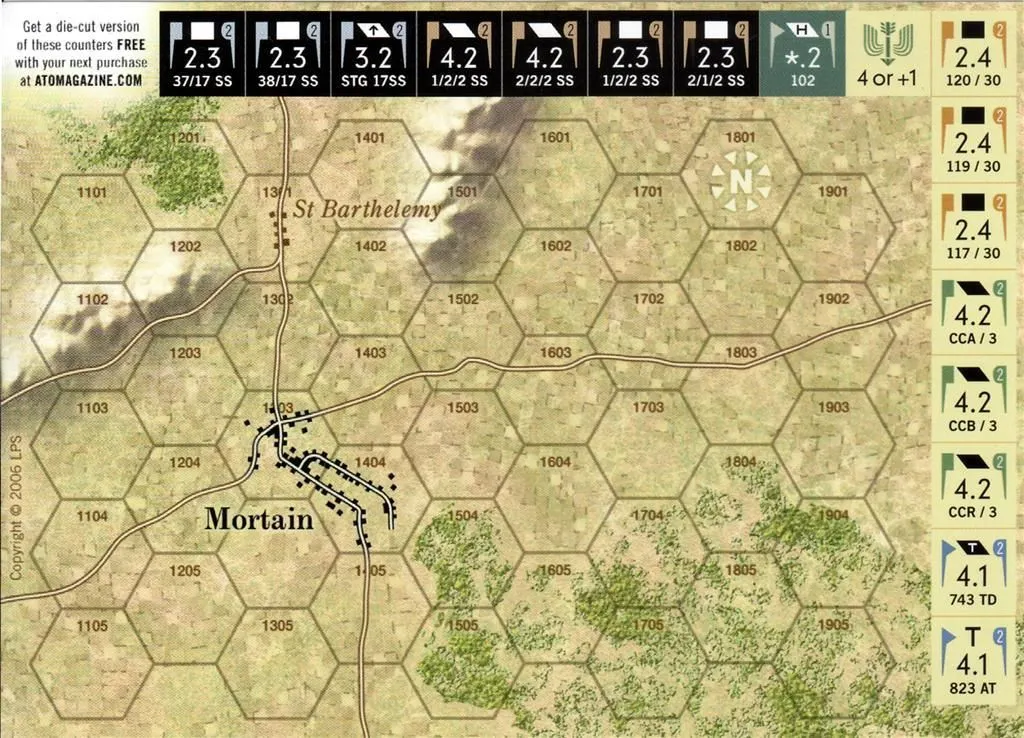
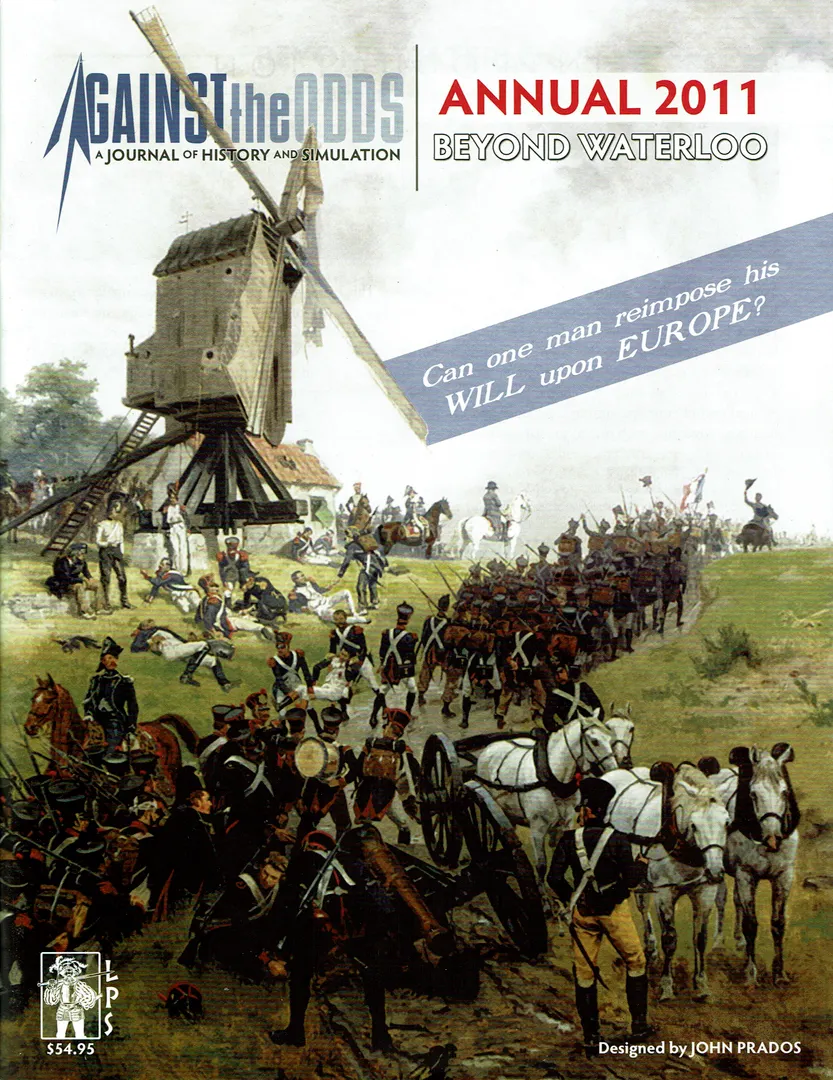
Before Hitler. Before Napoleon. Another European strong-man invaded Russia… and came to grief. He was Charles XII of Sweden. In later years, they would call it “The Great Northern War.” Whether the blame can tagged to Swedish expansionism or Peter the Great’s desire for that warm-water capital city and “window on Europe,” the clash was a seemingly inevitable clash over who would own what in northern and eastern Europe and what shape Poland would take (if any). When the war started, it resembled something Frederick the Great would face, a “everyone against one country” conflict that saw Russia joined by Denmark/Norway and a Saxon-Poland-Lithuania combination, with others joining later, all seeking to take advantage of the 18-year old Charles XII—who was perceived to be weak and inexperienced. Like Frederick, he would parry multiple invasions and survive. Unlike Frederick, he would launch a serious invasion deep into Russia…and fall from power. A Thunder Upon the Land looks as the Sweden vs. Russia portion of this war, with the two battles that rather started and finished the conflict. The Battle of Narva took place in 1700, as Russia and a Saxon-Polish contingent aimed to push Sweden out of the Baltic, with the Saxons threatening Riga and the Russians besieging Narva. But it was November, and Peter left his army feeling secure that his 40,000 men could bottle up and capture the 2500 Swedes holding the city. Charles rushed to relieve the city with an army that was well-drilled and well equipped, but numbered only about 8000 men. So, including the troops in the city, he would be attacking at something like 1-4 odds. And attacking in a blizzard. But the surprise and wretched weather worked to his advantage, and virtually the entire Russian army was killed or captured, along with their artillery and equipment. It was Russia’s finest force at the time, and an immediate invasion by Sweden might well have succeeded. But there was Riga and the Saxons to consider, and Charles let the moment pass. Three years later, having knocked the Saxons out of the war, Charles turned again to Russia, who had surprised Europe by founding St. Petersburg on what was then still Swedish territory. Charles aimed for Moscow, and this time, it was a Swedish army that vanished from the map. A Thunder Upon the Land brings you both battles of Narva and Poltava, with full color maps and over 250 die-cut counters. Each turn represents about one hour of real time and each hex represents about 500 yards. This game uses chit-draw for wing activation and allows players to make tactical choices like forming squares or deciding if their dragoons will press home charges or use the safer (but less effective) Carracole attacks, with optional rules for volley fire and desperation attacks. Can you, as Charles XII, maintain Sweden’s status as the rising power in Europe? Can you, as Peter I, defeat the invaders and open the great city you gave your name to? The choices are yours as you refight the battles of Narva and Poltava. Map - One double-sided full-color 22"x34" mapsheet Counters - 264 full-color large 5/8" diecut pieces Rules length - 12 pages Charts and tables - 2 pages Complexity - Medium Solitaire suitability - Average
Laut Katalog unterstützt A Thunder Upon the Land: The Battles of Narva and Poltava 1–2 Personen. Diese Spanne entspricht der vom Verlag angegebenen Spielerzahl, das Spiel lässt sich also für jede Gruppengröße innerhalb dieser Spanne aufbauen. Aufbau, einzelne Regeln und Wertungsdetails können je nach Personenzahl trotzdem abweichen; prüfe daher die genaue Konfiguration in der Anleitung deiner Ausgabe.
Die angegebene Spieldauer für A Thunder Upon the Land: The Battles of Narva and Poltava beträgt 240 Minuten. Das ist die Schätzung des Verlags für eine vollständige Partie. Die tatsächliche Dauer hängt von der Gruppe, der Personenzahl und der Regelkenntnis ab: Erste Partien dauern meist länger, erfahrene Gruppen sind oft schneller fertig. Aufbau und Regelerklärung sind in dieser Schätzung nicht enthalten.
Im Katalog wird A Thunder Upon the Land: The Battles of Narva and Poltava ab 14 Jahren empfohlen. Das ist die Empfehlung des Verlags und berücksichtigt Leseanforderungen, Regelkomplexität und Kleinteile, nicht nur das Thema. Jüngere Kinder können oft mit Hilfe eines Erwachsenen mitspielen; beachte die Altersangabe deiner Ausgabe und die Brettspielerfahrung deiner Gruppe.
A Thunder Upon the Land: The Battles of Narva and Poltava hat bei BoardGameGeek eine Komplexitätswertung von 2,8 von 5 und gilt damit als eher leichtes Spiel. Die Wertung zeigt, wie viel Regelwissen, Planung und Entscheidungen eine typische Partie verlangt. Schwerere Spiele brauchen bei der ersten Erklärung mehr Zeit, daher hilft vor dem Spieleabend eine Vorbereitungsanleitung.
A Thunder Upon the Land: The Battles of Narva and Poltava gehört zu diesen Kategorien: Wargame und Age of Reason. Die wichtigsten Mechaniken sind Dice Rolling, Hexagon Grid und Chit-Pull System. Kategorien beschreiben Thema und Setting eines Spiels, Mechaniken dagegen, was die Spielenden in ihrem Zug tatsächlich tun. Jede Mechanik führt zu einer Katalogseite mit ähnlichen Spielen, falls du etwas Vergleichbares suchst.
Als Autoren von A Thunder Upon the Land: The Battles of Narva and Poltava sind angegeben: Paul Rohrbaugh und Lembit Tohver. Diese Angaben stammen aus den veröffentlichten Spieldaten und nennen die für das Spieldesign verantwortlichen Personen, nicht die Illustratoren oder Verlage. Die Autorenseiten auf MeepleRules sammeln weitere Titel derselben Autoren – praktisch, wenn dir ein Spiel gefällt und du ähnliche Spiele suchst.
Im Katalog ist A Thunder Upon the Land: The Battles of Narva and Poltava als Grundspiel aufgeführt. Es lässt sich eigenständig mit dem Material aus der Schachtel spielen und benötigt keinen weiteren Titel. Erweiterungen, sofern es welche gibt, ergänzen neues Material oder neue Regeln und sind im Katalog separat mit einem Verweis auf dieses Grundspiel aufgeführt.