
- BGG-Rang
- BGG #9.915
- BGG-Bewertung
- 7,9
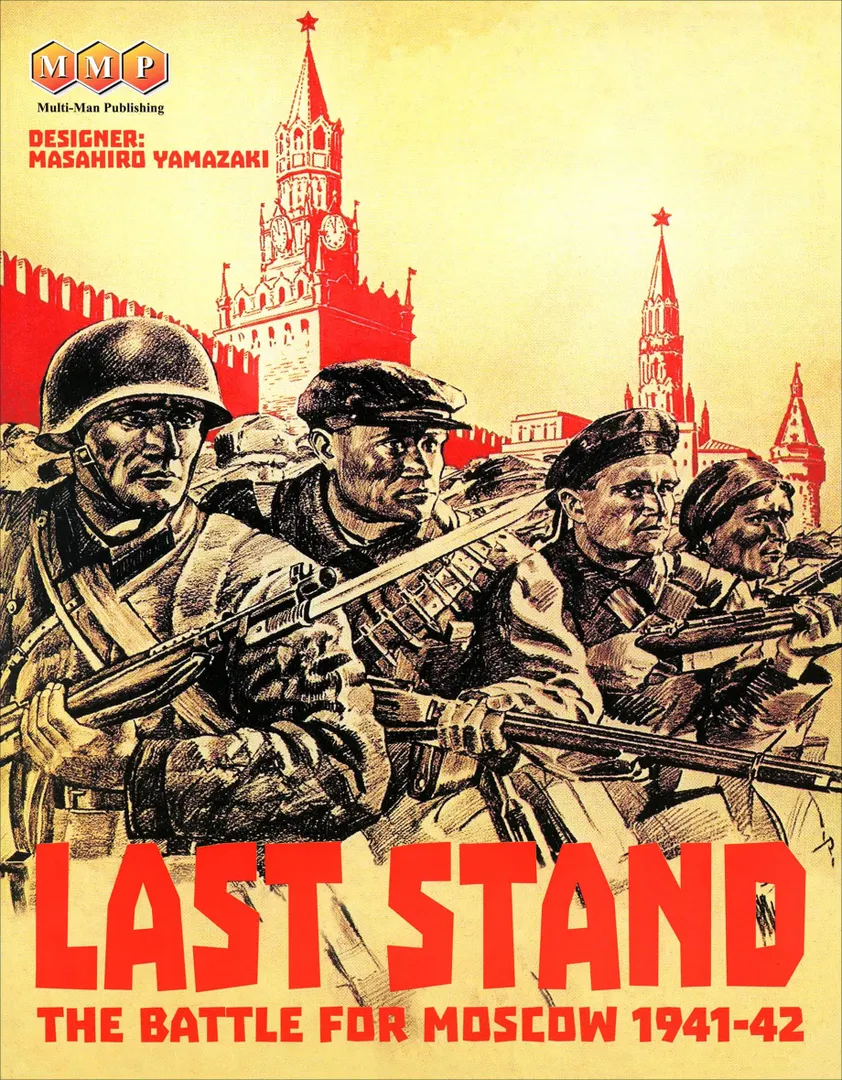
Last Stand: The Battle for Moscow 1941-42
- 1–2 Spieler
- 180–600 Min.
- Komplexität 2,8/5
- 2008
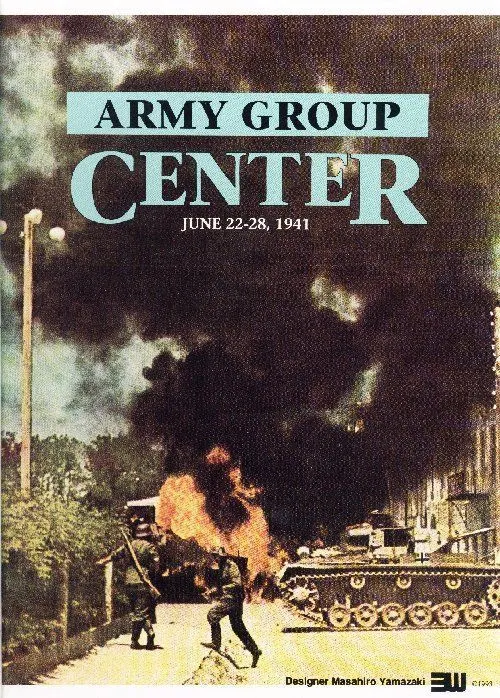
1993
Regelhilfe für Army Group Center: June 22-28, 1941
Verständliche Erklärungen zu Spielzügen, Karteneffekten und strittigen Situationen mit Verweisen auf offizielle Quellen und gespeichertem Fragenverlauf.
Was möchtest du wissen?
Antworten stammen aus dem offiziellen Regelheft, mit Seitenangabe zum Nachprüfen.
Army Group Center: June 22-28, 1941 ist ein Brettspiel aus dem Jahr 1993 für 1–2 Personen, mit 300 Minuten pro Partie und ab 12 Jahren. Entwickelt wurde es von Masahiro Yamazaki; die wichtigsten Mechaniken sind Dice Rolling, Hexagon Grid und Simulation.



Auf Englisch
Army Group Center: The Opening Blitz on Minsk, June 22-28, 1941 is an operational level game of the German Blitzkrieg Campaign of June 22, 1941 against the Soviet Union. Specifically, the game covers the attempt by German Army Group Center to encircle the Soviet Forces deployed on the front ar Belorussia, centered on the city of Minsk. The surprise attack was executed as planning by two Panzer groups, commanded by Colonel Generals Hoth and Guderian. The Soviet commander of the Western Front forces, General Pavlov, was taken completely by surprise, and, by order of the Soviet Supreme Command, dispatched his mobile forces directly into the German pincers. Most of the Soviet forces, including the mobile reserves, were thrown into disarray by the German first strike and were eliminated piecemeal. On June 28 the Germans closed their first major pocket of the war in the east. It extended from Belostok (Bialystok) to Minsk. 287,000 Soviet troops surrendered in this pocket, and in addition 2585 tanks and 1449 guns were captured. By July 3 the German forces had swept Belorussia of Soviet resistance with the single exception of the garrison at the fortress at Brest. From there they drove on to their next objectives of Smolensk and the Dnieper River, and from there towards Moscow. Army Group Center is a two player game in which one player controls the German forces, the other the Soviet. The game is presented in three separate scenarios, the first historical, the second and third hypothetical. The historical scenario is largely a one-sided affair and should be played by those wishing to glean the historical lessons of the German blitzkrieg campaign. For those wishing more balanced play, the second and third scenarios are recommended in which a hypothetical situation is postulated where the Soviets were aware of the German invasion plans and had prepared accordingly. Army Group Center was published by 3W in 1993. The Japanese edition is published by Masahiro Yamazaki with improved components; both of counters and game-map. The English edition for the revised edition is provided and may be downloaded. Game Scale: Game Turn: 12 hours Hex: 6.25 miles / 10 kilometers Units: Regiment to Division Game Inventory (3W): One 20-page Army Group Center rulebook One 22 x 34" full color mapsheet Three dual-side printed countersheets (500 1/2" counters) Four Player Aid charts One 10-sided die Solitaire Playability: High Complexity Level: Medium-High Players: 2 or more Playing Time: 5 hours Components (Six Angles edition) One magazine booklet One 22" x 34" game map Four counter sheets (528 counters) Two charts and tables
Laut Katalog unterstützt Army Group Center: June 22-28, 1941 1–2 Personen. Diese Spanne entspricht der vom Verlag angegebenen Spielerzahl, das Spiel lässt sich also für jede Gruppengröße innerhalb dieser Spanne aufbauen. Aufbau, einzelne Regeln und Wertungsdetails können je nach Personenzahl trotzdem abweichen; prüfe daher die genaue Konfiguration in der Anleitung deiner Ausgabe.
Die angegebene Spieldauer für Army Group Center: June 22-28, 1941 beträgt 300 Minuten. Das ist die Schätzung des Verlags für eine vollständige Partie. Die tatsächliche Dauer hängt von der Gruppe, der Personenzahl und der Regelkenntnis ab: Erste Partien dauern meist länger, erfahrene Gruppen sind oft schneller fertig. Aufbau und Regelerklärung sind in dieser Schätzung nicht enthalten.
Im Katalog wird Army Group Center: June 22-28, 1941 ab 12 Jahren empfohlen. Das ist die Empfehlung des Verlags und berücksichtigt Leseanforderungen, Regelkomplexität und Kleinteile, nicht nur das Thema. Jüngere Kinder können oft mit Hilfe eines Erwachsenen mitspielen; beachte die Altersangabe deiner Ausgabe und die Brettspielerfahrung deiner Gruppe.
Army Group Center: June 22-28, 1941 hat bei BoardGameGeek eine Komplexitätswertung von 3,1 von 5 und gilt damit als mittelschweres Spiel. Die Wertung zeigt, wie viel Regelwissen, Planung und Entscheidungen eine typische Partie verlangt. Schwerere Spiele brauchen bei der ersten Erklärung mehr Zeit, daher hilft vor dem Spieleabend eine Vorbereitungsanleitung.
Army Group Center: June 22-28, 1941 gehört zu diesen Kategorien: Wargame und World War II. Die wichtigsten Mechaniken sind Dice Rolling, Hexagon Grid und Simulation. Kategorien beschreiben Thema und Setting eines Spiels, Mechaniken dagegen, was die Spielenden in ihrem Zug tatsächlich tun. Jede Mechanik führt zu einer Katalogseite mit ähnlichen Spielen, falls du etwas Vergleichbares suchst.
Als Autoren von Army Group Center: June 22-28, 1941 sind angegeben: Masahiro Yamazaki. Diese Angaben stammen aus den veröffentlichten Spieldaten und nennen die für das Spieldesign verantwortlichen Personen, nicht die Illustratoren oder Verlage. Die Autorenseiten auf MeepleRules sammeln weitere Titel derselben Autoren – praktisch, wenn dir ein Spiel gefällt und du ähnliche Spiele suchst.
Im Katalog ist Army Group Center: June 22-28, 1941 als Grundspiel aufgeführt. Es lässt sich eigenständig mit dem Material aus der Schachtel spielen und benötigt keinen weiteren Titel. Erweiterungen, sofern es welche gibt, ergänzen neues Material oder neue Regeln und sind im Katalog separat mit einem Verweis auf dieses Grundspiel aufgeführt.