
- BGG-Rang
- BGG #3.339
- BGG-Bewertung
- 7,8
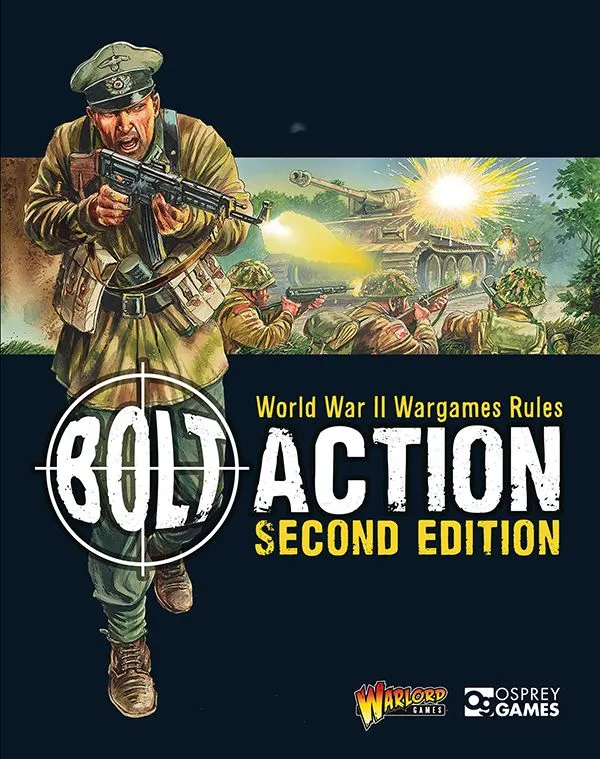
Bolt Action
- 2–6 Spieler
- 120 Min.
- Komplexität 2,7/5
- 2012
2018
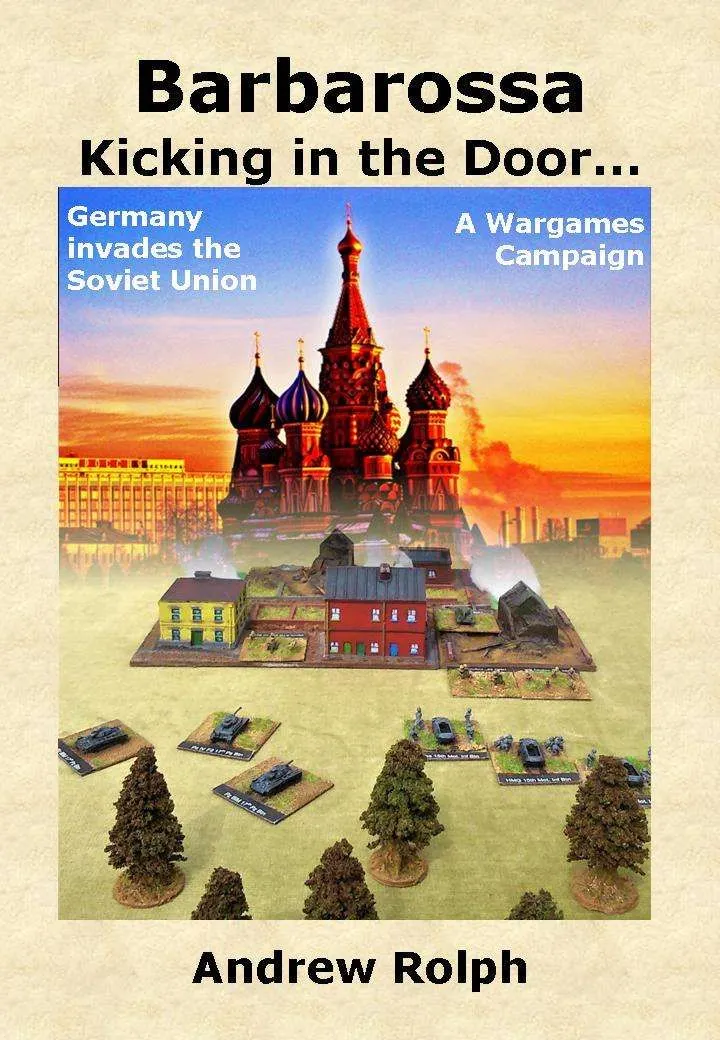
Regelhilfe für Barbarossa: Kicking in the Door... – Germany Invades the Soviet Union
Verständliche Erklärungen zu Spielzügen, Karteneffekten und strittigen Situationen mit Verweisen auf offizielle Quellen und gespeichertem Fragenverlauf.
Was möchtest du wissen?
Antworten stammen aus dem offiziellen Regelheft, mit Seitenangabe zum Nachprüfen.
Barbarossa: Kicking in the Door... – Germany Invades the Soviet Union ist eine Brettspiel-Erweiterung aus dem Jahr 2018 für 4–12 Personen und ab 12 Jahren. Entwickelt wurde es von Andrew Rolph; die wichtigsten Mechaniken sind Simulation und Scenario / Mission / Campaign Game.
Auf Englisch
Barbarossa – Kicking in the Door… is a wargames campaign covering the German invasion of the Soviet Union between June and September 1941. It is designed for games in which a stand represents a platoon, such as Blitzkrieg Commander, Command Decision: TOB, A Fistful of Tows, Rapid Fire and others, including those which wargamers may have written themselves. The system generates 150+ hours of gaming spread over 50+ individual battles which are fought over fifteen weekly campaign turns. Bookkeeping is kept to a minimum as players take command of four of the German panzer divisions spearheading the invasion or the Soviet tank and infantry forces opposing them. Straightforward German attacks will be interspersed with Soviet counterattacks, storming city outskirts, holding bridgeheads or trying to break through the fortifications of the Stalin Line. Each type of battle has its own terrain specifications, victory conditions, set up restrictions and likely opposition. Individual battles are reinforced regimental/brigade sized, with some battalions of each division selected to fight whilst others are rested. In addition to managing the individual battles, however, the German player also needs to manage the campaign. Ever increasing Soviet resistance needs to be curtailed by encircling their forces. Such encirclements reduce the availability of ‘mobilisation points’ which the Soviet players use as currency to ‘buy’ greater or better equipped forces and fortifications with which the slow the German advance. A rapid, deep advance, however, will exact a heavy toll in attrition. Supply will also become a problem for the German players, limiting the numbers they can commit to battle and their artillery/air support. The book also includes a brief history of the campaign background information (such as time and groundscale) useful in adapting the system to different sets of rules and some suggestions for additional optional rules a system for generating table layouts for individual battles a comprehensive set of Appendices covering the Tables of Organisation and Equipment to both platoon and company level for all divisions and regiments involved 42 colour terrain squares to assist in creating the terrain for individual battles a worked example of the terrain generation system a Campaign Quick Reference Sheet an example Campaign Turn a complete set of very quick play rules a full colour A4 Campaign Map Barbarossa – Kicking in the Door… is an ideal campaign for a club (with eight of more players for twelve or more three hour sessions) or one to be organised remotely, by e-mail, with shorter options available for fewer players or those with less time available. For those who have purchased the author’s previous book of eastern front scenarios (Grey Steel, Red Storm – available on Wargame Vault) please note that around seven pages of history and background from that book are reproduced largely unchanged in Part One of this volume. —description from the publisher
Laut Katalog unterstützt Barbarossa: Kicking in the Door... – Germany Invades the Soviet Union 4–12 Personen. Diese Spanne entspricht der vom Verlag angegebenen Spielerzahl, das Spiel lässt sich also für jede Gruppengröße innerhalb dieser Spanne aufbauen. Aufbau, einzelne Regeln und Wertungsdetails können je nach Personenzahl trotzdem abweichen; prüfe daher die genaue Konfiguration in der Anleitung deiner Ausgabe.
Im Katalog wird Barbarossa: Kicking in the Door... – Germany Invades the Soviet Union ab 12 Jahren empfohlen. Das ist die Empfehlung des Verlags und berücksichtigt Leseanforderungen, Regelkomplexität und Kleinteile, nicht nur das Thema. Jüngere Kinder können oft mit Hilfe eines Erwachsenen mitspielen; beachte die Altersangabe deiner Ausgabe und die Brettspielerfahrung deiner Gruppe.
Barbarossa: Kicking in the Door... – Germany Invades the Soviet Union gehört zu diesen Kategorien: Wargame, World War II und Expansion for Base-game. Die wichtigsten Mechaniken sind Simulation und Scenario / Mission / Campaign Game. Kategorien beschreiben Thema und Setting eines Spiels, Mechaniken dagegen, was die Spielenden in ihrem Zug tatsächlich tun. Jede Mechanik führt zu einer Katalogseite mit ähnlichen Spielen, falls du etwas Vergleichbares suchst.
Als Autoren von Barbarossa: Kicking in the Door... – Germany Invades the Soviet Union sind angegeben: Andrew Rolph. Diese Angaben stammen aus den veröffentlichten Spieldaten und nennen die für das Spieldesign verantwortlichen Personen, nicht die Illustratoren oder Verlage. Die Autorenseiten auf MeepleRules sammeln weitere Titel derselben Autoren – praktisch, wenn dir ein Spiel gefällt und du ähnliche Spiele suchst.
Im Katalog ist Barbarossa: Kicking in the Door... – Germany Invades the Soviet Union als Erweiterung aufgeführt. Erweiterungen ergänzen ein bestehendes Grundspiel um neues Material, neue Regeln oder Szenarien und sind meist nicht eigenständig spielbar. Prüfe auf der Schachtel oder in der Verlagsbeschreibung, welches Grundspiel genau benötigt wird und ob deine Ausgabe dieses Spiels mit der Erweiterung kompatibel ist.