
- BGG-Rang
- BGG #3.339
- BGG-Bewertung
- 7,8
Bolt Action
- 2–6 Spieler
- 120 Min.
- Komplexität 2,7/5
- 2012
2012
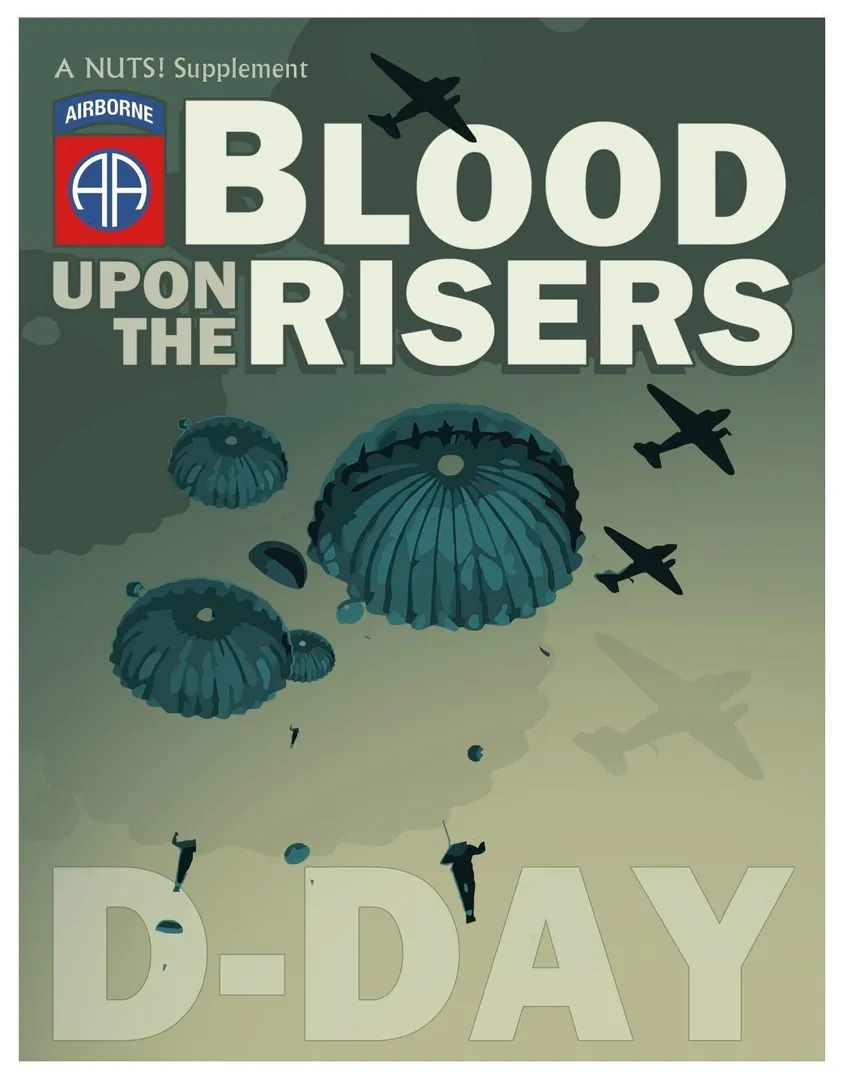
Regelhilfe für Blood Upon The Risers: D-Day
Verständliche Erklärungen zu Spielzügen, Karteneffekten und strittigen Situationen mit Verweisen auf offizielle Quellen und gespeichertem Fragenverlauf.
Was möchtest du wissen?
Antworten stammen aus dem offiziellen Regelheft, mit Seitenangabe zum Nachprüfen.
Blood Upon The Risers: D-Day ist eine Brettspiel-Erweiterung aus dem Jahr 2012 mit 120 Minuten pro Partie und ab 10 Jahren. Entwickelt wurde es von Darby Eckles; die wichtigsten Mechaniken sind Dice Rolling.

Auf Englisch
Blood Upon The Risers: D-Day is a scenario book for NUTS! 2nd Edition. It takes place on June 6, 1944 and covers the actions of small bands of American paratroopers of the 82nd Airborne Division during the early parts of Operation Neptune, a portion of the Overlord invasion plan. Inside Blood Upon The Risers: D-Day you will find: • Special Airborne rules that will make your paratroopers different than normal soldiers. • New rules for the different types of terrain you will fight in. • Tabletop artillery rules. • New weapon and vehicle stats. • Ten linked scenarios covering the actions on the 6th of June. The scenarios provided in the book are fictional, though based on actual events, and are intended to be played solo (or cooperative) from the American side. The scenarios can easily be modified to be played head-to-head with another player taking on the forces allocated to the German side. The scenarios are also designed to be played in sequence, with the result of the previous mission affecting the next. However, they may also be played as standalone scenarios with little-to-no changes.
Die angegebene Spieldauer für Blood Upon The Risers: D-Day beträgt 120 Minuten. Das ist die Schätzung des Verlags für eine vollständige Partie. Die tatsächliche Dauer hängt von der Gruppe, der Personenzahl und der Regelkenntnis ab: Erste Partien dauern meist länger, erfahrene Gruppen sind oft schneller fertig. Aufbau und Regelerklärung sind in dieser Schätzung nicht enthalten.
Im Katalog wird Blood Upon The Risers: D-Day ab 10 Jahren empfohlen. Das ist die Empfehlung des Verlags und berücksichtigt Leseanforderungen, Regelkomplexität und Kleinteile, nicht nur das Thema. Jüngere Kinder können oft mit Hilfe eines Erwachsenen mitspielen; beachte die Altersangabe deiner Ausgabe und die Brettspielerfahrung deiner Gruppe.
Blood Upon The Risers: D-Day gehört zu diesen Kategorien: Wargame, Miniatures und World War II. Die wichtigsten Mechaniken sind Dice Rolling. Kategorien beschreiben Thema und Setting eines Spiels, Mechaniken dagegen, was die Spielenden in ihrem Zug tatsächlich tun. Jede Mechanik führt zu einer Katalogseite mit ähnlichen Spielen, falls du etwas Vergleichbares suchst.
Als Autoren von Blood Upon The Risers: D-Day sind angegeben: Darby Eckles. Diese Angaben stammen aus den veröffentlichten Spieldaten und nennen die für das Spieldesign verantwortlichen Personen, nicht die Illustratoren oder Verlage. Die Autorenseiten auf MeepleRules sammeln weitere Titel derselben Autoren – praktisch, wenn dir ein Spiel gefällt und du ähnliche Spiele suchst.
Im Katalog ist Blood Upon The Risers: D-Day als Erweiterung aufgeführt. Erweiterungen ergänzen ein bestehendes Grundspiel um neues Material, neue Regeln oder Szenarien und sind meist nicht eigenständig spielbar. Prüfe auf der Schachtel oder in der Verlagsbeschreibung, welches Grundspiel genau benötigt wird und ob deine Ausgabe dieses Spiels mit der Erweiterung kompatibel ist.