

- BGG-Rang
- BGG #8.385
- BGG-Bewertung
- 6,9
Grand Illusion: Mirage of Glory, 1914
- 1–2 Spieler
- Komplexität 3,2/5
- 2004
2001
Regelhilfe für Clash of Giants: Campaigns of Tannenberg and the Marne, 1914
Verständliche Erklärungen zu Spielzügen, Karteneffekten und strittigen Situationen mit Verweisen auf offizielle Quellen und gespeichertem Fragenverlauf.
Für 1 Person
Was möchtest du wissen?
Antworten stammen aus dem offiziellen Regelheft, mit Seitenangabe zum Nachprüfen.
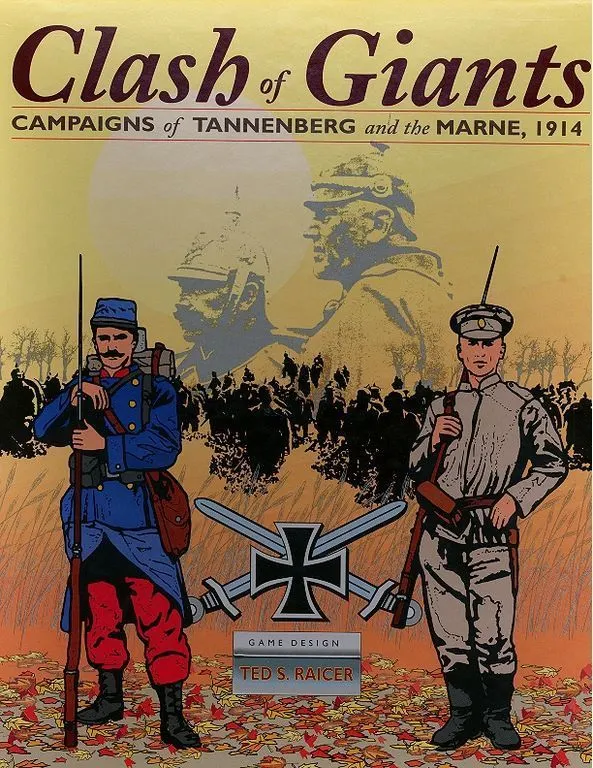
Clash of Giants: Campaigns of Tannenberg and the Marne, 1914 ist ein Brettspiel aus dem Jahr 2001 für 1–2 Personen, mit 180 Minuten pro Partie und ab 12 Jahren. Entwickelt wurde es von Ted Raicer; die wichtigsten Mechaniken sind Dice Rolling und Hexagon Grid.



Auf Englisch
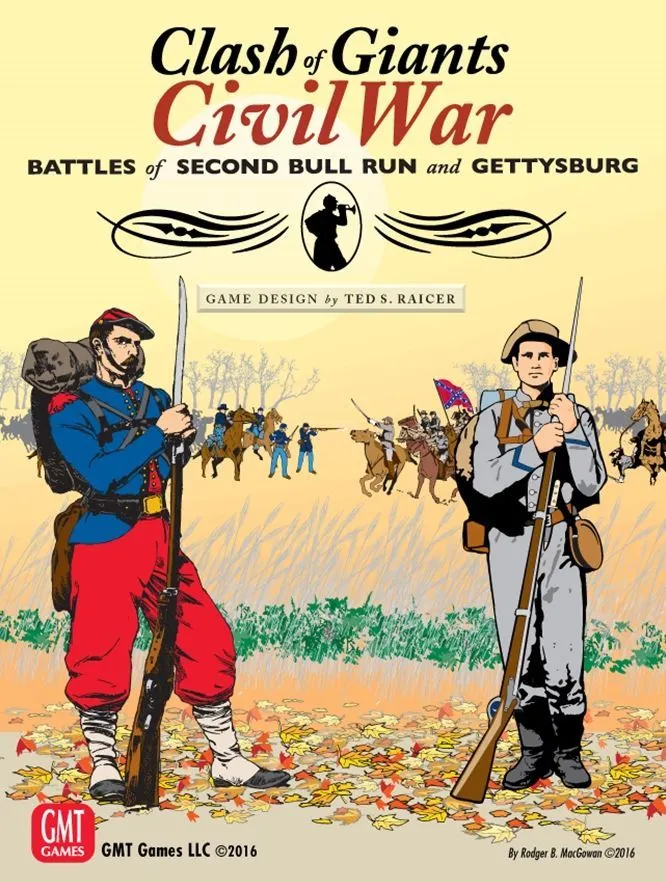
Clash of Giants contains two separate games (both using the same basic system) covering the two most famous battles of the opening phase of the First World War. Tannenberg was the German victory that halted a Russian offensive into East Prussia and destroyed the Russian 2nd Army. The Marne was the climactic battle of Germany's attempt to defeat France in the war's first six weeks. Arguably a tactical draw, it was a strategic defeat for the Germans as their armies recoiled from the gates of Paris. Designed by eight-time Charles S. Roberts award winner Ted S. Raicer (whose most recent game was GMT's Paths of Glory), and developed by Krieg designer Steve Kosakowski, the Clash of Giants system is intended to emphasize playability while still providing players with proper historical feel. The games focus on the difficulty of commanding groups of armies, with a system where movement allowance for each army is separately determined by a command roll. Clash of Giants includes the standard and exclusive rules (including rules for Paris Taxis at the Marne and Geman wireless intercepts at Tannenberg), two full size large-hex maps, two player aid cards, and 264 large counters. Units are divisions and brigades. Simple but not simplistic, Clash of Giants has a unique combat system based more on a unit's training, equipment, and morale than numbers. In Tannenberg, the victory conditions force both sides to take risks - and the German player will have to use every advantage to avoid being crushed by superior Russian numbers. At the Marne, the Allied player will first have to successfully disengage and rally his French and British armies, before turning to deliver a powerful counterattack. (But don't forget that the Germans can win instantly if they take Paris!) The two battles in Clash of Giants [...] are good for solo or competitive play. The Marne (which contains an Allied Counterattack scenario in addition to the full campaign) can be played in an afternoon. Tannenberg can be completed in a couple of hours, making it the perfect game when time is short. TIME SCALE: 1-2 days per turn MAP SCALE: 4.5/3.3 miles per hex UNIT SCALE: Divisions and brigades NUMBER OF PLAYERS: One or two COMPONENTS 264 full-color counters Two 22"x34" full-color mapsheets 8-page Rulebook 12-page Battle Book 2 Player Aid cards One 6-sided dice (from GMT Games website)
Laut Katalog unterstützt Clash of Giants: Campaigns of Tannenberg and the Marne, 1914 1–2 Personen. Diese Spanne entspricht der vom Verlag angegebenen Spielerzahl, das Spiel lässt sich also für jede Gruppengröße innerhalb dieser Spanne aufbauen. Aufbau, einzelne Regeln und Wertungsdetails können je nach Personenzahl trotzdem abweichen; prüfe daher die genaue Konfiguration in der Anleitung deiner Ausgabe.
Die angegebene Spieldauer für Clash of Giants: Campaigns of Tannenberg and the Marne, 1914 beträgt 180 Minuten. Das ist die Schätzung des Verlags für eine vollständige Partie. Die tatsächliche Dauer hängt von der Gruppe, der Personenzahl und der Regelkenntnis ab: Erste Partien dauern meist länger, erfahrene Gruppen sind oft schneller fertig. Aufbau und Regelerklärung sind in dieser Schätzung nicht enthalten.
Im Katalog wird Clash of Giants: Campaigns of Tannenberg and the Marne, 1914 ab 12 Jahren empfohlen. Das ist die Empfehlung des Verlags und berücksichtigt Leseanforderungen, Regelkomplexität und Kleinteile, nicht nur das Thema. Jüngere Kinder können oft mit Hilfe eines Erwachsenen mitspielen; beachte die Altersangabe deiner Ausgabe und die Brettspielerfahrung deiner Gruppe.
Clash of Giants: Campaigns of Tannenberg and the Marne, 1914 hat bei BoardGameGeek eine Komplexitätswertung von 2,3 von 5 und gilt damit als eher leichtes Spiel. Die Wertung zeigt, wie viel Regelwissen, Planung und Entscheidungen eine typische Partie verlangt. Schwerere Spiele brauchen bei der ersten Erklärung mehr Zeit, daher hilft vor dem Spieleabend eine Vorbereitungsanleitung.
Clash of Giants: Campaigns of Tannenberg and the Marne, 1914 gehört zu diesen Kategorien: Wargame und World War I. Die wichtigsten Mechaniken sind Dice Rolling und Hexagon Grid. Kategorien beschreiben Thema und Setting eines Spiels, Mechaniken dagegen, was die Spielenden in ihrem Zug tatsächlich tun. Jede Mechanik führt zu einer Katalogseite mit ähnlichen Spielen, falls du etwas Vergleichbares suchst.
Als Autoren von Clash of Giants: Campaigns of Tannenberg and the Marne, 1914 sind angegeben: Ted Raicer. Diese Angaben stammen aus den veröffentlichten Spieldaten und nennen die für das Spieldesign verantwortlichen Personen, nicht die Illustratoren oder Verlage. Die Autorenseiten auf MeepleRules sammeln weitere Titel derselben Autoren – praktisch, wenn dir ein Spiel gefällt und du ähnliche Spiele suchst.
Im Katalog ist Clash of Giants: Campaigns of Tannenberg and the Marne, 1914 als Grundspiel aufgeführt. Es lässt sich eigenständig mit dem Material aus der Schachtel spielen und benötigt keinen weiteren Titel. Erweiterungen, sofern es welche gibt, ergänzen neues Material oder neue Regeln und sind im Katalog separat mit einem Verweis auf dieses Grundspiel aufgeführt.