
- BGG-Rang
- BGG #30.763
- BGG-Bewertung
- 4,6
Zola
- 2 Spieler
- 20–60 Min.
- Komplexität 1,8/5
- 2021

2022
Regelhilfe für Diablo
Verständliche Erklärungen zu Spielzügen, Karteneffekten und strittigen Situationen mit Verweisen auf offizielle Quellen und gespeichertem Fragenverlauf.
Für 2 Personen
Was möchtest du wissen?
Antworten stammen aus dem offiziellen Regelheft, mit Seitenangabe zum Nachprüfen.
Diablo ist ein Brettspiel aus dem Jahr 2022 für 2 Personen, mit 20–60 Minuten pro Partie und ab 5 Jahren. Entwickelt wurde es von Mark Steere; die wichtigsten Mechaniken sind Dice Rolling, Square Grid und Pattern Movement.






Auf Englisch
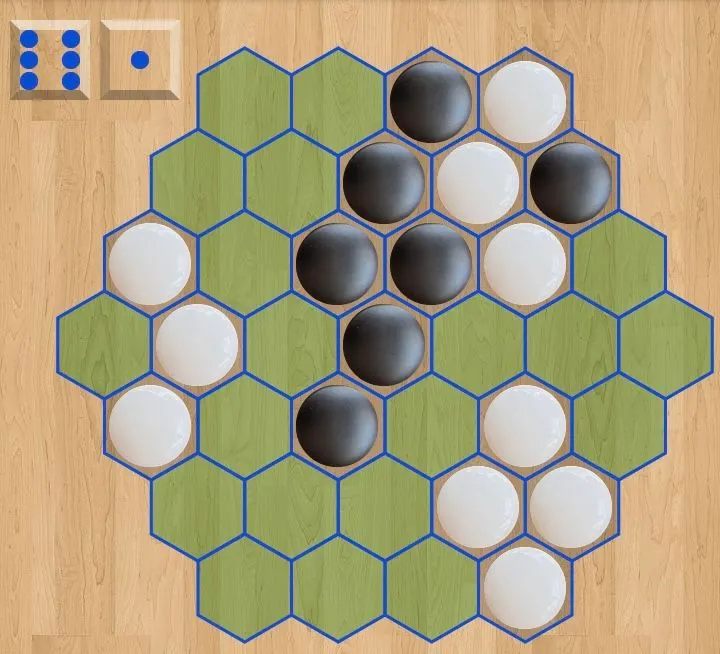
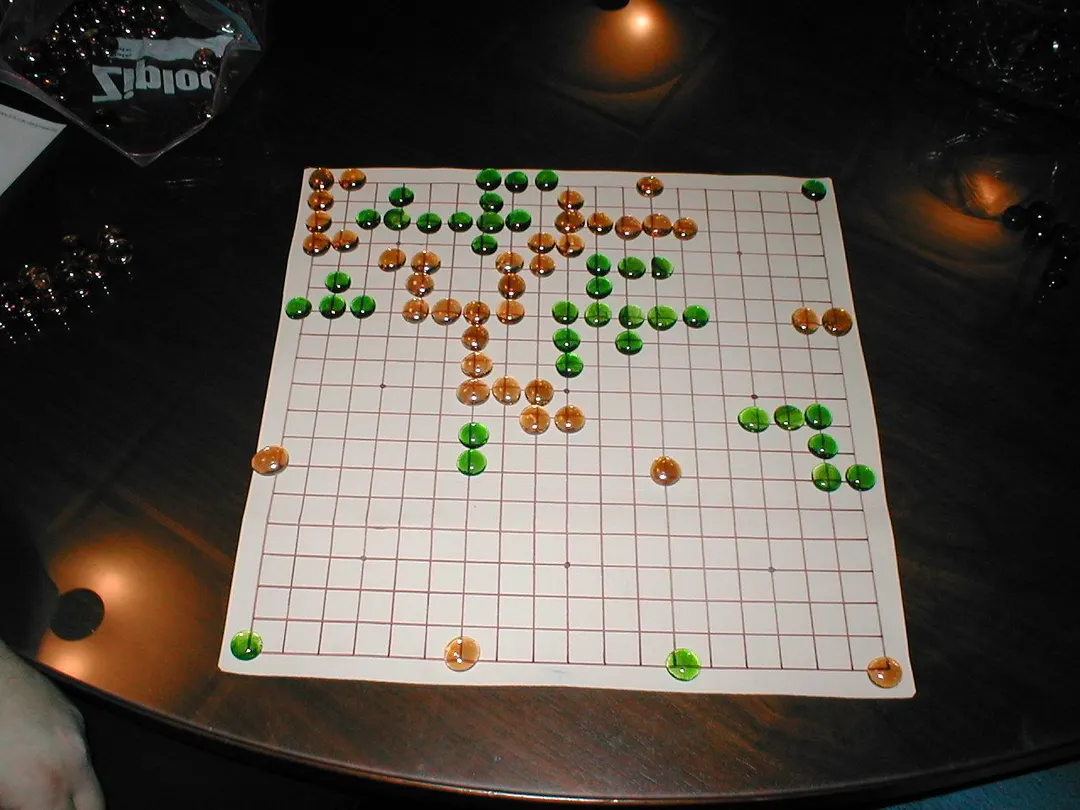
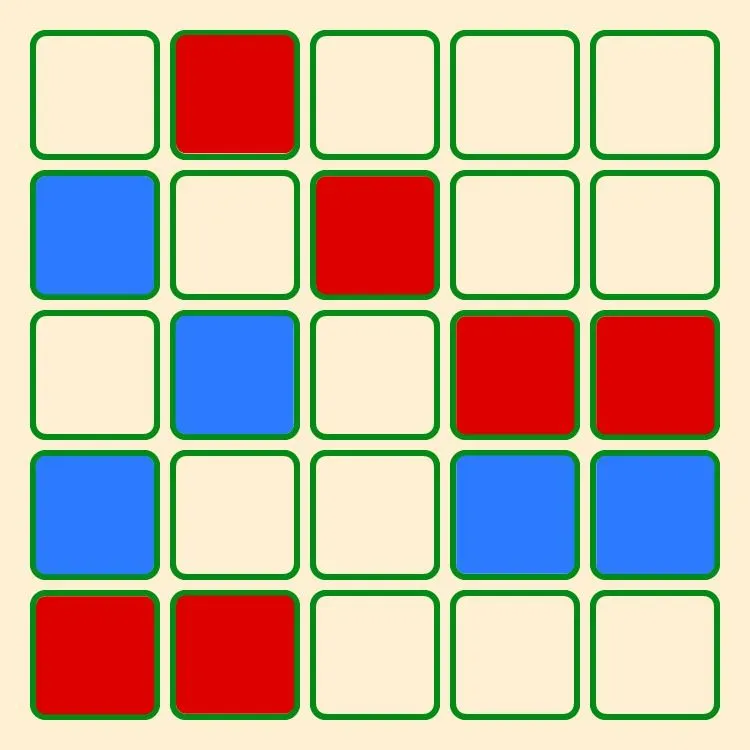
Diablo is a two-player game played with two dice and black and green checkers on a checkerboard of any even size. The number of faces on each of the dice is equal to half the length of the board. For example, if playing on a 6x6 board, the dice will be 3-sided. The board is initially populated with stacks of height one in a checkered pattern. The two players, Black and Green, take turns rolling the dice and moving their own stacks. All moves are horizontal or vertical. Only entire stacks can be moved. Stacks cannot be subdivided. Black goes first. Player turn After rolling the dice, you will take two actions. Possible action combinations: Move two stacks (or the same stack twice), each move driven by a different die. The two moves can be of the same type or different types (subject to restrictions explained in ACTION TYPES). Move one stack, driven by one of the dice, and remove one of your checkers from the board (subject to restrictions explained in ACTION TYPES). Remove two of your checkers from the board (subject to restrictions explained in ACTION TYPES). Action types Merging move. You may move one of your stacks onto another of your stacks at a distance indicated by one of the dice, merging the two stacks into one monocolored stack. Capturing move. You may capture by replacement an enemy stack of equal or smaller size at a distance indicated by one of the dice. Move to unoccupied square. You may move a stack to an unoccupied square at a distance indicated by one of the dice ONLY FOR ONE OF YOUR TWO ACTIONS. You can’t make two moves to unoccupied squares during your turn. Remove a checker. At the outset of your turn, if you are able to make any kind of a move (merge, capture, or move to unoccupied square) you must do so. If not, you must remove any two of your checkers from the board, concluding your turn. If you began your turn with a move to an unoccupied square, then you must finish your turn with a merge or capture if you can. If not, you must remove one of your checkers, concluding your turn. If you began your turn with a merge or capture, then you must finish your turn with any kind of a move (merge, capture, or move to an unoccupied square) if you can. If not, you must remove one of your checkers, concluding your turn. Balancing rule Black, on his first turn, plays only one of the two rolled dice, of his choosing. Object of the game A player wins when all of his opponent’s checkers have been removed from the board.
Laut Katalog unterstützt Diablo 2 Personen. Das ist die vom Verlag angegebene Spielerzahl, das Spiel ist also genau für diese Anzahl von Mitspielenden ausgelegt. Varianten für andere Gruppengrößen sind, sofern vorhanden, in der Anleitung deiner Ausgabe beschrieben; prüfe sie, bevor du eine andere Konfiguration aufbaust.
Die angegebene Spieldauer für Diablo beträgt 20–60 Minuten. Das ist die Schätzung des Verlags für eine vollständige Partie. Die tatsächliche Dauer hängt von der Gruppe, der Personenzahl und der Regelkenntnis ab: Erste Partien dauern meist länger, erfahrene Gruppen sind oft schneller fertig. Aufbau und Regelerklärung sind in dieser Schätzung nicht enthalten.
Im Katalog wird Diablo ab 5 Jahren empfohlen. Das ist die Empfehlung des Verlags und berücksichtigt Leseanforderungen, Regelkomplexität und Kleinteile, nicht nur das Thema. Jüngere Kinder können oft mit Hilfe eines Erwachsenen mitspielen; beachte die Altersangabe deiner Ausgabe und die Brettspielerfahrung deiner Gruppe.
Diablo gehört zu diesen Kategorien: Dice und Abstract Strategy. Die wichtigsten Mechaniken sind Dice Rolling, Square Grid und Pattern Movement. Kategorien beschreiben Thema und Setting eines Spiels, Mechaniken dagegen, was die Spielenden in ihrem Zug tatsächlich tun. Jede Mechanik führt zu einer Katalogseite mit ähnlichen Spielen, falls du etwas Vergleichbares suchst.
Als Autoren von Diablo sind angegeben: Mark Steere. Diese Angaben stammen aus den veröffentlichten Spieldaten und nennen die für das Spieldesign verantwortlichen Personen, nicht die Illustratoren oder Verlage. Die Autorenseiten auf MeepleRules sammeln weitere Titel derselben Autoren – praktisch, wenn dir ein Spiel gefällt und du ähnliche Spiele suchst.
Im Katalog ist Diablo als Grundspiel aufgeführt. Es lässt sich eigenständig mit dem Material aus der Schachtel spielen und benötigt keinen weiteren Titel. Erweiterungen, sofern es welche gibt, ergänzen neues Material oder neue Regeln und sind im Katalog separat mit einem Verweis auf dieses Grundspiel aufgeführt.