
- BGG-Rang
- BGG #8.738
- BGG-Bewertung
- 8,6
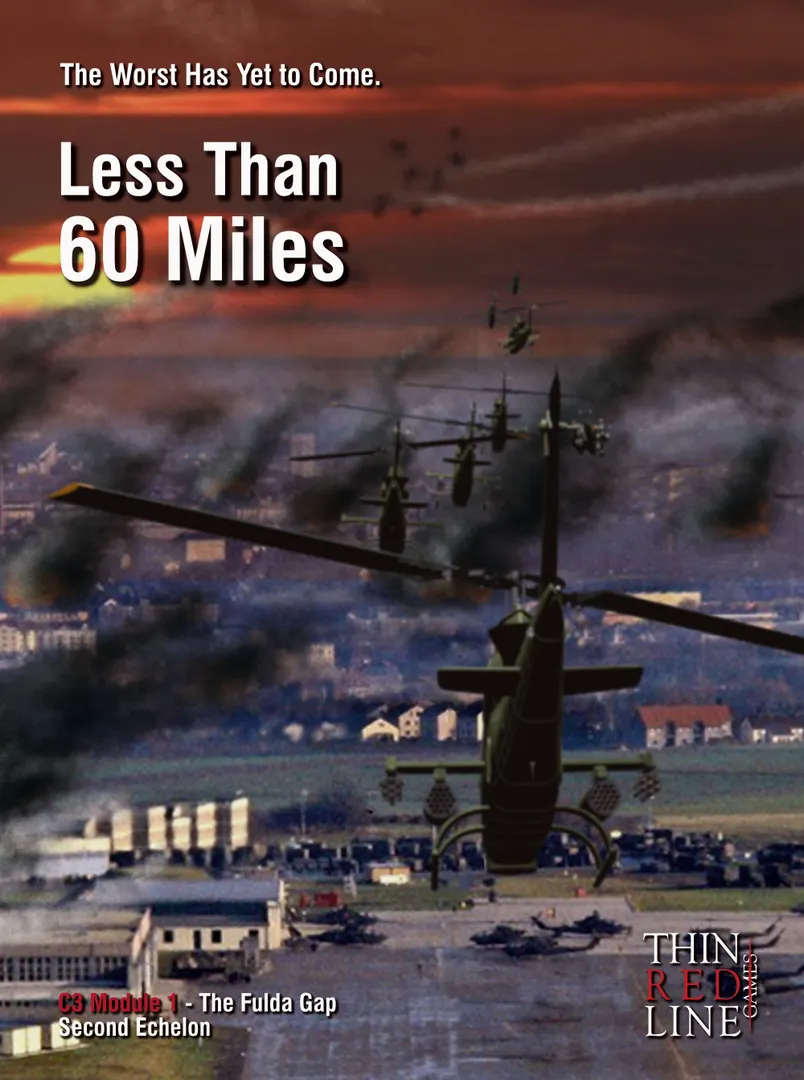
Less Than 60 Miles
- 1–4 Spieler
- 180–600 Min.
- Komplexität 3,7/5
- 2019
2022
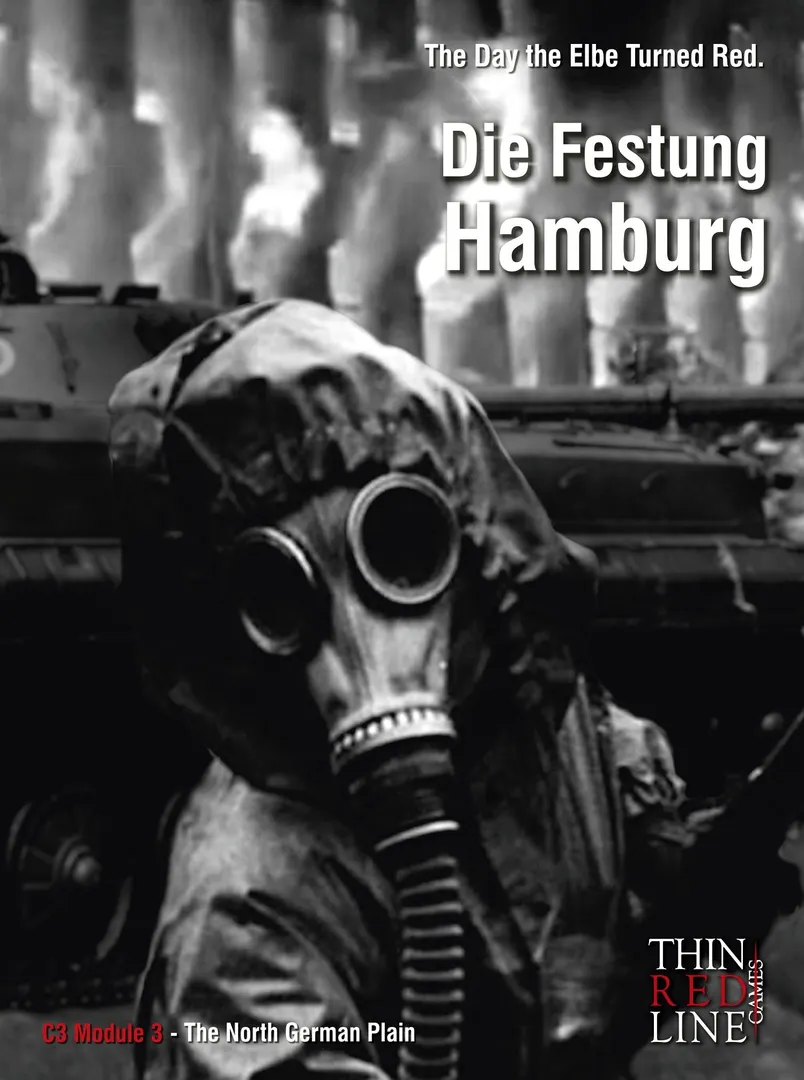
Regelhilfe für Die Festung Hamburg
Verständliche Erklärungen zu Spielzügen, Karteneffekten und strittigen Situationen mit Verweisen auf offizielle Quellen und gespeichertem Fragenverlauf.
Für 1 Person
Was möchtest du wissen?
Antworten stammen aus dem offiziellen Regelheft, mit Seitenangabe zum Nachprüfen.
Die Festung Hamburg ist ein Brettspiel aus dem Jahr 2022 für 1–4 Personen, mit 180–600 Minuten pro Partie und ab 16 Jahren. Entwickelt wurde es von Fabrizio Vianello; die wichtigsten Mechaniken sind Dice Rolling, Hexagon Grid und Simulation.


Auf Englisch
"The goal is to collapse adversary’s system into confusion and disorder causing him to over and under react to activity that appears simultaneously menacing as well as ambiguous, chaotic, or misleading." John R. Boyd, “Patterns of Conflict” At 0400 Zulu Time, July 24 1985, Warsaw Pact forces cross the Inner German Border and assault NATO positions in West Germany. The offensive in the North German Plain sector involves twelve divisions and has three main objectives: Deny NATO the access to the Baltic region, gain control of the West German ports on the North Sea, and support the advance of the Soviet armies in the BAOR sector. Taking its roots from SPI’s Central Front and NATO: Division Commander, Die Festung Hamburg is the third module of the C3 series, focused on Command, Control and Communication and pioneered by Less Than 60 Miles - one of the five nominees for the 2019 Charles Roberts Awards as Best Post-WW2, Cold War, & Hypothetical Era Board Wargame. Several typical wargame mechanics have been reinterpreted, and both sides must fight three equally dangerous foes: the enemy, their own plan and time. Even a simple action can quickly turn into a disaster when facing an opponent using more efficiently the real key to victory: the OODA Loop theorized by John Boyd in the early ‘80s and used today as the basis for several military doctrines. Military doctrine, tactics and peculiarities for each side are represented, allowing a skilled commander to use his own strength points and exploit the enemy's weak ones. Some examples are: West German Auftragstaktik (Mission-Type Orders), giving Bundeswehr a flexibility hardly obtained by other armies. Mobilization of Dutch and Danish reservists. The critical boundary between NATO's AFCENT and AFNORTH Commands. Soviet Sappers, first-line assault units used to crack the toughest nuts. Soviet Assault From March. Warsaw Pact Axis of Advance. Warsaw Pact vulnerable supply network. Game Highlights 5 km per hex, 3 hours per game turn Regiment / Battalion sized ground units Detailed Order of Battle set in 1985 Close Air Support and Attack Helicopters Command, Control & Communication related problems Electronic and Intelligence Warfare Artillery interdiction and Counter-Battery fire Chemical and Nuclear warfare Specific events for Warsaw Pact and NATO Random events to further increase battlefield chaos Two Campaign Games: "The North Stygian Plain", Warsaw Pact offensive against NORTHAG and JUTLAND sectors. "One Minute to Midnight", Unrestricted nuclear warfare after days of build-up. Four Smaller Scenarios: "Our Dearest Brothers", West German 18 Panzer Brigade defense of the Elbe - Lübeck Kanal against East German 8th Motorized Rifle Division. "The Sickle's Long Shadow", The initial attack of Soviet 2nd Guards Tank Army along the Elbe. "A Pact of Blood", West German and Danish defense of the JUTLAND sector against East German 5 and Polish 1st Armies. "The Roaring Sound of Doom", Second Echelon of Soviet 2nd Guards Tank Army assaults a still deploying Netherlands I Corps. Game Components 98×75 cm matte plasticized map, covering the Netherlands I Corps, JUTLAND Corps, and the surrounding areas. 1000+ 5/8″ matte plasticized counters 41 Action and Event Cards 24 pages Rules Booklet 32 pages Scenarios & Designer’s Notes Booklet 8 pages Examples of Play Booklet 2x Tables booklets 5x Players' Aid Charts 2x 10-sided dice 10x zipbags -description from designer
Laut Katalog unterstützt Die Festung Hamburg 1–4 Personen. Diese Spanne entspricht der vom Verlag angegebenen Spielerzahl, das Spiel lässt sich also für jede Gruppengröße innerhalb dieser Spanne aufbauen. Aufbau, einzelne Regeln und Wertungsdetails können je nach Personenzahl trotzdem abweichen; prüfe daher die genaue Konfiguration in der Anleitung deiner Ausgabe.
Die angegebene Spieldauer für Die Festung Hamburg beträgt 180–600 Minuten. Das ist die Schätzung des Verlags für eine vollständige Partie. Die tatsächliche Dauer hängt von der Gruppe, der Personenzahl und der Regelkenntnis ab: Erste Partien dauern meist länger, erfahrene Gruppen sind oft schneller fertig. Aufbau und Regelerklärung sind in dieser Schätzung nicht enthalten.
Im Katalog wird Die Festung Hamburg ab 16 Jahren empfohlen. Das ist die Empfehlung des Verlags und berücksichtigt Leseanforderungen, Regelkomplexität und Kleinteile, nicht nur das Thema. Jüngere Kinder können oft mit Hilfe eines Erwachsenen mitspielen; beachte die Altersangabe deiner Ausgabe und die Brettspielerfahrung deiner Gruppe.
Die Festung Hamburg hat bei BoardGameGeek eine Komplexitätswertung von 4,3 von 5 und gilt damit als schweres Spiel. Die Wertung zeigt, wie viel Regelwissen, Planung und Entscheidungen eine typische Partie verlangt. Schwerere Spiele brauchen bei der ersten Erklärung mehr Zeit, daher hilft vor dem Spieleabend eine Vorbereitungsanleitung.
Die Festung Hamburg gehört zu diesen Kategorien: Wargame und Modern Warfare. Die wichtigsten Mechaniken sind Dice Rolling, Hexagon Grid und Simulation. Kategorien beschreiben Thema und Setting eines Spiels, Mechaniken dagegen, was die Spielenden in ihrem Zug tatsächlich tun. Jede Mechanik führt zu einer Katalogseite mit ähnlichen Spielen, falls du etwas Vergleichbares suchst.
Als Autoren von Die Festung Hamburg sind angegeben: Fabrizio Vianello. Diese Angaben stammen aus den veröffentlichten Spieldaten und nennen die für das Spieldesign verantwortlichen Personen, nicht die Illustratoren oder Verlage. Die Autorenseiten auf MeepleRules sammeln weitere Titel derselben Autoren – praktisch, wenn dir ein Spiel gefällt und du ähnliche Spiele suchst.
Im Katalog ist Die Festung Hamburg als Grundspiel aufgeführt. Es lässt sich eigenständig mit dem Material aus der Schachtel spielen und benötigt keinen weiteren Titel. Erweiterungen, sofern es welche gibt, ergänzen neues Material oder neue Regeln und sind im Katalog separat mit einem Verweis auf dieses Grundspiel aufgeführt.