
- BGG-Rang
- BGG #2.742
- BGG-Bewertung
- 7,3
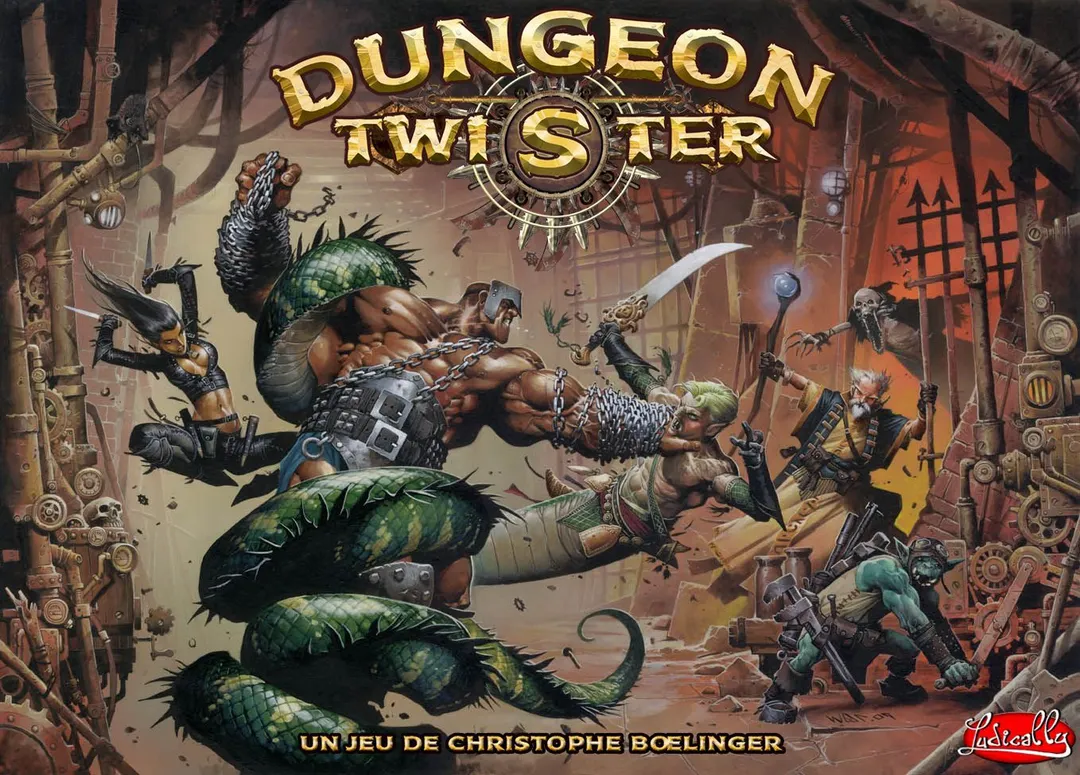
Dungeon Twister 2: Prison
- 1–2 Spieler
- 60 Min.
- Komplexität 3,2/5
- 2009
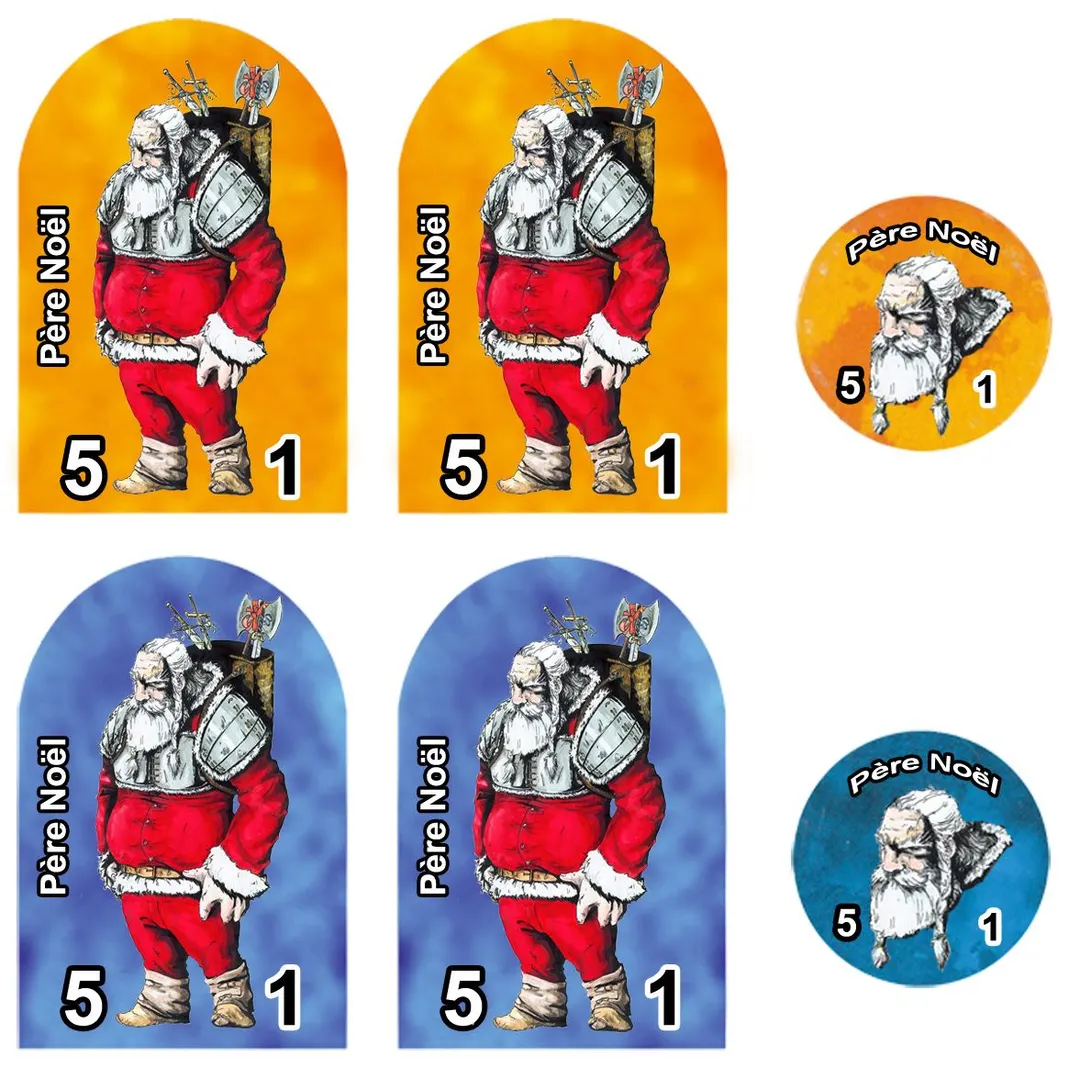
Regelhilfe für Dungeon Twister: Father Christmas
Verständliche Erklärungen zu Spielzügen, Karteneffekten und strittigen Situationen mit Verweisen auf offizielle Quellen und gespeichertem Fragenverlauf.
Was möchtest du wissen?
Antworten stammen aus dem offiziellen Regelheft, mit Seitenangabe zum Nachprüfen.
Dungeon Twister: Father Christmas ist eine Erweiterung für Dungeon Twister aus dem Jahr 2007 für 2 Personen, mit 60 Minuten pro Partie und ab 11 Jahren. Entwickelt wurde es von Christophe Boelinger; die wichtigsten Mechaniken sind Variable Player Powers, Hand Management und Tile Placement.


Auf Englisch
(5/1) (Goodies Christmas 2007) The player who controls Father Christmas must select the contents of his bag before the beginning of the game. The bag holds a useless toy (cursed object), a useful toy (common object: rope, key, or torch), a magical toy (ring, scroll, etc...) and a warrior toy (weapon, armor...). The selected toys are put on the side of the board and cannot be chosen by the team that has Father Christmas (except for the common objects). When he is adjacent to a characters, friend or enemy, Father Christmas can, for 1 AP, offer him one of the toys in his bag. If the character already had an object (or two objects, in the case of the Paladin and Ice Witch), the object is given to Father Christmas in exchange. If Father Christmas is already carrying one object, the object being given to Father Christmas is discarded. Father Christmas can use the Flying Carpet (Lands of Ice expansion) without discarding combat cards.
Laut Katalog unterstützt Dungeon Twister: Father Christmas 2 Personen. Das ist die vom Verlag angegebene Spielerzahl, das Spiel ist also genau für diese Anzahl von Mitspielenden ausgelegt. Varianten für andere Gruppengrößen sind, sofern vorhanden, in der Anleitung deiner Ausgabe beschrieben; prüfe sie, bevor du eine andere Konfiguration aufbaust.
Die angegebene Spieldauer für Dungeon Twister: Father Christmas beträgt 60 Minuten. Das ist die Schätzung des Verlags für eine vollständige Partie. Die tatsächliche Dauer hängt von der Gruppe, der Personenzahl und der Regelkenntnis ab: Erste Partien dauern meist länger, erfahrene Gruppen sind oft schneller fertig. Aufbau und Regelerklärung sind in dieser Schätzung nicht enthalten.
Im Katalog wird Dungeon Twister: Father Christmas ab 11 Jahren empfohlen. Das ist die Empfehlung des Verlags und berücksichtigt Leseanforderungen, Regelkomplexität und Kleinteile, nicht nur das Thema. Jüngere Kinder können oft mit Hilfe eines Erwachsenen mitspielen; beachte die Altersangabe deiner Ausgabe und die Brettspielerfahrung deiner Gruppe.
Dungeon Twister: Father Christmas gehört zu diesen Kategorien: Fantasy, Fighting und Exploration. Die wichtigsten Mechaniken sind Variable Player Powers, Hand Management und Tile Placement. Kategorien beschreiben Thema und Setting eines Spiels, Mechaniken dagegen, was die Spielenden in ihrem Zug tatsächlich tun. Jede Mechanik führt zu einer Katalogseite mit ähnlichen Spielen, falls du etwas Vergleichbares suchst.
Als Autoren von Dungeon Twister: Father Christmas sind angegeben: Christophe Boelinger. Diese Angaben stammen aus den veröffentlichten Spieldaten und nennen die für das Spieldesign verantwortlichen Personen, nicht die Illustratoren oder Verlage. Die Autorenseiten auf MeepleRules sammeln weitere Titel derselben Autoren – praktisch, wenn dir ein Spiel gefällt und du ähnliche Spiele suchst.
Im Katalog ist Dungeon Twister: Father Christmas als Erweiterung zu Dungeon Twister aufgeführt. Erweiterungen ergänzen das Grundspiel um neues Material, neue Regeln oder Szenarien und sind meist nicht eigenständig spielbar; du brauchst also Dungeon Twister, um sie zu nutzen. Prüfe, ob deine Ausgabe von Dungeon Twister kompatibel ist, da manche Erweiterungen zwischen den Auflagen überarbeitet wurden.