

- BGG-Bewertung
- 7,0
End of Empire: Lord Dunmore's War, 1774
- 2 Spieler
- Komplexität 2,0/5
- 2014
2014
Regelhilfe für End of Empire: 1744-1782
Verständliche Erklärungen zu Spielzügen, Karteneffekten und strittigen Situationen mit Verweisen auf offizielle Quellen und gespeichertem Fragenverlauf.
Was möchtest du wissen?
Antworten stammen aus dem offiziellen Regelheft, mit Seitenangabe zum Nachprüfen.
End of Empire: 1744-1782 ist ein Brettspiel aus dem Jahr 2014 für 1–99 Personen und mit 360–1080 Minuten pro Partie. Entwickelt wurde es von William Marsh; die wichtigsten Mechaniken sind Hexagon Grid und Movement Points.






Auf Englisch
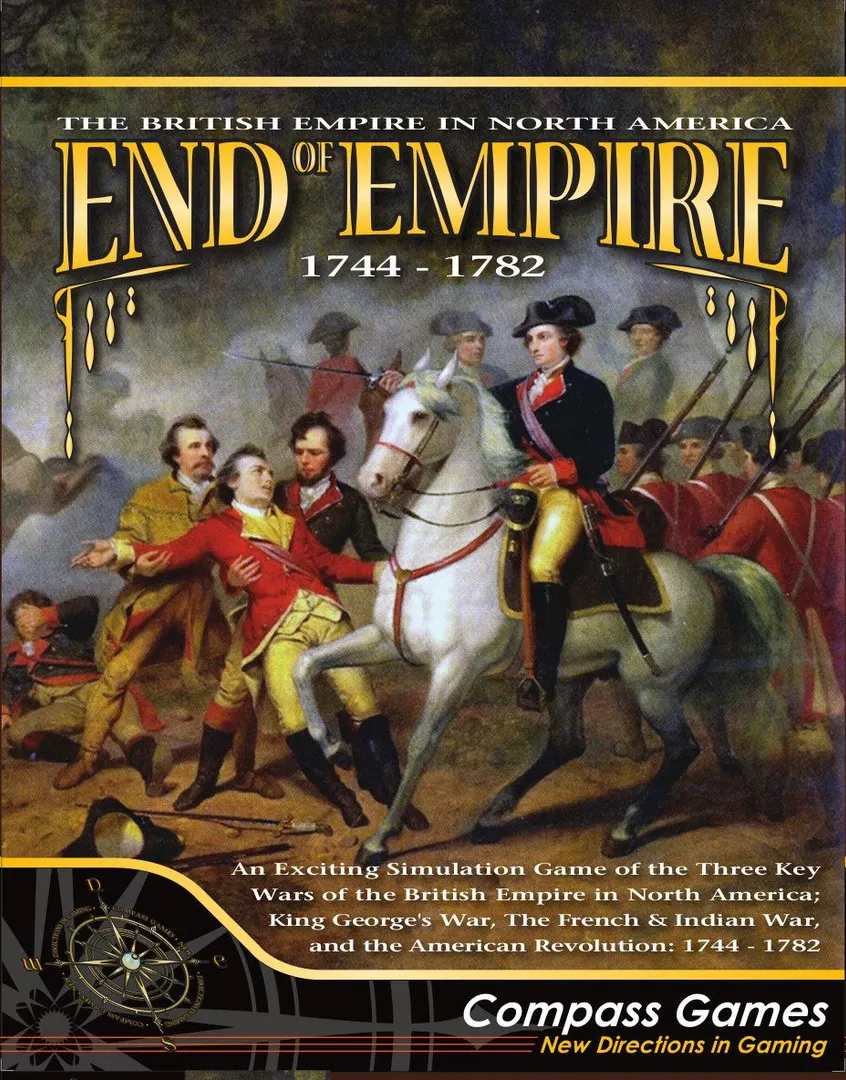
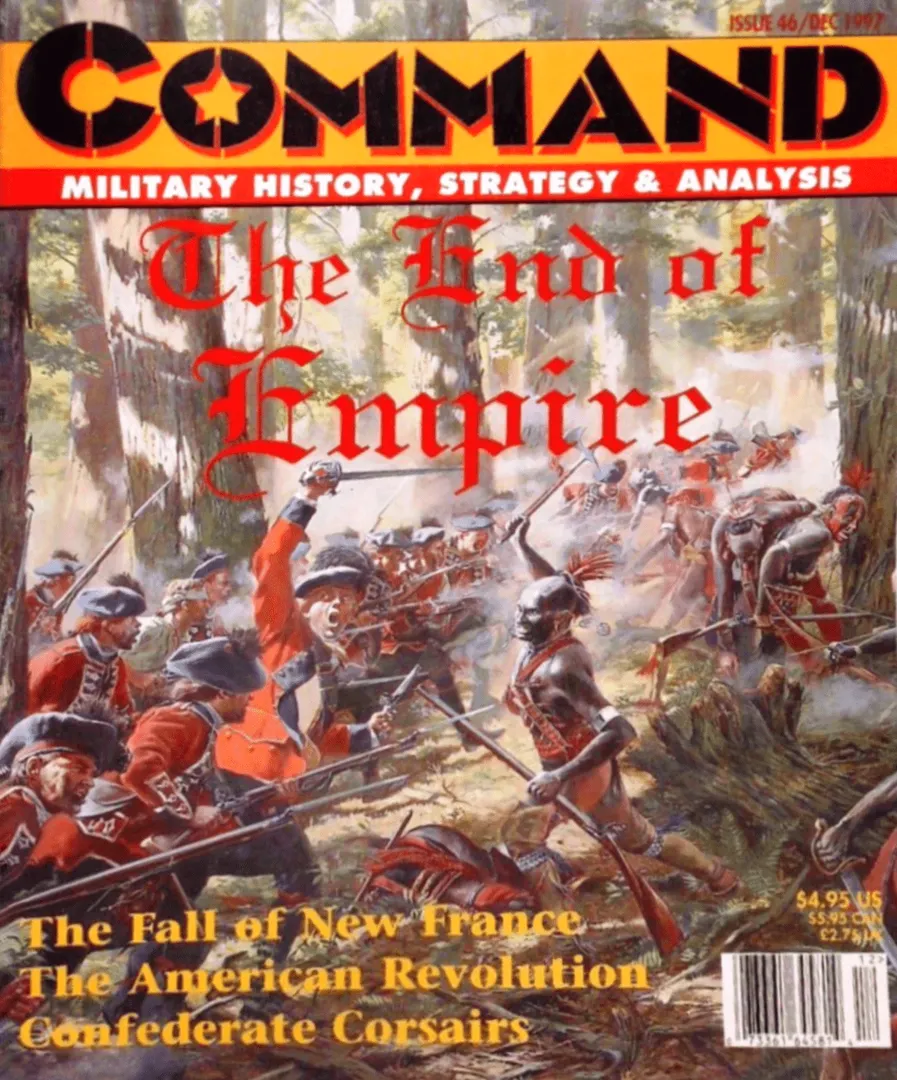
End of Empire: 1744-1782 is a two player game covering the three great conflicts fought on the North American continent between 1744 and 1783: King George’s War, sometimes known as the Old French War, which was part of the War of the Austrian Succession), the French and Indian War, part of the Seven Years War (known in England as the Great War for Empire), and the American Revolutionary War. The French and Indian War ended the French Empire in Canada; the American Revolution ended the British Empire in the 13 American colonies. An additional bonus scenario covers the War of Jenkin's Ear between Spanish Florida and British Georgia. Freely available post publication scenarios cover Lord Dunmore's War, the Chickasaw Wars, Queen Anne's War, King William's War as well as variant starts and political situations for the three wars in the published game. Each End of Empire game turn represents two months time. Each year consists of one spring turn, two summer turns, one fall turn, and two winter turns. Each hex is approximately 20 miles across. Units are mostly regiments but a few represent other sizes, each step represents approximately 250 men. End of Empire features two maps showing eastern North America. Each hex or town contains natural and/or man-made features that can effect the movement of units and the combat between units. End of Empire is an Epic game and perhaps the most detailed coverage of the critical period that saw the Empires of England, France, and Spain exit North America and the rise of the United States of America. With fifteen scenarios, and another thirteen available here on boardgamegeek, End of Empire represents plenty of value for your gaming dollar. Components: Two 22 X 34 inch maps Four and 1/2 countersheets (5/8” size) One rulebook One scenario book Multiple reference cards Time Scale: 2 months per turn Map Scale: 20 miles per hex Unit Scale: Various sizes – mostly regiments and fleets Players: Two Playing Time: Three to eighteen hours depending on scenario Designer: William M. Marsh Developer: Don Johnson Artist: Brien Miller
Laut Katalog unterstützt End of Empire: 1744-1782 1–99 Personen. Diese Spanne entspricht der vom Verlag angegebenen Spielerzahl, das Spiel lässt sich also für jede Gruppengröße innerhalb dieser Spanne aufbauen. Aufbau, einzelne Regeln und Wertungsdetails können je nach Personenzahl trotzdem abweichen; prüfe daher die genaue Konfiguration in der Anleitung deiner Ausgabe.
Die angegebene Spieldauer für End of Empire: 1744-1782 beträgt 360–1080 Minuten. Das ist die Schätzung des Verlags für eine vollständige Partie. Die tatsächliche Dauer hängt von der Gruppe, der Personenzahl und der Regelkenntnis ab: Erste Partien dauern meist länger, erfahrene Gruppen sind oft schneller fertig. Aufbau und Regelerklärung sind in dieser Schätzung nicht enthalten.
End of Empire: 1744-1782 hat bei BoardGameGeek eine Komplexitätswertung von 2,8 von 5 und gilt damit als eher leichtes Spiel. Die Wertung zeigt, wie viel Regelwissen, Planung und Entscheidungen eine typische Partie verlangt. Schwerere Spiele brauchen bei der ersten Erklärung mehr Zeit, daher hilft vor dem Spieleabend eine Vorbereitungsanleitung.
End of Empire: 1744-1782 gehört zu diesen Kategorien: Wargame, Age of Reason und American Revolutionary War. Die wichtigsten Mechaniken sind Hexagon Grid und Movement Points. Kategorien beschreiben Thema und Setting eines Spiels, Mechaniken dagegen, was die Spielenden in ihrem Zug tatsächlich tun. Jede Mechanik führt zu einer Katalogseite mit ähnlichen Spielen, falls du etwas Vergleichbares suchst.
Als Autoren von End of Empire: 1744-1782 sind angegeben: William Marsh. Diese Angaben stammen aus den veröffentlichten Spieldaten und nennen die für das Spieldesign verantwortlichen Personen, nicht die Illustratoren oder Verlage. Die Autorenseiten auf MeepleRules sammeln weitere Titel derselben Autoren – praktisch, wenn dir ein Spiel gefällt und du ähnliche Spiele suchst.
Im Katalog ist End of Empire: 1744-1782 als Grundspiel aufgeführt. Es lässt sich eigenständig mit dem Material aus der Schachtel spielen und benötigt keinen weiteren Titel. Erweiterungen, sofern es welche gibt, ergänzen neues Material oder neue Regeln und sind im Katalog separat mit einem Verweis auf dieses Grundspiel aufgeführt.