
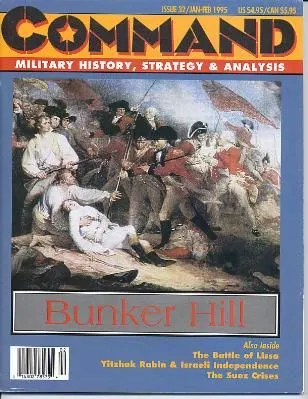
- BGG-Rang
- BGG #23.385
- BGG-Bewertung
- 6,0
Bunker Hill
- 2 Spieler
- 120 Min.
- Komplexität 3,0/5
- 1995
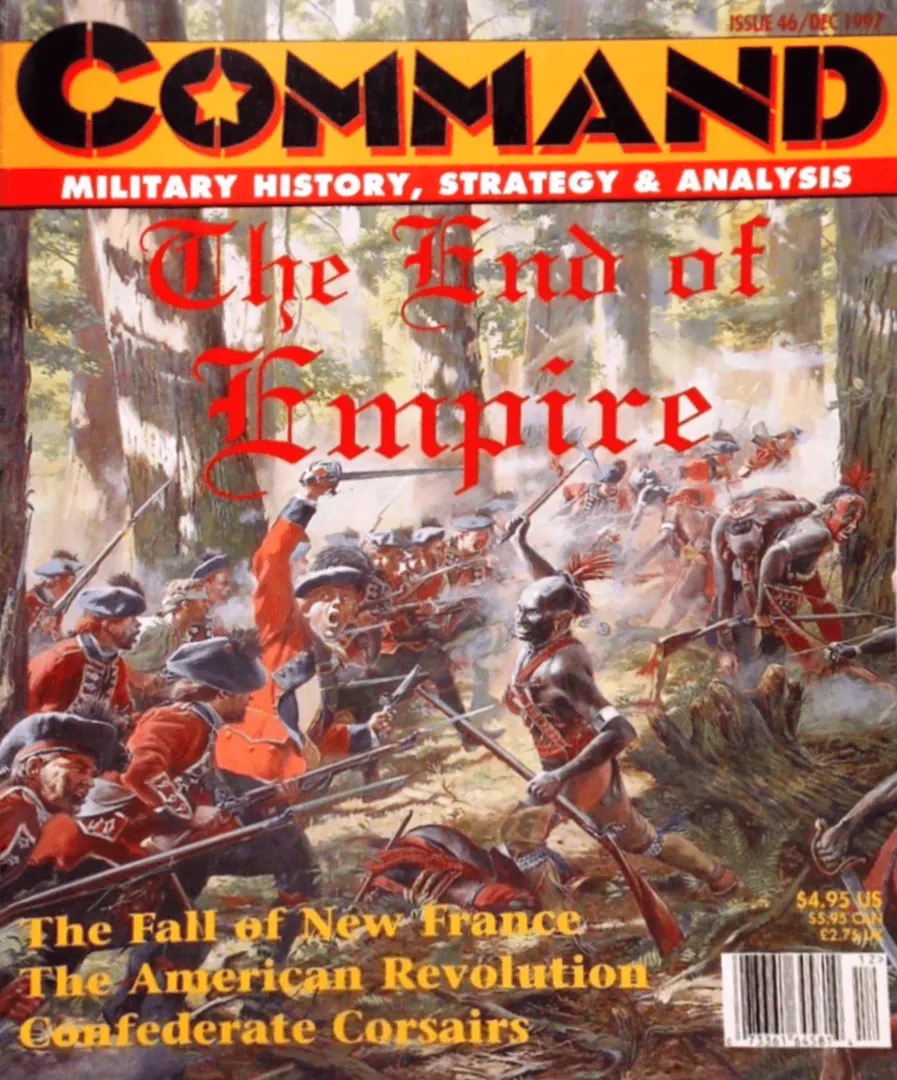
1997
Regelhilfe für End of Empire: The French and Indian War and the American Revolution
Verständliche Erklärungen zu Spielzügen, Karteneffekten und strittigen Situationen mit Verweisen auf offizielle Quellen und gespeichertem Fragenverlauf.
Für 2 Personen
Was möchtest du wissen?
Antworten stammen aus dem offiziellen Regelheft, mit Seitenangabe zum Nachprüfen.
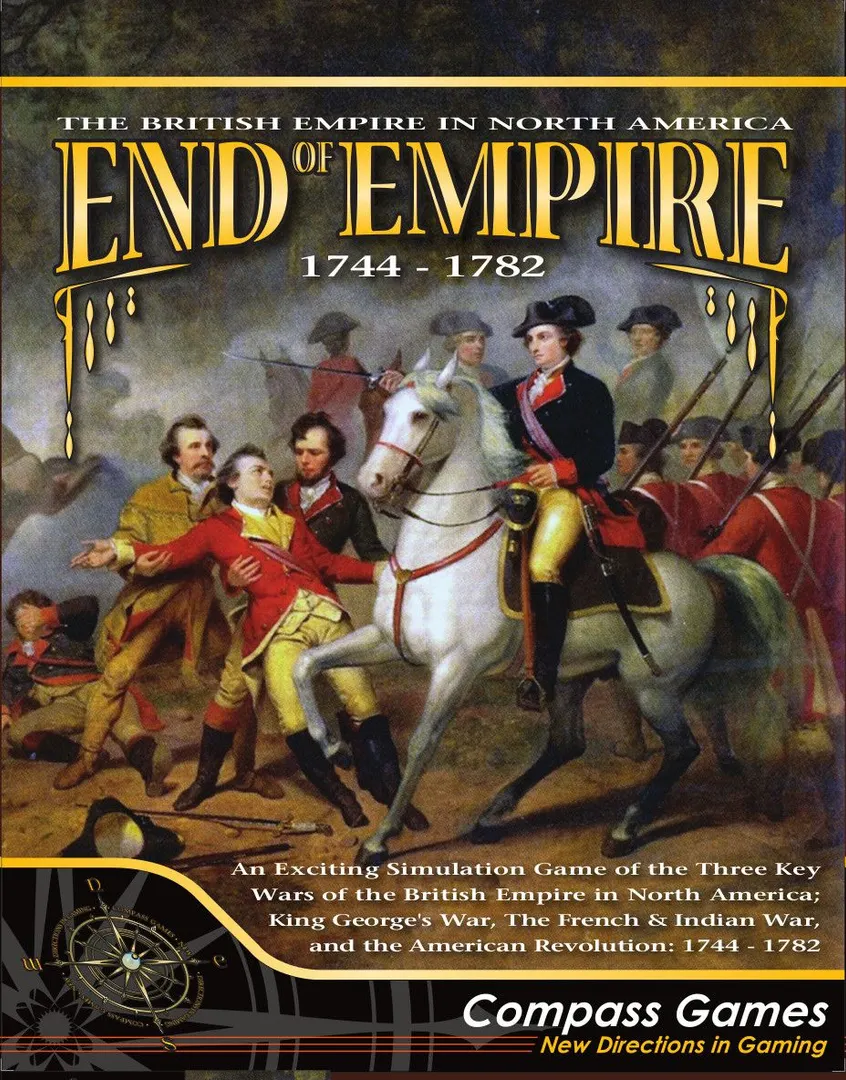
End of Empire: The French and Indian War and the American Revolution ist ein Brettspiel aus dem Jahr 1997 für 2 Personen und ab 12 Jahren. Entwickelt wurde es von William Marsh; die wichtigsten Mechaniken sind Dice Rolling, Hexagon Grid und Simulation.
Auf Englisch
End of Empire: The French and Indian War and the American Revolution is a two-player game covering the great conflicts fought on the North American continent between 1744 and 1783: King George's War, sometimes known as the Old French War, which was part of the War of the Austrian Succession); the French and Indian War; part of the Seven Years War (known in England as the Great War for Empire); and the American Revolutionary War. The French and Indian War ended the French Empire in Canada; the American Revolution ended the British Empire in the thirteen American colonies. End of Empire is an epic game, providing the most detailed coverage of the critical period that saw the Empires of England, France, and Spain exit North America and the rise of the United States of America.
Laut Katalog unterstützt End of Empire: The French and Indian War and the American Revolution 2 Personen. Das ist die vom Verlag angegebene Spielerzahl, das Spiel ist also genau für diese Anzahl von Mitspielenden ausgelegt. Varianten für andere Gruppengrößen sind, sofern vorhanden, in der Anleitung deiner Ausgabe beschrieben; prüfe sie, bevor du eine andere Konfiguration aufbaust.
Im Katalog wird End of Empire: The French and Indian War and the American Revolution ab 12 Jahren empfohlen. Das ist die Empfehlung des Verlags und berücksichtigt Leseanforderungen, Regelkomplexität und Kleinteile, nicht nur das Thema. Jüngere Kinder können oft mit Hilfe eines Erwachsenen mitspielen; beachte die Altersangabe deiner Ausgabe und die Brettspielerfahrung deiner Gruppe.
End of Empire: The French and Indian War and the American Revolution hat bei BoardGameGeek eine Komplexitätswertung von 3,1 von 5 und gilt damit als mittelschweres Spiel. Die Wertung zeigt, wie viel Regelwissen, Planung und Entscheidungen eine typische Partie verlangt. Schwerere Spiele brauchen bei der ersten Erklärung mehr Zeit, daher hilft vor dem Spieleabend eine Vorbereitungsanleitung.
End of Empire: The French and Indian War and the American Revolution gehört zu diesen Kategorien: Wargame, Age of Reason und American Revolutionary War. Die wichtigsten Mechaniken sind Dice Rolling, Hexagon Grid und Simulation. Kategorien beschreiben Thema und Setting eines Spiels, Mechaniken dagegen, was die Spielenden in ihrem Zug tatsächlich tun. Jede Mechanik führt zu einer Katalogseite mit ähnlichen Spielen, falls du etwas Vergleichbares suchst.
Als Autoren von End of Empire: The French and Indian War and the American Revolution sind angegeben: William Marsh. Diese Angaben stammen aus den veröffentlichten Spieldaten und nennen die für das Spieldesign verantwortlichen Personen, nicht die Illustratoren oder Verlage. Die Autorenseiten auf MeepleRules sammeln weitere Titel derselben Autoren – praktisch, wenn dir ein Spiel gefällt und du ähnliche Spiele suchst.
Im Katalog ist End of Empire: The French and Indian War and the American Revolution als Grundspiel aufgeführt. Es lässt sich eigenständig mit dem Material aus der Schachtel spielen und benötigt keinen weiteren Titel. Erweiterungen, sofern es welche gibt, ergänzen neues Material oder neue Regeln und sind im Katalog separat mit einem Verweis auf dieses Grundspiel aufgeführt.