
- BGG-Rang
- BGG #4.879
- BGG-Bewertung
- 6,9
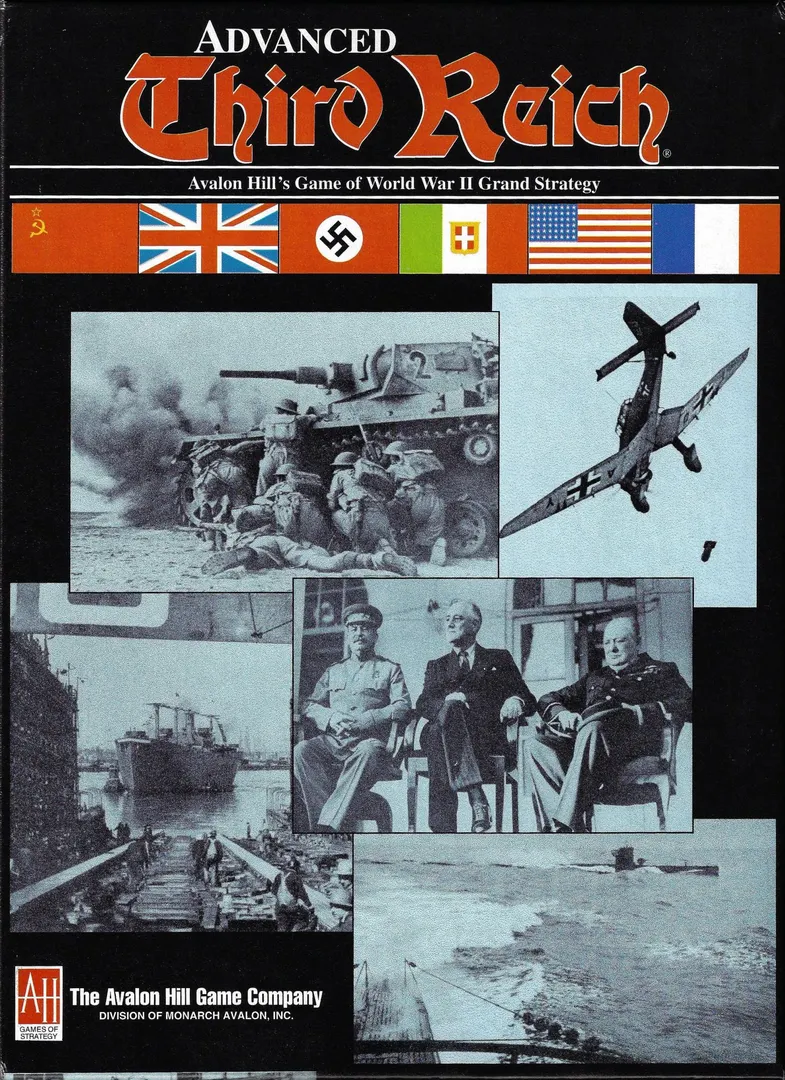
Advanced Third Reich
- 1–6 Spieler
- 180–1200 Min.
- Komplexität 4,5/5
- 1992
2015
Regelhilfe für Gathering Storm
Verständliche Erklärungen zu Spielzügen, Karteneffekten und strittigen Situationen mit Verweisen auf offizielle Quellen und gespeichertem Fragenverlauf.
Was möchtest du wissen?
Antworten stammen aus dem offiziellen Regelheft, mit Seitenangabe zum Nachprüfen.
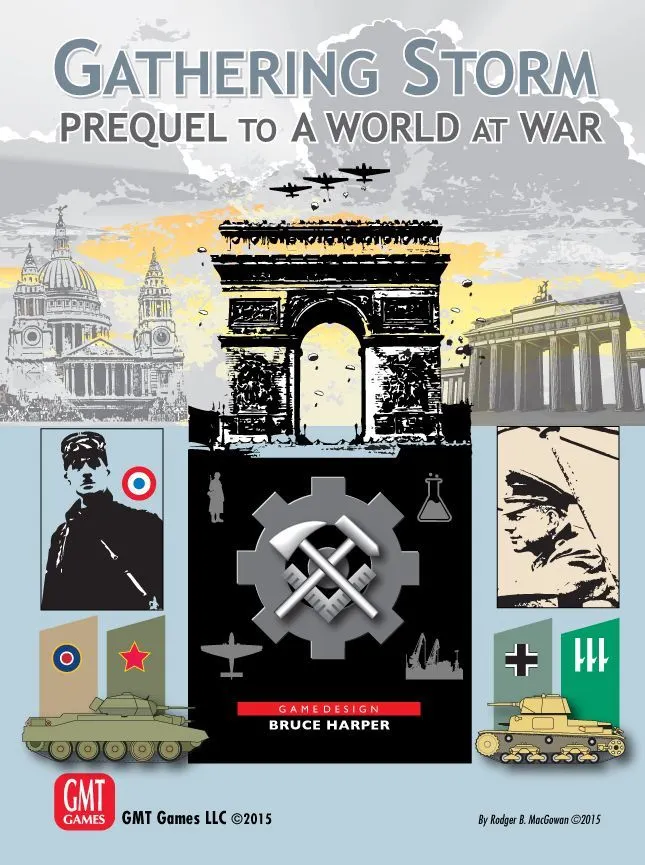
Gathering Storm ist ein Brettspiel aus dem Jahr 2015 für 2–5 Personen, mit 360–480 Minuten pro Partie und ab 12 Jahren. Entwickelt wurde es von Bruce Harper; die wichtigsten Mechaniken sind Area Majority / Influence, Simultaneous Action Selection und Action Points.



Auf Englisch
Gathering Storm does for GMT's A World at War what Days of Decision did for ADG's World in Flames. It allows players to simulate the diplomatic, economic, and political maneuverings that preceded the Second World War, either as a stand alone game or as an expansion for A World at War. (Unlike Days of Decision, Gathering Storm covers only the European events leading to war.) <From the publisher's website:> Gathering Storm, both a game in its own right and a prequel to GMT’s A World at War, covers the period from 1935 to the outbreak of World War II, whenever that might be. Like A World at War, Gathering Storm simulates the military, economic, political, diplomatic, research and production preparations for the Second World War, allowing the players to explore what might have happened if: - Admiral Doenitz had convinced his superiors of the importance of submarine warfare in the impending war with Britain. - Germany had pursued the Z Plan earlier and more consistently. - The development of the “Ural bomber” had been pursued. - Poland had become a German satellite, rather than resisting German aggression. - War had broken out over the Sudetenland, or even the remilitarization of the Rhineland. - Mussolini had given a lower priority to naval armaments, to the benefit of the Italian armor and air forces. - France had extended the Maginot Line. - de Gaulle’s arguments to expand and strengthen France’s armor units had been accepted. - Britain had rearmed sooner. - Russia had deferred the Great Purges. Or accelerated them. - The Spanish civil war had been won by the Loyalists. - A civil war had broken out in Yugoslavia. Or Greece. - Atomic fission had been discovered earlier. - The Second World War had begun with a Franco-Italian conflict. Or a French pre-emptive attack on Germany. Or a Russo-German war, with Italy and the Western Allies neutral. - War comes early. Or later, in 1940 or even 1941. - YOU had been in command. Gathering Storm can be played as a separate game in a single session, with its own victory conditions, but A World at War players will want to press on and see how the war they have created plays out. While using different mechanics, Gathering Storm's structure is consistent with A World at War and allows for a seamless transition to whatever alternate war the players planned – or stumbled into. Some 30 years in development, with three years of design and playtesting, Gathering Storm, includes the following: - Six random events each turn, providing unlimited replay value. - Economics based on tiles and activity counters, eliminating any paperwork. - Flexible mobilization rules, allowing players to emphasis civilian or military production – each at the expense of the other. - Unit construction which allows players to activate reserve units for immediate benefits, at a cost of limiting future options. - Variable research, which can focus on air, naval, military or intelligence projects, as well as short or long term gains. - A fast-moving diplomatic system, with each player allocating diplomatic counters each turn. Diplomatic targets are public, but the points allocated to them are not. - Shipbuilding that allows varied fleets, including the possibility of 5-factor super battleships. - Ahistorical A World at War counters, including armor units of different strengths and additional ships. - A dynamic crisis system, in which the Allies can appease or oppose the Axis, with neither side necessarily being certain whether war might break out. - No dice. Gathering Storm is a must-buy for any committed A World at War player, an excellent – and possibly dangerously time consuming – introduction to the A World at War universe for those unfamiliar with that game, and a enjoyable and instructive fast-paced game all on its own.
Laut Katalog unterstützt Gathering Storm 2–5 Personen. Diese Spanne entspricht der vom Verlag angegebenen Spielerzahl, das Spiel lässt sich also für jede Gruppengröße innerhalb dieser Spanne aufbauen. Aufbau, einzelne Regeln und Wertungsdetails können je nach Personenzahl trotzdem abweichen; prüfe daher die genaue Konfiguration in der Anleitung deiner Ausgabe.
Die angegebene Spieldauer für Gathering Storm beträgt 360–480 Minuten. Das ist die Schätzung des Verlags für eine vollständige Partie. Die tatsächliche Dauer hängt von der Gruppe, der Personenzahl und der Regelkenntnis ab: Erste Partien dauern meist länger, erfahrene Gruppen sind oft schneller fertig. Aufbau und Regelerklärung sind in dieser Schätzung nicht enthalten.
Im Katalog wird Gathering Storm ab 12 Jahren empfohlen. Das ist die Empfehlung des Verlags und berücksichtigt Leseanforderungen, Regelkomplexität und Kleinteile, nicht nur das Thema. Jüngere Kinder können oft mit Hilfe eines Erwachsenen mitspielen; beachte die Altersangabe deiner Ausgabe und die Brettspielerfahrung deiner Gruppe.
Gathering Storm hat bei BoardGameGeek eine Komplexitätswertung von 4,1 von 5 und gilt damit als schweres Spiel. Die Wertung zeigt, wie viel Regelwissen, Planung und Entscheidungen eine typische Partie verlangt. Schwerere Spiele brauchen bei der ersten Erklärung mehr Zeit, daher hilft vor dem Spieleabend eine Vorbereitungsanleitung.
Gathering Storm gehört zu diesen Kategorien: Wargame und World War II. Die wichtigsten Mechaniken sind Area Majority / Influence, Simultaneous Action Selection und Action Points. Kategorien beschreiben Thema und Setting eines Spiels, Mechaniken dagegen, was die Spielenden in ihrem Zug tatsächlich tun. Jede Mechanik führt zu einer Katalogseite mit ähnlichen Spielen, falls du etwas Vergleichbares suchst.
Als Autoren von Gathering Storm sind angegeben: Bruce Harper. Diese Angaben stammen aus den veröffentlichten Spieldaten und nennen die für das Spieldesign verantwortlichen Personen, nicht die Illustratoren oder Verlage. Die Autorenseiten auf MeepleRules sammeln weitere Titel derselben Autoren – praktisch, wenn dir ein Spiel gefällt und du ähnliche Spiele suchst.
Im Katalog ist Gathering Storm als Grundspiel aufgeführt. Es lässt sich eigenständig mit dem Material aus der Schachtel spielen und benötigt keinen weiteren Titel. Erweiterungen, sofern es welche gibt, ergänzen neues Material oder neue Regeln und sind im Katalog separat mit einem Verweis auf dieses Grundspiel aufgeführt.