
- BGG-Rang
- BGG #13.470
- BGG-Bewertung
- 6,4
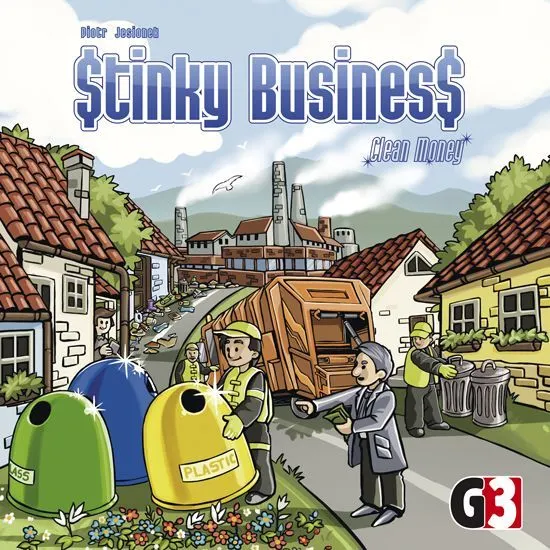
Stinky Business
- 2–5 Spieler
- 60–90 Min.
- Komplexität 2,1/5
- 2015
2011
Regelhilfe für Global Warming
Verständliche Erklärungen zu Spielzügen, Karteneffekten und strittigen Situationen mit Verweisen auf offizielle Quellen und gespeichertem Fragenverlauf.
Für 2 Personen
Was möchtest du wissen?
Antworten stammen aus dem offiziellen Regelheft, mit Seitenangabe zum Nachprüfen.
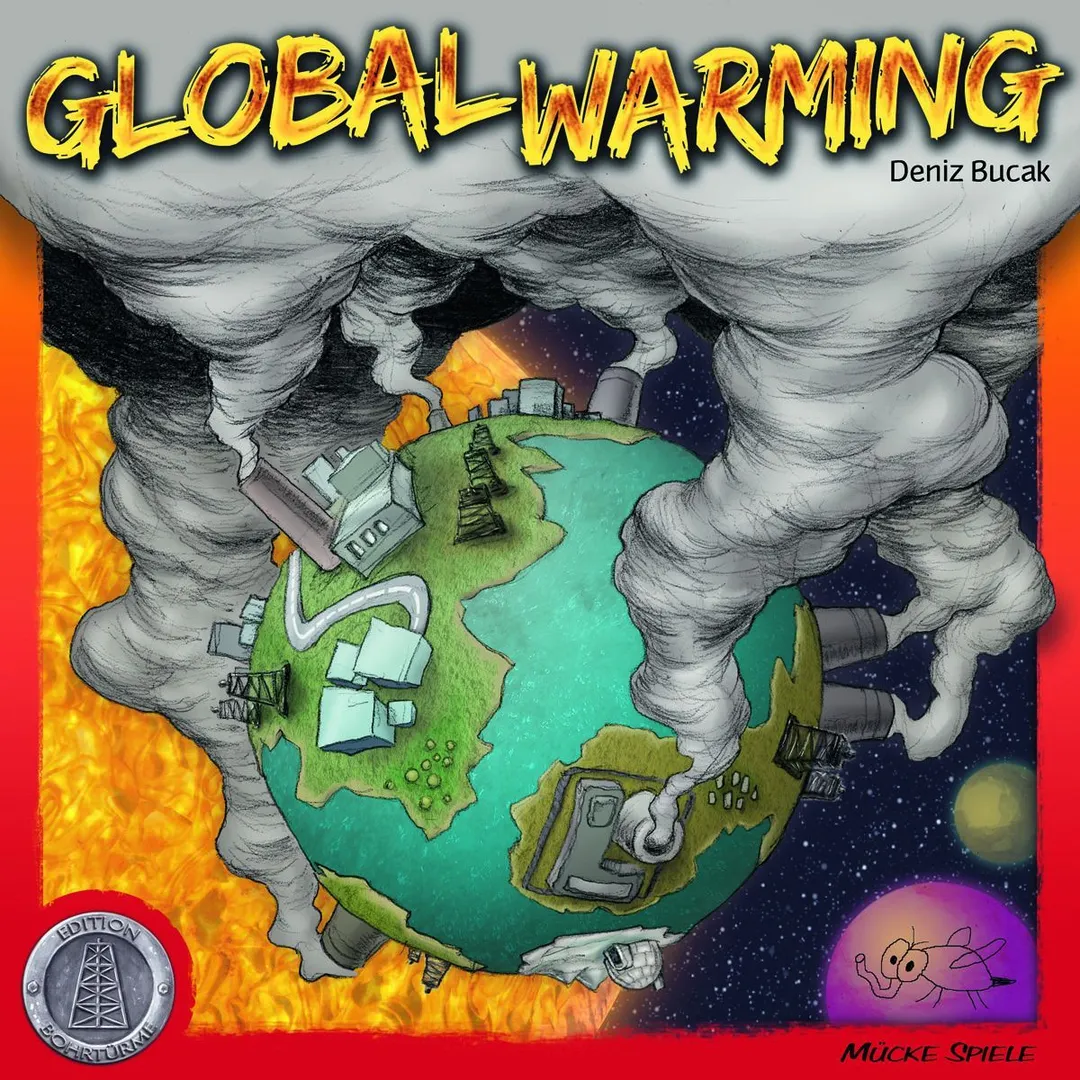
Global Warming ist ein Brettspiel aus dem Jahr 2011 für 2–4 Personen, mit 30 Minuten pro Partie und ab 8 Jahren. Entwickelt wurde es von S. Deniz Bucak; die wichtigsten Mechaniken sind Hand Management, Open Drafting und Worker Placement.


Auf Englisch
Global Warming is a tactical, card-driven game in which players score "happiness points" by providing goods to the public. Cards played can be either national industries, consumer goods, green technologies, or events; played industries require the roll of dice to determine pollution output. Collect enough happiness points and you win. But by producing these goods, you influence the earth's ecology. The player's individual influence, as well as the overall influence, is shown by a marker on a second track, and if these markers reach certain (moveable) points on the warming track, bad things happen to the ecology and the players. If the third warming point is reached, the game ends and the player with the lowest contribution to the overall warming wins. Thus, the players are embedded in a quite true setting in which they have to balance production and sustainable actions. Who will manage to control his industrial production in a way that minimizes the environmental impact while nevertheless allowing him to meet consumer demand? Global Warming is the fourth game in Mücke Spiele's "Edition Bohrtürme" series that uses the game pieces from Kosmos' Giganten in the context of a new game.
Laut Katalog unterstützt Global Warming 2–4 Personen. Diese Spanne entspricht der vom Verlag angegebenen Spielerzahl, das Spiel lässt sich also für jede Gruppengröße innerhalb dieser Spanne aufbauen. Aufbau, einzelne Regeln und Wertungsdetails können je nach Personenzahl trotzdem abweichen; prüfe daher die genaue Konfiguration in der Anleitung deiner Ausgabe.
Die angegebene Spieldauer für Global Warming beträgt 30 Minuten. Das ist die Schätzung des Verlags für eine vollständige Partie. Die tatsächliche Dauer hängt von der Gruppe, der Personenzahl und der Regelkenntnis ab: Erste Partien dauern meist länger, erfahrene Gruppen sind oft schneller fertig. Aufbau und Regelerklärung sind in dieser Schätzung nicht enthalten.
Im Katalog wird Global Warming ab 8 Jahren empfohlen. Das ist die Empfehlung des Verlags und berücksichtigt Leseanforderungen, Regelkomplexität und Kleinteile, nicht nur das Thema. Jüngere Kinder können oft mit Hilfe eines Erwachsenen mitspielen; beachte die Altersangabe deiner Ausgabe und die Brettspielerfahrung deiner Gruppe.
Global Warming hat bei BoardGameGeek eine Komplexitätswertung von 2,0 von 5 und gilt damit als eher leichtes Spiel. Die Wertung zeigt, wie viel Regelwissen, Planung und Entscheidungen eine typische Partie verlangt. Schwerere Spiele brauchen bei der ersten Erklärung mehr Zeit, daher hilft vor dem Spieleabend eine Vorbereitungsanleitung.
Global Warming gehört zu diesen Kategorien: Card Game, Educational und Industry / Manufacturing. Die wichtigsten Mechaniken sind Hand Management, Open Drafting und Worker Placement. Kategorien beschreiben Thema und Setting eines Spiels, Mechaniken dagegen, was die Spielenden in ihrem Zug tatsächlich tun. Jede Mechanik führt zu einer Katalogseite mit ähnlichen Spielen, falls du etwas Vergleichbares suchst.
Als Autoren von Global Warming sind angegeben: S. Deniz Bucak. Diese Angaben stammen aus den veröffentlichten Spieldaten und nennen die für das Spieldesign verantwortlichen Personen, nicht die Illustratoren oder Verlage. Die Autorenseiten auf MeepleRules sammeln weitere Titel derselben Autoren – praktisch, wenn dir ein Spiel gefällt und du ähnliche Spiele suchst.
Im Katalog ist Global Warming als Grundspiel aufgeführt. Es lässt sich eigenständig mit dem Material aus der Schachtel spielen und benötigt keinen weiteren Titel. Erweiterungen, sofern es welche gibt, ergänzen neues Material oder neue Regeln und sind im Katalog separat mit einem Verweis auf dieses Grundspiel aufgeführt.