

- BGG-Rang
- BGG #9.028
- BGG-Bewertung
- 7,2
Great War at Sea: Jutland
- 2 Spieler
- 30–120 Min.
- Komplexität 3,1/5
- 2006
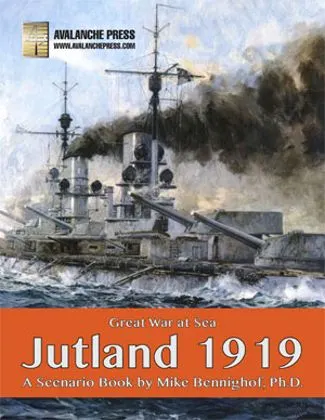
Regelhilfe für Great War at Sea: Jutland 1919
Verständliche Erklärungen zu Spielzügen, Karteneffekten und strittigen Situationen mit Verweisen auf offizielle Quellen und gespeichertem Fragenverlauf.
Was möchtest du wissen?
Antworten stammen aus dem offiziellen Regelheft, mit Seitenangabe zum Nachprüfen.
Great War at Sea: Jutland 1919 ist eine Erweiterung für Great War at Sea: High Seas Fleet aus dem Jahr 2018 für 2 Personen, mit 30–240 Minuten pro Partie und ab 12 Jahren. Entwickelt wurde es von Michael Bennighof; die wichtigsten Mechaniken sind Dice Rolling, Secret Unit Deployment und Hexagon Grid.









Auf Englisch
Imperial Germany laid down her last dreadnought in January 1915, and never completed her. But planning continued for new classes of battleships, battle cruisers, armored cruisers and scout cruisers. All understood that they could not possibly be built during the course of the ongoing First World War, but would be laid down afterwards. Reflecting the lessons first of the battles of the Falklands, Coronel and Helgoland Bight, and eventually those of Jutland, the new German designs continued to emphasize protection. At the urging of sea officers, the new ships also now carried armament equal to that of the British, and would make much higher speeds as well. Across the North Sea, the British Admiralty had no clear idea of what the Germans might be planning to build, but could state with certainty that they and other potential enemies would continue to improve their warships. New British dreadnoughts would carry ever-more-powerful armaments, including a new, secret 18-inch gun. Jutland 1919 is a supplement for our Great War at Sea: Jutland game, studying these drawing-board battleships that would never actually be launched. It includes background essays, forty new scenarios, and 80 new silky-smooth die-cut playing pieces (60 double-sized "long" ship pieces and 20 square ones). It is not playable by itself; you’ll need our Jutland game and High Seas Fleet book to play the scenarios. You can, of course, just read the essays and fondle the pieces without owning either. We won’t tell. New pieces include three classes of German battleships designed but never built: a fast battleship with eight 15-inch guns, a battleship with ten 15-inch guns in five turrets, with three of them in a unique triple-stacked arrangement. And an even larger ship with 16.5-inch guns. There are two new classes of battle cruiser, one with 15-inch guns, one with 16.5-inch guns. And two variations on the fast armored cruiser proposed after the Battle of Jutland, one with ten 8.2-inch guns, and one with twenty (20) 5.9-inch guns. Plus there are additional scout cruisers and destroyers. The British for their part receive their improved but slower Queen Elizabeth class, with ten 15-inch guns, and the massive ships proposed to carry eight 18-inch guns apiece, based on the Hood design but slower with battleship-scale protection. Plus their own fast armored cruiser. These are powerful new ships, and now you can lead them into battle. -description from publisher's website
Laut Katalog unterstützt Great War at Sea: Jutland 1919 2 Personen. Das ist die vom Verlag angegebene Spielerzahl, das Spiel ist also genau für diese Anzahl von Mitspielenden ausgelegt. Varianten für andere Gruppengrößen sind, sofern vorhanden, in der Anleitung deiner Ausgabe beschrieben; prüfe sie, bevor du eine andere Konfiguration aufbaust.
Die angegebene Spieldauer für Great War at Sea: Jutland 1919 beträgt 30–240 Minuten. Das ist die Schätzung des Verlags für eine vollständige Partie. Die tatsächliche Dauer hängt von der Gruppe, der Personenzahl und der Regelkenntnis ab: Erste Partien dauern meist länger, erfahrene Gruppen sind oft schneller fertig. Aufbau und Regelerklärung sind in dieser Schätzung nicht enthalten.
Im Katalog wird Great War at Sea: Jutland 1919 ab 12 Jahren empfohlen. Das ist die Empfehlung des Verlags und berücksichtigt Leseanforderungen, Regelkomplexität und Kleinteile, nicht nur das Thema. Jüngere Kinder können oft mit Hilfe eines Erwachsenen mitspielen; beachte die Altersangabe deiner Ausgabe und die Brettspielerfahrung deiner Gruppe.
Great War at Sea: Jutland 1919 hat bei BoardGameGeek eine Komplexitätswertung von 3,0 von 5 und gilt damit als mittelschweres Spiel. Die Wertung zeigt, wie viel Regelwissen, Planung und Entscheidungen eine typische Partie verlangt. Schwerere Spiele brauchen bei der ersten Erklärung mehr Zeit, daher hilft vor dem Spieleabend eine Vorbereitungsanleitung.
Great War at Sea: Jutland 1919 gehört zu diesen Kategorien: Wargame, Nautical und Expansion for Base-game. Die wichtigsten Mechaniken sind Dice Rolling, Secret Unit Deployment und Hexagon Grid. Kategorien beschreiben Thema und Setting eines Spiels, Mechaniken dagegen, was die Spielenden in ihrem Zug tatsächlich tun. Jede Mechanik führt zu einer Katalogseite mit ähnlichen Spielen, falls du etwas Vergleichbares suchst.
Als Autoren von Great War at Sea: Jutland 1919 sind angegeben: Michael Bennighof. Diese Angaben stammen aus den veröffentlichten Spieldaten und nennen die für das Spieldesign verantwortlichen Personen, nicht die Illustratoren oder Verlage. Die Autorenseiten auf MeepleRules sammeln weitere Titel derselben Autoren – praktisch, wenn dir ein Spiel gefällt und du ähnliche Spiele suchst.
Im Katalog ist Great War at Sea: Jutland 1919 als Erweiterung zu Great War at Sea: High Seas Fleet aufgeführt. Erweiterungen ergänzen das Grundspiel um neues Material, neue Regeln oder Szenarien und sind meist nicht eigenständig spielbar; du brauchst also Great War at Sea: High Seas Fleet, um sie zu nutzen. Prüfe, ob deine Ausgabe von Great War at Sea: High Seas Fleet kompatibel ist, da manche Erweiterungen zwischen den Auflagen überarbeitet wurden.