
- BGG-Rang
- BGG #11.006
- BGG-Bewertung
- 7,0
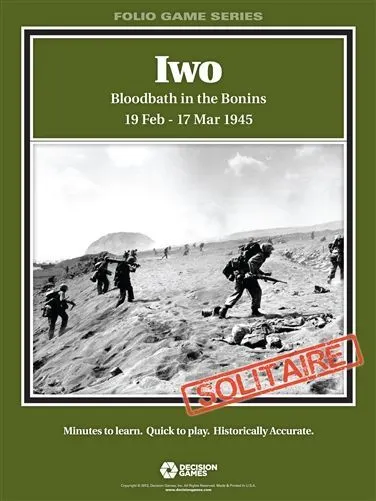
Iwo: Bloodbath in the Bonins 19 Feb – 17 Mar 1945
- 1–2 Spieler
- 60–120 Min.
- Komplexität 2,5/5
- 2013
2012
Regelhilfe für Koniggratz: Blood & Iron Triumphant
Verständliche Erklärungen zu Spielzügen, Karteneffekten und strittigen Situationen mit Verweisen auf offizielle Quellen und gespeichertem Fragenverlauf.
Was möchtest du wissen?
Antworten stammen aus dem offiziellen Regelheft, mit Seitenangabe zum Nachprüfen.
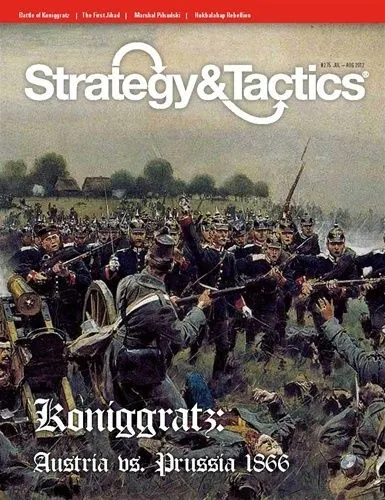
Koniggratz: Blood & Iron Triumphant ist ein Brettspiel aus dem Jahr 2012 für 1–2 Personen. Entwickelt wurde es von Chris Perello; die wichtigsten Mechaniken sind Hexagon Grid.



Auf Englisch
(from S&T press website:) On 3 July 1866 the armies of Austria-Hungary and Prussia met west of the Bohemian fortress of Königgrätz (now Hradec Králové). The battle was the culmination of a quarter-century of political and military maneuvering by Otto von Bismarck, aimed at enabling Prussia to supplant Austria-Hungary as the dominant state of the coalescing German nation. The battle is presented using the folio line’s Musket & Saber system: brigade-sized units, one-fifth-mile hexes, 90-minute turns, 280 counters. The Austro-Hungarian army, chastened by a week of minor defeats, was entrenched a long line covering the fortress of Königgrätz. It occupied a central position facing three converging Prussian armies. To win, the Prussians must sweep the Austrians off the field (as they did historically), while the Austrians must maintain a presence on the field to justify their continued claim to political primacy. The game emphasizes the differences between the armies in doctrine, weapons and morale. The Prussian triumph was born of more than just the famous needle-gun: their infantry used flexible organization and tactics to mass men quickly at the decisive point, while the Austrians used a throwback to Napoleonic column formations due to a misreading of the lesson from an earlier engagement. The Prussian artillery is outclassed by the superb Austrian guns, but can be dangerous if used properly. The Austrian cavalry is superior as well, but horsed charges were already an anachronism. In the end the battle came down to crucial command decisions, giving both players an opportunity to win. Components: One 22" x 34" map & 280 counters Magazine: Strategy & Tactics #275
Laut Katalog unterstützt Koniggratz: Blood & Iron Triumphant 1–2 Personen. Diese Spanne entspricht der vom Verlag angegebenen Spielerzahl, das Spiel lässt sich also für jede Gruppengröße innerhalb dieser Spanne aufbauen. Aufbau, einzelne Regeln und Wertungsdetails können je nach Personenzahl trotzdem abweichen; prüfe daher die genaue Konfiguration in der Anleitung deiner Ausgabe.
Koniggratz: Blood & Iron Triumphant hat bei BoardGameGeek eine Komplexitätswertung von 3,5 von 5 und gilt damit als mittelschweres Spiel. Die Wertung zeigt, wie viel Regelwissen, Planung und Entscheidungen eine typische Partie verlangt. Schwerere Spiele brauchen bei der ersten Erklärung mehr Zeit, daher hilft vor dem Spieleabend eine Vorbereitungsanleitung.
Koniggratz: Blood & Iron Triumphant gehört zu diesen Kategorien: Wargame. Die wichtigsten Mechaniken sind Hexagon Grid. Kategorien beschreiben Thema und Setting eines Spiels, Mechaniken dagegen, was die Spielenden in ihrem Zug tatsächlich tun. Jede Mechanik führt zu einer Katalogseite mit ähnlichen Spielen, falls du etwas Vergleichbares suchst.
Als Autoren von Koniggratz: Blood & Iron Triumphant sind angegeben: Chris Perello. Diese Angaben stammen aus den veröffentlichten Spieldaten und nennen die für das Spieldesign verantwortlichen Personen, nicht die Illustratoren oder Verlage. Die Autorenseiten auf MeepleRules sammeln weitere Titel derselben Autoren – praktisch, wenn dir ein Spiel gefällt und du ähnliche Spiele suchst.
Im Katalog ist Koniggratz: Blood & Iron Triumphant als Grundspiel aufgeführt. Es lässt sich eigenständig mit dem Material aus der Schachtel spielen und benötigt keinen weiteren Titel. Erweiterungen, sofern es welche gibt, ergänzen neues Material oder neue Regeln und sind im Katalog separat mit einem Verweis auf dieses Grundspiel aufgeführt.