
- BGG-Rang
- BGG #5.213
- BGG-Bewertung
- 8,0
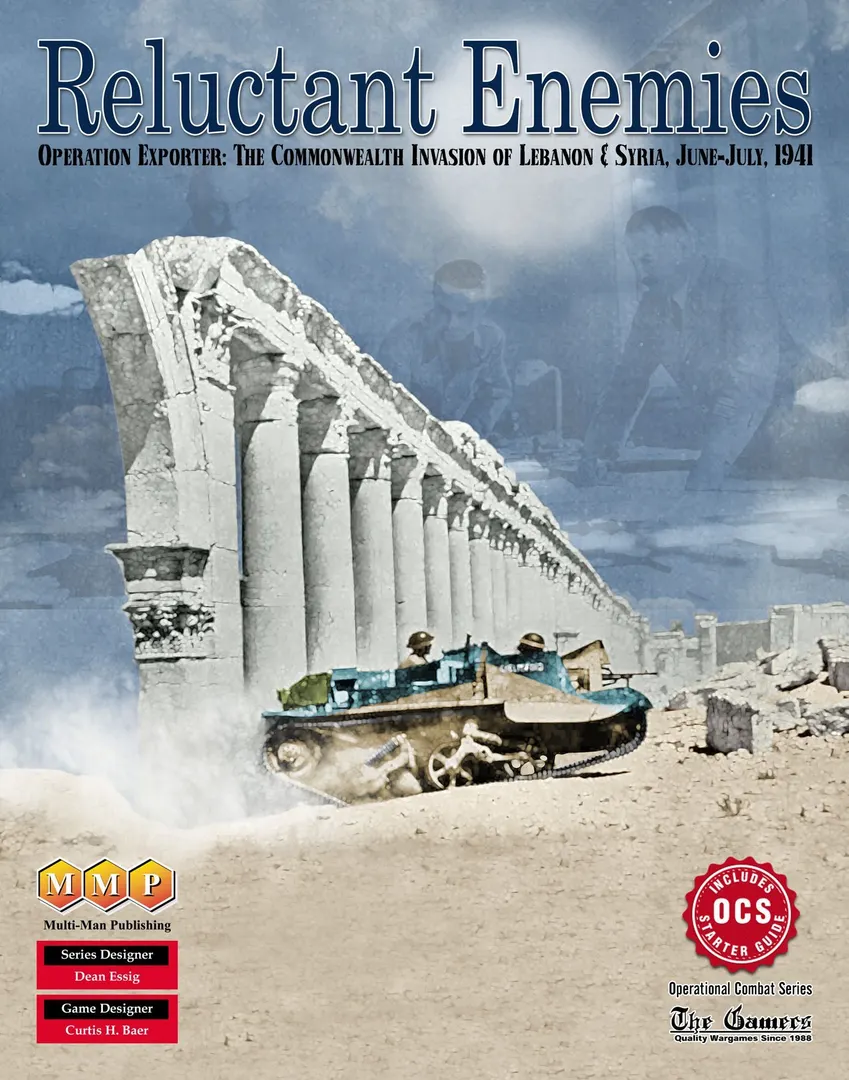
Reluctant Enemies: Operation Exporter
- 2 Spieler
- 750 Min.
- Komplexität 3,6/5
- 2014

2016
Regelhilfe für Last Blitzkrieg: Wacht am Rhein, The Battle of the Bulge
Verständliche Erklärungen zu Spielzügen, Karteneffekten und strittigen Situationen mit Verweisen auf offizielle Quellen und gespeichertem Fragenverlauf.
Für 2 Personen
Was möchtest du wissen?
Antworten stammen aus dem offiziellen Regelheft, mit Seitenangabe zum Nachprüfen.
Last Blitzkrieg: Wacht am Rhein, The Battle of the Bulge ist ein Brettspiel aus dem Jahr 2016 für 2–4 Personen, mit 180–960 Minuten pro Partie und ab 13 Jahren. Entwickelt wurde es von Dean Essig; die wichtigsten Mechaniken sind Dice Rolling, Hexagon Grid und Simulation.





Auf Englisch
Last Blitzkrieg is the first entry in the new Series: Battalion Combat Series (MMP), which simulates combat in World War II (and beyond) at the battalion scale. Its subject is the German Ardennes offensive Wacht Am Rhein (the Battle of the Bulge) on four detailed maps (at 1km per hex) and with 1,680 counters. Last Blitzkrieg covers the battle in a level of detail rarely seen before and does so in a very playable manner. The BCS itself was designed to show that battalion level combat is its own subject, being neither "small divisions" nor "large platoons". The results may surprise some players, but will hopefully pique the interest of all and allow them to see many things they thought they already knew in a fresh light. Key Battalion Combat Series concepts include: Objectives Recon Units Concentrated Armor and Support Prepared Defense MSRs and Combat Trains Set Piece Combats vs. Shock Attacks vs. Engagements Artillery Barrages Artillery Asset Points Attack by Fire SNAFU Activation by Formation Traffic and Coordination Fatigue Memory Markers Last Blitzkrieg also adds: Bridge Blowing Greif Teams Weather Tiger Maintenance Woes Voraus Units Game play commences on 16 December 44 and ends on 31 December 44 (with each turn being one day) allowing the first phase of the Allied counterattack to proceed. The winner is determined by comparing the German high water mark in Victory Point hexes against the situation at the very end of the game. In addition to the full campaign, which uses a 4-map "box" layout, there are 9 additional scenarios for a total of 10 scenarios of various sizes: Two 4-map scenarios: Last Blitzkrieg Campaign: 16 turns Final Blitzkrieg: 10 turns Two 2-map scenarios: Breakthrough Campaign: 6 turns using Maps C and D Advance & Destroy: 10 turns using Map D and a portion of Map B Six 1-map scenarios (including two scenarios on portions of a single map) Northern Campaign: 6 turns using Map C Southern Campaign: 6 turns using Map D Kampfgruppe Peiper: 5 turns using portion of Map C The Goose Egg: 5 turns using portion of Map C Bastogne: Screaming Eagles Under Siege: 8 turns using portions of Maps B and D (total playing area is less than one map) Tip of the Spear: 4 turns using Map A Last Blitzkrieg was designed to bring all of this—and much more—to your table in a most historically accurate game that is jam-packed with information. The BCS was designed with twin goals: to provide the most insight possible into a battle and to provide games that have maximum playability. Last Blitzkrieg contents: Four 22" x 34" maps Six countersheets One Battalion Combat Series rules booklet One Last Blitzkrieg specific rulebook One Battalion Combat Series Crib Notes booklet Two Battalion Combat Series Charts and Tables booklets Two Last Blitzkrieg Charts and Tables booklets One box and lid Two 6-sided dice (description from MMP website and user)
Laut Katalog unterstützt Last Blitzkrieg: Wacht am Rhein, The Battle of the Bulge 2–4 Personen. Diese Spanne entspricht der vom Verlag angegebenen Spielerzahl, das Spiel lässt sich also für jede Gruppengröße innerhalb dieser Spanne aufbauen. Aufbau, einzelne Regeln und Wertungsdetails können je nach Personenzahl trotzdem abweichen; prüfe daher die genaue Konfiguration in der Anleitung deiner Ausgabe.
Die angegebene Spieldauer für Last Blitzkrieg: Wacht am Rhein, The Battle of the Bulge beträgt 180–960 Minuten. Das ist die Schätzung des Verlags für eine vollständige Partie. Die tatsächliche Dauer hängt von der Gruppe, der Personenzahl und der Regelkenntnis ab: Erste Partien dauern meist länger, erfahrene Gruppen sind oft schneller fertig. Aufbau und Regelerklärung sind in dieser Schätzung nicht enthalten.
Im Katalog wird Last Blitzkrieg: Wacht am Rhein, The Battle of the Bulge ab 13 Jahren empfohlen. Das ist die Empfehlung des Verlags und berücksichtigt Leseanforderungen, Regelkomplexität und Kleinteile, nicht nur das Thema. Jüngere Kinder können oft mit Hilfe eines Erwachsenen mitspielen; beachte die Altersangabe deiner Ausgabe und die Brettspielerfahrung deiner Gruppe.
Last Blitzkrieg: Wacht am Rhein, The Battle of the Bulge hat bei BoardGameGeek eine Komplexitätswertung von 3,8 von 5 und gilt damit als schweres Spiel. Die Wertung zeigt, wie viel Regelwissen, Planung und Entscheidungen eine typische Partie verlangt. Schwerere Spiele brauchen bei der ersten Erklärung mehr Zeit, daher hilft vor dem Spieleabend eine Vorbereitungsanleitung.
Last Blitzkrieg: Wacht am Rhein, The Battle of the Bulge gehört zu diesen Kategorien: Wargame und World War II. Die wichtigsten Mechaniken sind Dice Rolling, Hexagon Grid und Simulation. Kategorien beschreiben Thema und Setting eines Spiels, Mechaniken dagegen, was die Spielenden in ihrem Zug tatsächlich tun. Jede Mechanik führt zu einer Katalogseite mit ähnlichen Spielen, falls du etwas Vergleichbares suchst.
Als Autoren von Last Blitzkrieg: Wacht am Rhein, The Battle of the Bulge sind angegeben: Dean Essig. Diese Angaben stammen aus den veröffentlichten Spieldaten und nennen die für das Spieldesign verantwortlichen Personen, nicht die Illustratoren oder Verlage. Die Autorenseiten auf MeepleRules sammeln weitere Titel derselben Autoren – praktisch, wenn dir ein Spiel gefällt und du ähnliche Spiele suchst.
Im Katalog ist Last Blitzkrieg: Wacht am Rhein, The Battle of the Bulge als Grundspiel aufgeführt. Es lässt sich eigenständig mit dem Material aus der Schachtel spielen und benötigt keinen weiteren Titel. Erweiterungen, sofern es welche gibt, ergänzen neues Material oder neue Regeln und sind im Katalog separat mit einem Verweis auf dieses Grundspiel aufgeführt.