
- BGG-Rang
- BGG #8.687
- BGG-Bewertung
- 6,9
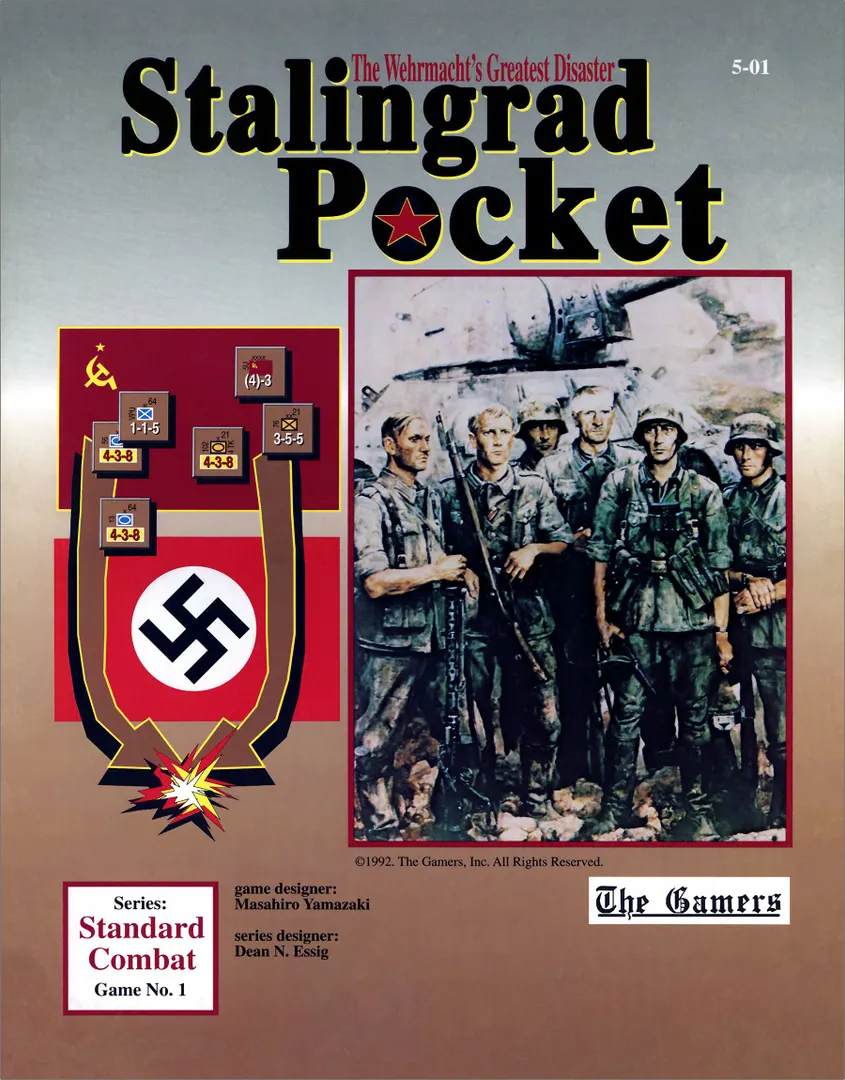
Stalingrad Pocket: The Wehrmacht's Greatest Disaster
- 1–2 Spieler
- 180–900 Min.
- Komplexität 2,6/5
- 1992
2008
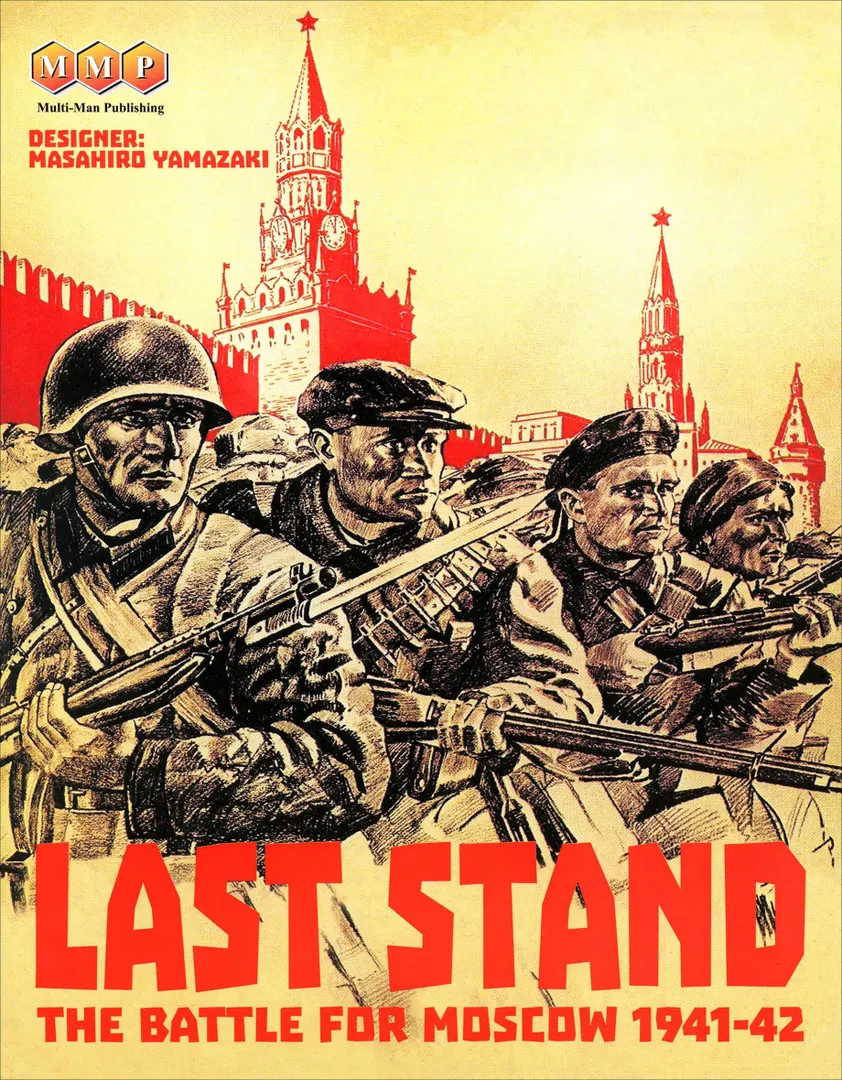
Regelhilfe für Last Stand: The Battle for Moscow 1941-42
Verständliche Erklärungen zu Spielzügen, Karteneffekten und strittigen Situationen mit Verweisen auf offizielle Quellen und gespeichertem Fragenverlauf.
Für 1 Person
Was möchtest du wissen?
Antworten stammen aus dem offiziellen Regelheft, mit Seitenangabe zum Nachprüfen.
Last Stand: The Battle for Moscow 1941-42 ist ein Brettspiel aus dem Jahr 2008 für 1–2 Personen, mit 180–600 Minuten pro Partie und ab 18 Jahren. Entwickelt wurde es von Masahiro Yamazaki; die wichtigsten Mechaniken sind Dice Rolling, Grid Movement und Hexagon Grid.





Auf Englisch
The Last Stand at Moscow simulates German winter offensive to capture Moscow. One map 59,4×84,1cm (23x33 inches) 17.2 km/hex [10.69 miles/hex] 386 counters Unit scale II, X, XX, XXX, KG 10 days/Turn; Oct 1941 to Jan 1942 In October 1941, the German Army launched Operation Typhoon - the last major German offensive of the year. In an all-out attempt to defeat Russia and end World War Two, the Germans managed to see the spires of the Kremlin as their high water mark for both this battle and for the war. Over two million men fought in this desperate battle that would decide the war and the future of mankind. Masahiro Yamazaki, the designer of the MMP games Red Star Rising and Stalingrad Pocket has designed his greatest game on this great conflict- Last Stand; The Battle for Moscow 1941-1942. Using all the tricks in his designer’s bag, Mas has made this titanic struggle playable but without sacrificing a great sense of history. Offering 3 scenarios to show different aspects of the campaign, and a unique way of showing the plight of the Soviet morale as a nation faces possible complete military defeat, all in a manageable size, Last Stand is a game that has no competitor. As seen in Mas’ other games, Last Stand features an interesting sequence of play: A.) German Player Turn ) Supply Phase a.) Weather b.) Reinforcement/Supply Placement c.) Receive Air Points d.) Combat Unit Supply Check e.) Isolated Attrition Check f.) Supply Unit Removal (Snow Turns) g.) Soviet Morale Chit Pull (if applicable) ) Movement Phase a.) Unit Movement/Overrun b.) Supply Unit Consumption ) Combat Phase a.) Resolve Combat b.) Remove Supply Units in Expend Mode ) Soviet Reaction Phase (The Soviet Player is allowed to move and overrun with eligible Mechanized units) ) Exploitation Movement (all German units may move again with one half of their movement allowance) B.) Soviet Player Turn ) Supply Phase a.) Reinforcement HQ and Combat Unit Placement b.) Receive Air Points c.) Combat Unit Supply Check d.) Isolated Attrition Check e.) Red Army Morale Check ) Katyusha Gun Phase a.) Katyusha movement b.) Katyusha Fire ) Movement Phase ) German Reaction Phase (Like the Soviets in his reaction phase, but with different parameters, the German player may conduct reaction move with his eligible Mechanized units). ) Combat Phase a.) Ski Unit placement b.) Resolve Attacks ) Exploitation Movement (identical to the German Phase) In addition, the game features unknown unit strengths for the Soviet Units, variable and shifting victory conditions, Soviet Army morale breakdown, German variable supply consumption, and of course, substantial weather effects as General Winter arrives as a reinforcement for the Soviet cause. Perhaps the most unique aspect of Last Stand is the Victory Conditions. As the game begins, neither player knows what they must accomplish to win the game. As the game progresses and the Germans advance towards Moscow, the Germans will find out what it takes to win. Soviet Morale will continue to fall until the Soviets can strike back - and when they do, the damage is healed twofold - but defeat can happen at any moment. Last Stand features three scenarios of different lengths to give players options depending on how much time they have to play. Scenario One - the Soviet Counterblow This scenario covers only the great Soviet Counterattack that pushed the Germans to the brink of defeat in the late Winter 1942. Playing time is about 3-4 hours. Scenario Two - The Germans Attack This scenario covers the German attack to defeat the Soviets before winter comes. Playing time is about 5-6 hours. Scenario Three - the Campaign Game This scenario covers the entire offensive and the Soviet counterattack. Combining both scenario one and two together, this has a playing time of about 10 hours. Last Stand components: One 34 by 22 map 560 ½" counters 32 page full color rulebook 2 player aids Game Details: Solitaire Rating: very good to excellent Complexity: Medium Playing Time: 3-10 hours Scenarios: 3 Game scale: Units are divisions, turns are ten days, and hexes are 17.2 kilometers [10.69 miles] across.
Laut Katalog unterstützt Last Stand: The Battle for Moscow 1941-42 1–2 Personen. Diese Spanne entspricht der vom Verlag angegebenen Spielerzahl, das Spiel lässt sich also für jede Gruppengröße innerhalb dieser Spanne aufbauen. Aufbau, einzelne Regeln und Wertungsdetails können je nach Personenzahl trotzdem abweichen; prüfe daher die genaue Konfiguration in der Anleitung deiner Ausgabe.
Die angegebene Spieldauer für Last Stand: The Battle for Moscow 1941-42 beträgt 180–600 Minuten. Das ist die Schätzung des Verlags für eine vollständige Partie. Die tatsächliche Dauer hängt von der Gruppe, der Personenzahl und der Regelkenntnis ab: Erste Partien dauern meist länger, erfahrene Gruppen sind oft schneller fertig. Aufbau und Regelerklärung sind in dieser Schätzung nicht enthalten.
Im Katalog wird Last Stand: The Battle for Moscow 1941-42 ab 18 Jahren empfohlen. Das ist die Empfehlung des Verlags und berücksichtigt Leseanforderungen, Regelkomplexität und Kleinteile, nicht nur das Thema. Jüngere Kinder können oft mit Hilfe eines Erwachsenen mitspielen; beachte die Altersangabe deiner Ausgabe und die Brettspielerfahrung deiner Gruppe.
Last Stand: The Battle for Moscow 1941-42 hat bei BoardGameGeek eine Komplexitätswertung von 2,8 von 5 und gilt damit als eher leichtes Spiel. Die Wertung zeigt, wie viel Regelwissen, Planung und Entscheidungen eine typische Partie verlangt. Schwerere Spiele brauchen bei der ersten Erklärung mehr Zeit, daher hilft vor dem Spieleabend eine Vorbereitungsanleitung.
Last Stand: The Battle for Moscow 1941-42 gehört zu diesen Kategorien: Wargame und World War II. Die wichtigsten Mechaniken sind Dice Rolling, Grid Movement und Hexagon Grid. Kategorien beschreiben Thema und Setting eines Spiels, Mechaniken dagegen, was die Spielenden in ihrem Zug tatsächlich tun. Jede Mechanik führt zu einer Katalogseite mit ähnlichen Spielen, falls du etwas Vergleichbares suchst.
Als Autoren von Last Stand: The Battle for Moscow 1941-42 sind angegeben: Masahiro Yamazaki. Diese Angaben stammen aus den veröffentlichten Spieldaten und nennen die für das Spieldesign verantwortlichen Personen, nicht die Illustratoren oder Verlage. Die Autorenseiten auf MeepleRules sammeln weitere Titel derselben Autoren – praktisch, wenn dir ein Spiel gefällt und du ähnliche Spiele suchst.
Im Katalog ist Last Stand: The Battle for Moscow 1941-42 als Grundspiel aufgeführt. Es lässt sich eigenständig mit dem Material aus der Schachtel spielen und benötigt keinen weiteren Titel. Erweiterungen, sofern es welche gibt, ergänzen neues Material oder neue Regeln und sind im Katalog separat mit einem Verweis auf dieses Grundspiel aufgeführt.