
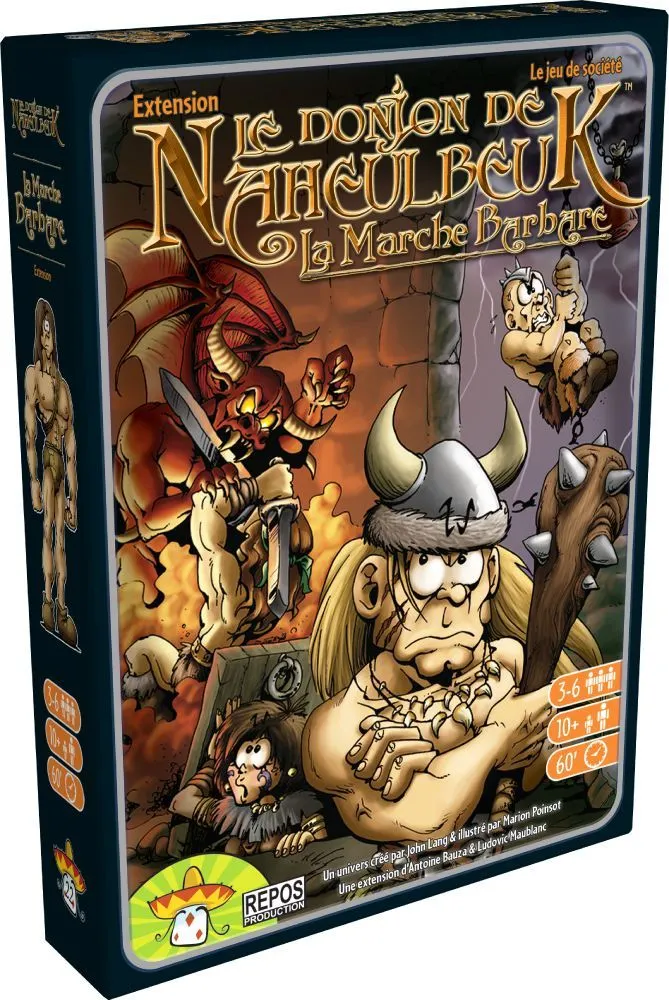
- BGG-Bewertung
- 7,1
Le Donjon de Naheulbeuk: La marche Barbare
- 3–6 Spieler
- 60 Min.
- Komplexität 1,0/5
- 2012
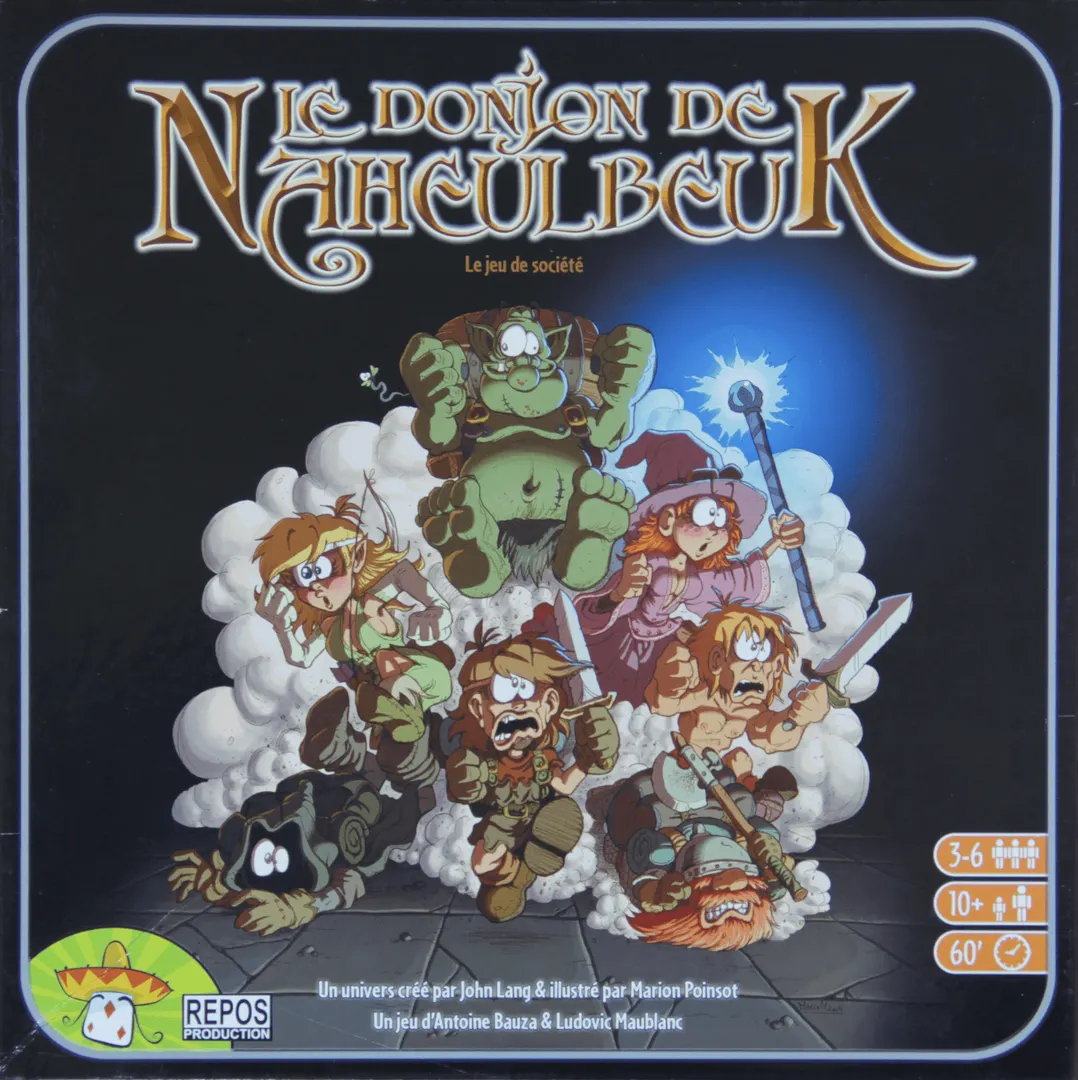
2010
Regelhilfe für Le Donjon de Naheulbeuk
Verständliche Erklärungen zu Spielzügen, Karteneffekten und strittigen Situationen mit Verweisen auf offizielle Quellen und gespeichertem Fragenverlauf.
Für 3 Personen
Was möchtest du wissen?
Antworten stammen aus dem offiziellen Regelheft, mit Seitenangabe zum Nachprüfen.
Le Donjon de Naheulbeuk ist ein Brettspiel aus dem Jahr 2010 für 3–6 Personen, mit 60 Minuten pro Partie und ab 10 Jahren. Entwickelt wurde es von Antoine Bauza und Ludovic Maublanc; die wichtigsten Mechaniken sind Variable Player Powers und Cooperative Game.

Auf Englisch
"Le Donjon de Naheulbeuk" is a cooperative game in which the players try to recover the last of Gladeulfeurha's statuettes. Players embody adventurers in this dungeon-crawling quest, each with a different class, skill and personality: there're the stupid barbarian, the belching ogre, the haughty sorceress, the dumb elf, the coward thief, the ever-singing bard, the cranky dwarf and the ranger who wishes he were a leader… (all the characters and elements of the game are inspired by the audio and comics saga by the same name, parodies of Fantasy RPG — à la Munchkin). In each game, the group must go through 14 of the 56 available dungeon rooms in order to defeat the powerful sorcerer Zangdar. In every room, players will face choices, skill checks or battles, and maybe rewards (as xp, gold or loot cards) There're 8 kind of skill checks, and each checks can slightly differ from the others of the same kind (number of players involved, special rule, etc.). Most of the skill checks use Destiny Tiles (which are 16 thick cards, which also represents monsters) and a special timer (with 3 difficulty levels) Balance Check: the player must put a Destiny Tile on the top of his head, walk/run around and sit down again without letting the tile fall. Climbing Check: the player must put a Destiny Tile on the top of his head, stand up on his chair, then sit down again without letting the tile fall. Dexterity Check: the player must build a house of cards using Destiny Tiles. Speed Check: the player must put a Destiny Tile on the edge of the table, then slap it up the air and catch it before it falls back down. Precision Check: a player stands 3 steps from the table, holding the game box, and the others must throw Destiny Tiles into the box from the other side of the table. Intelligence Check: players play a memory game with the 16 Destiny Tiles Coordination Check: players stands a step from the table, and must circle all the Destiny Tiles around the table, throwing them from one player to the next. Stamina Check: the player must stand on one leg, with a Destiny Tile on his other knee and another one on both of his forefingers, without dropping down either one. The battles are also timed and are played with Letter Cards, that can be exchanged one by one between 2 players. They are used to spell special words (several different words for each character) as blows to the enemy. Every time a player plays cards to spell a word, he draw 3 new cards and keep on playing. At the end of the battle, if there're enough blows, the enemy is defeated. For instance, the sorceress can cast a spell by spelling "wazaaa" with any number of a's at the end, wounding the enemy for every extra a's. The barbarian can misspell a letter in each of his word. The bard and the ranger can make other players draw cards. And so on… For every 3 cards played with a punch symbol on it, a player takes one wound him/herself. Using gold and/or xp, characters can level up (up to level 3) and gain access to more powerful attacks or skills. The party can rest up to 3 times a game to recover from one wound each. If a player dies, he shuffles his character sheet with the other available sheets and pick one : if it's the same, he recovers all his health and keep all his loot, gold and xp; if it's another one, he dies, loses everything, and continues the game as a totally new character. If the players defeat Zangdar the Sorcerer in the 14th room (4 tiles with different rules so every game doesn't end the same way), they win the game.
Laut Katalog unterstützt Le Donjon de Naheulbeuk 3–6 Personen. Diese Spanne entspricht der vom Verlag angegebenen Spielerzahl, das Spiel lässt sich also für jede Gruppengröße innerhalb dieser Spanne aufbauen. Aufbau, einzelne Regeln und Wertungsdetails können je nach Personenzahl trotzdem abweichen; prüfe daher die genaue Konfiguration in der Anleitung deiner Ausgabe.
Die angegebene Spieldauer für Le Donjon de Naheulbeuk beträgt 60 Minuten. Das ist die Schätzung des Verlags für eine vollständige Partie. Die tatsächliche Dauer hängt von der Gruppe, der Personenzahl und der Regelkenntnis ab: Erste Partien dauern meist länger, erfahrene Gruppen sind oft schneller fertig. Aufbau und Regelerklärung sind in dieser Schätzung nicht enthalten.
Im Katalog wird Le Donjon de Naheulbeuk ab 10 Jahren empfohlen. Das ist die Empfehlung des Verlags und berücksichtigt Leseanforderungen, Regelkomplexität und Kleinteile, nicht nur das Thema. Jüngere Kinder können oft mit Hilfe eines Erwachsenen mitspielen; beachte die Altersangabe deiner Ausgabe und die Brettspielerfahrung deiner Gruppe.
Le Donjon de Naheulbeuk hat bei BoardGameGeek eine Komplexitätswertung von 1,8 von 5 und gilt damit als leichtes Spiel. Die Wertung zeigt, wie viel Regelwissen, Planung und Entscheidungen eine typische Partie verlangt. Schwerere Spiele brauchen bei der ersten Erklärung mehr Zeit, daher hilft vor dem Spieleabend eine Vorbereitungsanleitung.
Le Donjon de Naheulbeuk gehört zu diesen Kategorien: Fantasy, Humor und Comic Book / Strip. Die wichtigsten Mechaniken sind Variable Player Powers und Cooperative Game. Kategorien beschreiben Thema und Setting eines Spiels, Mechaniken dagegen, was die Spielenden in ihrem Zug tatsächlich tun. Jede Mechanik führt zu einer Katalogseite mit ähnlichen Spielen, falls du etwas Vergleichbares suchst.
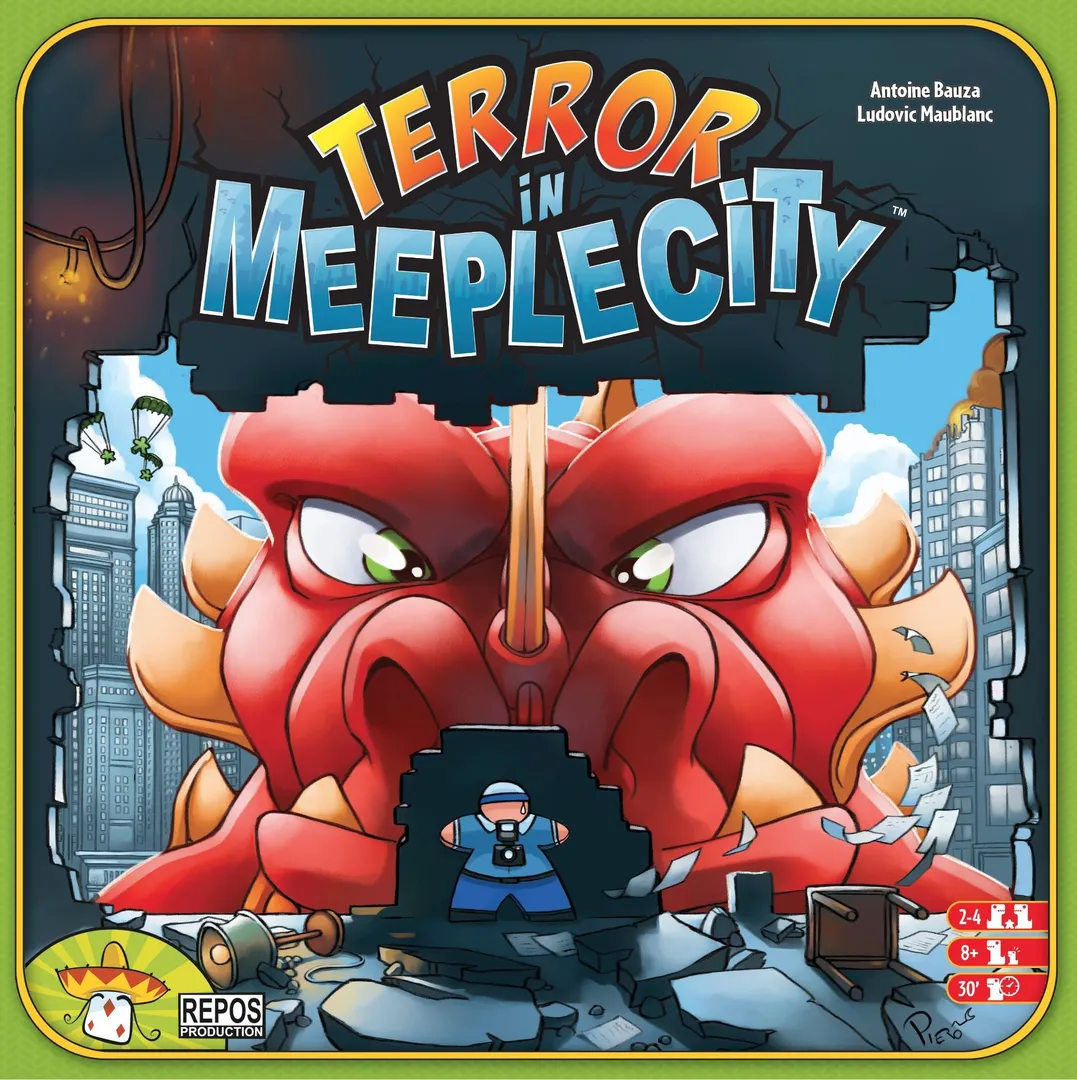
Als Autoren von Le Donjon de Naheulbeuk sind angegeben: Antoine Bauza und Ludovic Maublanc. Diese Angaben stammen aus den veröffentlichten Spieldaten und nennen die für das Spieldesign verantwortlichen Personen, nicht die Illustratoren oder Verlage. Die Autorenseiten auf MeepleRules sammeln weitere Titel derselben Autoren – praktisch, wenn dir ein Spiel gefällt und du ähnliche Spiele suchst.
Im Katalog ist Le Donjon de Naheulbeuk als Grundspiel aufgeführt. Es lässt sich eigenständig mit dem Material aus der Schachtel spielen und benötigt keinen weiteren Titel. Erweiterungen, sofern es welche gibt, ergänzen neues Material oder neue Regeln und sind im Katalog separat mit einem Verweis auf dieses Grundspiel aufgeführt.