
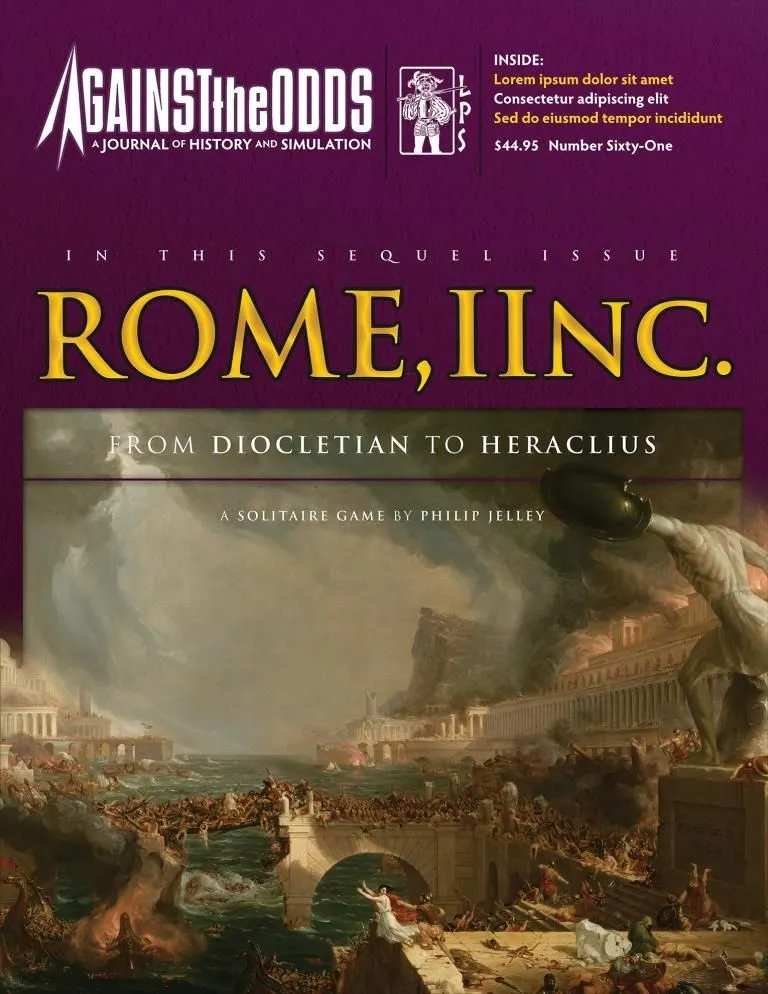
- BGG-Rang
- BGG #16.910
- BGG-Bewertung
- 8,3
Rome, IInc.: From Diocletian to Heraclius
- 1–2 Spieler
- 180–960 Min.
- Komplexität 3,0/5
- 2024

2013
Regelhilfe für Lilliburlero: The Battle of the Boyne, July 1690
Verständliche Erklärungen zu Spielzügen, Karteneffekten und strittigen Situationen mit Verweisen auf offizielle Quellen und gespeichertem Fragenverlauf.
Für 2 Personen
Was möchtest du wissen?
Antworten stammen aus dem offiziellen Regelheft, mit Seitenangabe zum Nachprüfen.
Lilliburlero: The Battle of the Boyne, July 1690 ist ein Brettspiel aus dem Jahr 2013 für 2 Personen, mit 180 Minuten pro Partie und ab 14 Jahren. Entwickelt wurde es von Philip Jelley; die wichtigsten Mechaniken sind Dice Rolling und Area-Impulse.




Auf Englisch
(from ATO website:) Americans hear it on the news and wonder. July 12 in Ireland has become a day of pride and anger, lawsuits and fisticuffs. Called “The Twelfth,” it commemorates the Battle of the Boyne, 1690, when William of Orange (hence today’s Protestant “Orangemen”) and his polyglot army ended the Jacobite hopes for James II to regain the throne and allow (at least) more religious freedom for Catholic Ireland. In one sense, The Boyne might be considered the last battle of the English Civil War—a conflict that had spilled into both Scotland and Ireland along the way. And it might be considered one of the last battles of the Protestant Reformation, since much support on both sides had to do with which religion other countries wished to prevail, which is evident when you find that William’s army included Danes, Dutch, English, Huguenots, Welsh and Protestant Irish. James’ army was mostly Catholic Irish but also included a brigade of crack French infantry and some of the best cavalry in Europe. The Boyne also represents a key transition point in military technology…the last of the matchlocks and pikes and first of the flintlocks, a final time when cavalry caracole competed with pressing home a charge So what’s with ‘Lillibulero’? It’s a song that was a popular tune before this time but became locked with the whole Irish campaign. Trust us, you have heard the tune. It used to be used by the BBC, various British army groups, and the movie Barry Lyndon, and has been featured in alternative lyrics versions for several wars since—including the ACW and WW2—and in Ulster folk tunes. It was “said to have sung James II out of three kingdoms,” and is still part of the Orange marches mentioned above. What about the game? Philip Jelley’s design brings us area movement for the broad area of eastern Ireland relevant to the battle, with units representing the various regiments, battalions, squadrons, and batteries that fought in the battle. Each turn represents roughly one hour of time, with weather, mist, and gunsmoke affecting command and control and unit activations. Scenarios are included for the full battle with historical deployments, the full battle with free-set-up, and for specific parts of the battle (for shorter playtime). Also included is a smaller battle “delaying action” that some people say is what James should have done, plus, there are optional rules for units who could have been involved or who had pressing reasons to NOT be involved (Even William might not be there!). You’ll have plenty of chances to try various ways of heading off “The Troubles” of three centuries ago, or of pressing William’s claims and making a truly “United Kingdom.” Map - One full color 22" x 34" mapsheet (plus a second half-sized map covering the battle of Aughrim) Counters - 176 full color 5/8" die-cut pieces Rules length - 12 pages Charts and tables - 2 pages Complexity - Low Solitaire suitability - Low Playing time - Up to 3 hours Design - Philip Jelley Development - Lembit Tohver Graphic Design - Mark Mahaffey
Laut Katalog unterstützt Lilliburlero: The Battle of the Boyne, July 1690 2 Personen. Das ist die vom Verlag angegebene Spielerzahl, das Spiel ist also genau für diese Anzahl von Mitspielenden ausgelegt. Varianten für andere Gruppengrößen sind, sofern vorhanden, in der Anleitung deiner Ausgabe beschrieben; prüfe sie, bevor du eine andere Konfiguration aufbaust.
Die angegebene Spieldauer für Lilliburlero: The Battle of the Boyne, July 1690 beträgt 180 Minuten. Das ist die Schätzung des Verlags für eine vollständige Partie. Die tatsächliche Dauer hängt von der Gruppe, der Personenzahl und der Regelkenntnis ab: Erste Partien dauern meist länger, erfahrene Gruppen sind oft schneller fertig. Aufbau und Regelerklärung sind in dieser Schätzung nicht enthalten.
Im Katalog wird Lilliburlero: The Battle of the Boyne, July 1690 ab 14 Jahren empfohlen. Das ist die Empfehlung des Verlags und berücksichtigt Leseanforderungen, Regelkomplexität und Kleinteile, nicht nur das Thema. Jüngere Kinder können oft mit Hilfe eines Erwachsenen mitspielen; beachte die Altersangabe deiner Ausgabe und die Brettspielerfahrung deiner Gruppe.
Lilliburlero: The Battle of the Boyne, July 1690 hat bei BoardGameGeek eine Komplexitätswertung von 3,0 von 5 und gilt damit als mittelschweres Spiel. Die Wertung zeigt, wie viel Regelwissen, Planung und Entscheidungen eine typische Partie verlangt. Schwerere Spiele brauchen bei der ersten Erklärung mehr Zeit, daher hilft vor dem Spieleabend eine Vorbereitungsanleitung.
Lilliburlero: The Battle of the Boyne, July 1690 gehört zu diesen Kategorien: Wargame, Civil War und Pike and Shot. Die wichtigsten Mechaniken sind Dice Rolling und Area-Impulse. Kategorien beschreiben Thema und Setting eines Spiels, Mechaniken dagegen, was die Spielenden in ihrem Zug tatsächlich tun. Jede Mechanik führt zu einer Katalogseite mit ähnlichen Spielen, falls du etwas Vergleichbares suchst.
Als Autoren von Lilliburlero: The Battle of the Boyne, July 1690 sind angegeben: Philip Jelley. Diese Angaben stammen aus den veröffentlichten Spieldaten und nennen die für das Spieldesign verantwortlichen Personen, nicht die Illustratoren oder Verlage. Die Autorenseiten auf MeepleRules sammeln weitere Titel derselben Autoren – praktisch, wenn dir ein Spiel gefällt und du ähnliche Spiele suchst.
Im Katalog ist Lilliburlero: The Battle of the Boyne, July 1690 als Grundspiel aufgeführt. Es lässt sich eigenständig mit dem Material aus der Schachtel spielen und benötigt keinen weiteren Titel. Erweiterungen, sofern es welche gibt, ergänzen neues Material oder neue Regeln und sind im Katalog separat mit einem Verweis auf dieses Grundspiel aufgeführt.