

- BGG-Rang
- BGG #135
- BGG-Bewertung
- 7,7
Tigris & Euphrates
- 2–4 Spieler
- 60–120 Min.
- Komplexität 3,5/5
- 1997
1850
Regelhilfe für Mahjong
Verständliche Erklärungen zu Spielzügen, Karteneffekten und strittigen Situationen mit Verweisen auf offizielle Quellen und gespeichertem Fragenverlauf.
Für 3 Personen
Was möchtest du wissen?
Antworten stammen aus dem offiziellen Regelheft, mit Seitenangabe zum Nachprüfen.
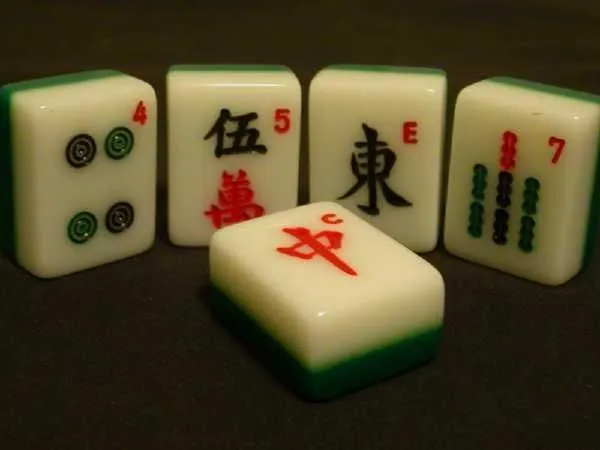
Mahjong ist ein Brettspiel aus dem Jahr 1850 für 3–4 Personen, mit 120 Minuten pro Partie und ab 8 Jahren. Die wichtigsten Mechaniken sind Hand Management und Set Collection.


Auf Englisch
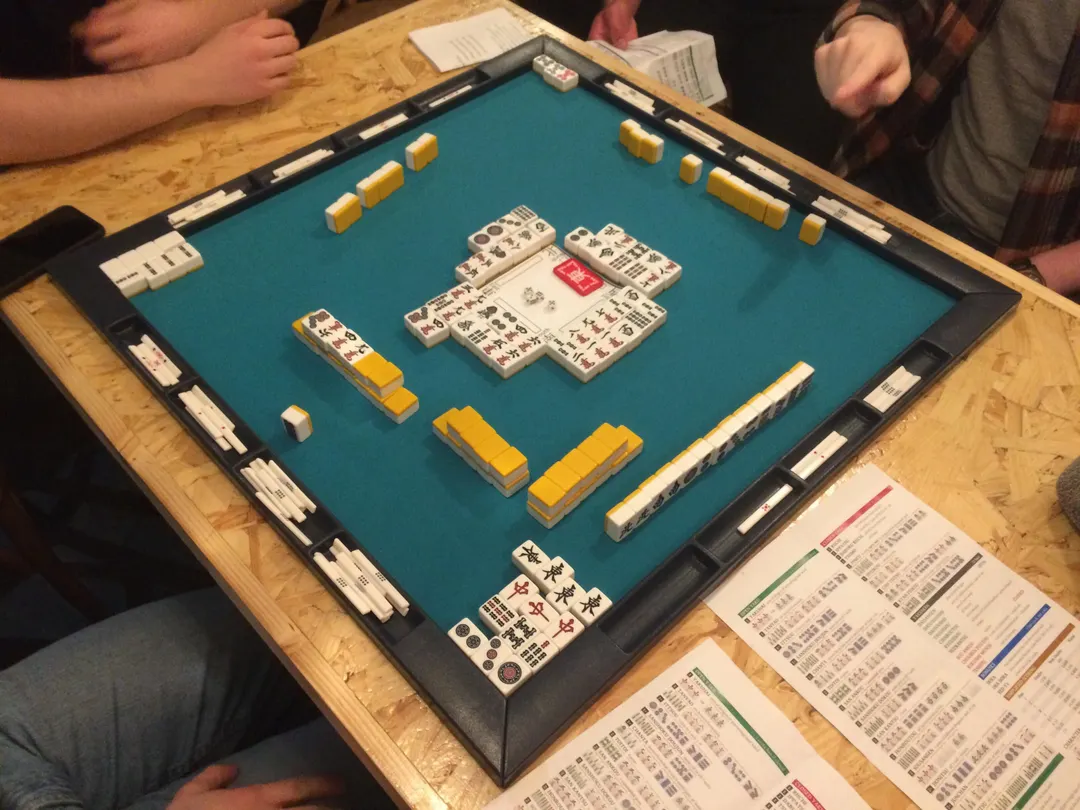
Mah-Jongg (Chinese 麻將/麻将 Májiàng [game of the] sparrow) is a traditional Chinese game using illustrated tiles, with game play similarities to rummy. It is a popular gambling game, but wagering real stakes is by no means necessary to have fun playing. The tiles consist of three suits numbering 1-9 (Dots, Numbers or Characters, and Bamboo, the "Ace" of which almost always looks like a bird), three different dragons (Red, Green, and White [white is unusual in that it may look like a silvery dragon, or like a picture frame, or blank - think "White dragon in a snowstorm"), and the four winds (east, south, west, and north). There are four copies of each tile. This totals to 136 tiles. In addition, special Flower, Season, and Joker (American version) tiles may also be used. Four players take turns drawing from a stock (the wall), or from the other players' discards, in an attempt to form sets of numeric sequences (e.g., 5-6-7 of the same suit, which can only be drawn from the player at one's left, by calling "Chow"), triplets and quadruplets (which can be drawn from the discards out-of-turn by calling "Pung"), pairs, and other patterns. "Pung" takes precedence over "Chow", and "Mah Jongg" takes precedence over all (and is the only situation one may draw "Chow" out-of-turn.) What happens if a single discard would give two (or more!) players "Mah Jongg"? Precedence goes to the player who would play next in normal sequence. Originating in China in the mid-19th century, it was introduced to the U.S. in the 1920s. It is now played in different forms throughout Asia, Europe, North America, Australia, and New Zealand. Although the rules for game play are fairly constant, there are an immense variety of scoring schemes. A few general categories of rule-sets include: Chinese Classical, Hong Kong Old Style, Japanese, Taiwanese, Western, and American.
Laut Katalog unterstützt Mahjong 3–4 Personen. Diese Spanne entspricht der vom Verlag angegebenen Spielerzahl, das Spiel lässt sich also für jede Gruppengröße innerhalb dieser Spanne aufbauen. Aufbau, einzelne Regeln und Wertungsdetails können je nach Personenzahl trotzdem abweichen; prüfe daher die genaue Konfiguration in der Anleitung deiner Ausgabe.
Die angegebene Spieldauer für Mahjong beträgt 120 Minuten. Das ist die Schätzung des Verlags für eine vollständige Partie. Die tatsächliche Dauer hängt von der Gruppe, der Personenzahl und der Regelkenntnis ab: Erste Partien dauern meist länger, erfahrene Gruppen sind oft schneller fertig. Aufbau und Regelerklärung sind in dieser Schätzung nicht enthalten.
Im Katalog wird Mahjong ab 8 Jahren empfohlen. Das ist die Empfehlung des Verlags und berücksichtigt Leseanforderungen, Regelkomplexität und Kleinteile, nicht nur das Thema. Jüngere Kinder können oft mit Hilfe eines Erwachsenen mitspielen; beachte die Altersangabe deiner Ausgabe und die Brettspielerfahrung deiner Gruppe.
Mahjong hat bei BoardGameGeek eine Komplexitätswertung von 2,6 von 5 und gilt damit als eher leichtes Spiel. Die Wertung zeigt, wie viel Regelwissen, Planung und Entscheidungen eine typische Partie verlangt. Schwerere Spiele brauchen bei der ersten Erklärung mehr Zeit, daher hilft vor dem Spieleabend eine Vorbereitungsanleitung.
Mahjong gehört zu diesen Kategorien: Abstract Strategy. Die wichtigsten Mechaniken sind Hand Management und Set Collection. Kategorien beschreiben Thema und Setting eines Spiels, Mechaniken dagegen, was die Spielenden in ihrem Zug tatsächlich tun. Jede Mechanik führt zu einer Katalogseite mit ähnlichen Spielen, falls du etwas Vergleichbares suchst.
Im Katalog ist Mahjong als Grundspiel aufgeführt. Es lässt sich eigenständig mit dem Material aus der Schachtel spielen und benötigt keinen weiteren Titel. Erweiterungen, sofern es welche gibt, ergänzen neues Material oder neue Regeln und sind im Katalog separat mit einem Verweis auf dieses Grundspiel aufgeführt.