
- BGG-Rang
- BGG #1.636
- BGG-Bewertung
- 7,3
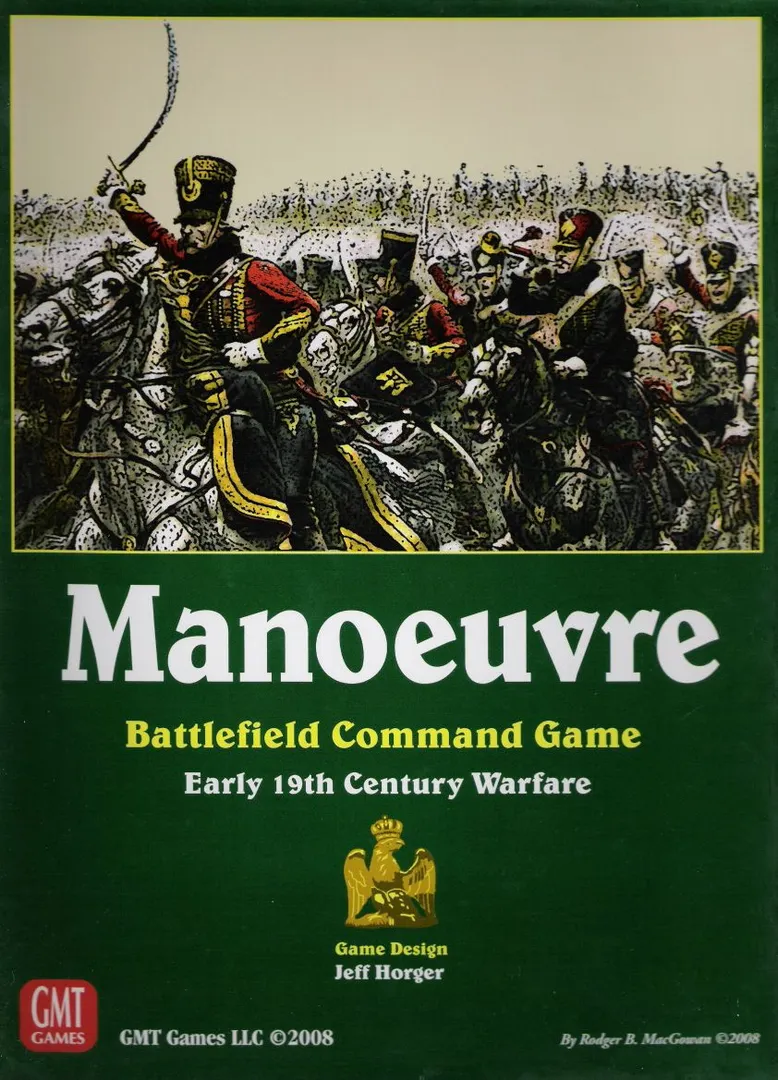
Manoeuvre
- 2 Spieler
- 60 Min.
- Komplexität 2,1/5
- 2008
2017
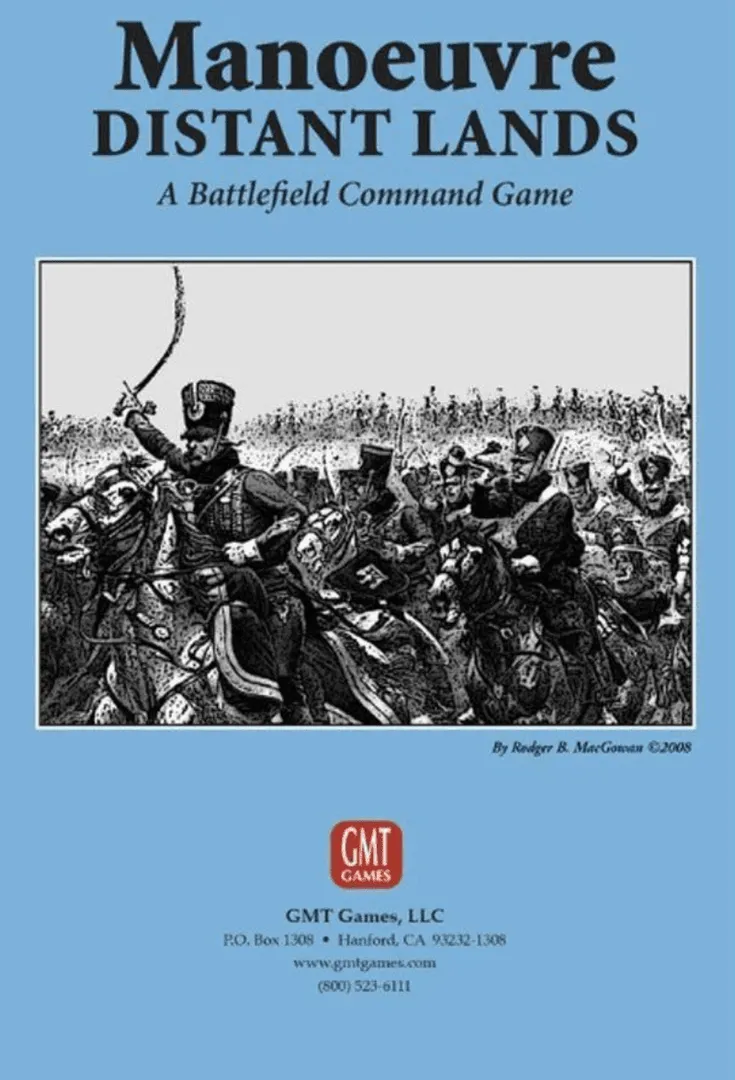
Regelhilfe für Manoeuvre: Distant Lands
Verständliche Erklärungen zu Spielzügen, Karteneffekten und strittigen Situationen mit Verweisen auf offizielle Quellen und gespeichertem Fragenverlauf.
Für 2 Personen
Was möchtest du wissen?
Antworten stammen aus dem offiziellen Regelheft, mit Seitenangabe zum Nachprüfen.
Manoeuvre: Distant Lands ist ein Brettspiel aus dem Jahr 2017 für 2 Personen, mit 60 Minuten pro Partie und ab 10 Jahren. Entwickelt wurde es von Jeff Horger und Joseph Roush; die wichtigsten Mechaniken sind Variable Player Powers, Hand Management und Dice Rolling.

Auf Englisch
The regiment had fought countless battles across the European continent. War had been waged in Bavaria against the Prussians, Catalonia against the Spaniards, under the great pyramids against the relentless Turk and even at New Orleans against those upstart Americans. Now new challengers have arisen and a completely foreign army is arrayed across the battlefield. The Tri-Color fluttered in the breeze as rocket shells burst in the air. A new type of warfare was about to be unleashed. Manoeuvre: Distant Lands is a stand alone expansion for Manoeuvre. Four new armies are included to allow you to bring the fight from the frozen north to the sub-continent and the mythic east. Included in this set are counters and cards for Sweden, the splintered Kingdoms of India, the Chinese 8-Banner Army and the crumbling remains of the Japanese Shogunate. Also included is a set of 8 new land tiles that will force veteran players to learn new tactics among the swamps and fields of the Orient as well as the forests of Scandinavia. Sweden: The Swedes are reminiscent of the more traditional European powers and fit nicely into the current game hierarchy to allow for more balanced tournament play. The Swedish army fits the mold of both the Prussians and Russians but falls into line just below them in overall strength. Indians: The Kingdoms of the Marathas, Mughals, Mysore and Sikhs from the Punjab have banded together to overthrow the colonial powers of the day. Their problem is overcoming the lack of a true leader that makes it difficult to set aside their rivalries and squabbling. They have speed rivaling the Ottomans but far less of a capacity to use it well. They are a true guerilla force adept at denying their opponents resources or freedom to maneuver. Tokugawa Shogunate: The Shogunate is crumbling. The army seeks to modernize against the will of the Shogun and in a few years Japan will step into the Industrial age. However, at the turn of the 19th Century, insular clans still dominated the military. Every Daimyo leads his own army into battle with their own guns, cavalry, samurai and teppo. Only the Shogun can be called on to make any Clan work with another. Beware the deadly fury of the Banzai charge and even cornered units will fight to the bitter end and the last man. China: The Chinese 8-Banner army boasts a core of elite units, including three cavalry units that can stand their ground against any European foe. Unfortunately, the Han conscripts and the peasants that form the Tuan Lian are ill-suited and under-equipped in relation to their Manchu and Mongol horsemen. Will rockets and witchcraft bring disruption to the orderly European battlefield? "I have not imagined that the Napoleonic experience can be brought to the orient!" - Thunder Wong, Playtester Extraordinaire Components: 32 Unit counters (8 for each nationality) 240 Cards (60 for each nationality) 8 Terrain tiles Rules for the new abilities and some advanced Manoeuvre additions. 3 Advance-to-Contact Counters Designers: Jeff Horger and Joe Roush
Laut Katalog unterstützt Manoeuvre: Distant Lands 2 Personen. Das ist die vom Verlag angegebene Spielerzahl, das Spiel ist also genau für diese Anzahl von Mitspielenden ausgelegt. Varianten für andere Gruppengrößen sind, sofern vorhanden, in der Anleitung deiner Ausgabe beschrieben; prüfe sie, bevor du eine andere Konfiguration aufbaust.
Die angegebene Spieldauer für Manoeuvre: Distant Lands beträgt 60 Minuten. Das ist die Schätzung des Verlags für eine vollständige Partie. Die tatsächliche Dauer hängt von der Gruppe, der Personenzahl und der Regelkenntnis ab: Erste Partien dauern meist länger, erfahrene Gruppen sind oft schneller fertig. Aufbau und Regelerklärung sind in dieser Schätzung nicht enthalten.
Im Katalog wird Manoeuvre: Distant Lands ab 10 Jahren empfohlen. Das ist die Empfehlung des Verlags und berücksichtigt Leseanforderungen, Regelkomplexität und Kleinteile, nicht nur das Thema. Jüngere Kinder können oft mit Hilfe eines Erwachsenen mitspielen; beachte die Altersangabe deiner Ausgabe und die Brettspielerfahrung deiner Gruppe.
Manoeuvre: Distant Lands hat bei BoardGameGeek eine Komplexitätswertung von 2,0 von 5 und gilt damit als eher leichtes Spiel. Die Wertung zeigt, wie viel Regelwissen, Planung und Entscheidungen eine typische Partie verlangt. Schwerere Spiele brauchen bei der ersten Erklärung mehr Zeit, daher hilft vor dem Spieleabend eine Vorbereitungsanleitung.
Manoeuvre: Distant Lands gehört zu diesen Kategorien: Wargame und Napoleonic. Die wichtigsten Mechaniken sind Variable Player Powers, Hand Management und Dice Rolling. Kategorien beschreiben Thema und Setting eines Spiels, Mechaniken dagegen, was die Spielenden in ihrem Zug tatsächlich tun. Jede Mechanik führt zu einer Katalogseite mit ähnlichen Spielen, falls du etwas Vergleichbares suchst.
Als Autoren von Manoeuvre: Distant Lands sind angegeben: Jeff Horger und Joseph Roush. Diese Angaben stammen aus den veröffentlichten Spieldaten und nennen die für das Spieldesign verantwortlichen Personen, nicht die Illustratoren oder Verlage. Die Autorenseiten auf MeepleRules sammeln weitere Titel derselben Autoren – praktisch, wenn dir ein Spiel gefällt und du ähnliche Spiele suchst.
Im Katalog ist Manoeuvre: Distant Lands als Grundspiel aufgeführt. Es lässt sich eigenständig mit dem Material aus der Schachtel spielen und benötigt keinen weiteren Titel. Erweiterungen, sofern es welche gibt, ergänzen neues Material oder neue Regeln und sind im Katalog separat mit einem Verweis auf dieses Grundspiel aufgeführt.