

- BGG-Rang
- BGG #11.547
- BGG-Bewertung
- 6,4
HATSUDEN
- 2 Spieler
- 15–30 Min.
- Komplexität 1,2/5
- 2017
2019
Regelhilfe für Moon Base
Verständliche Erklärungen zu Spielzügen, Karteneffekten und strittigen Situationen mit Verweisen auf offizielle Quellen und gespeichertem Fragenverlauf.
Für 2 Personen
Was möchtest du wissen?
Antworten stammen aus dem offiziellen Regelheft, mit Seitenangabe zum Nachprüfen.
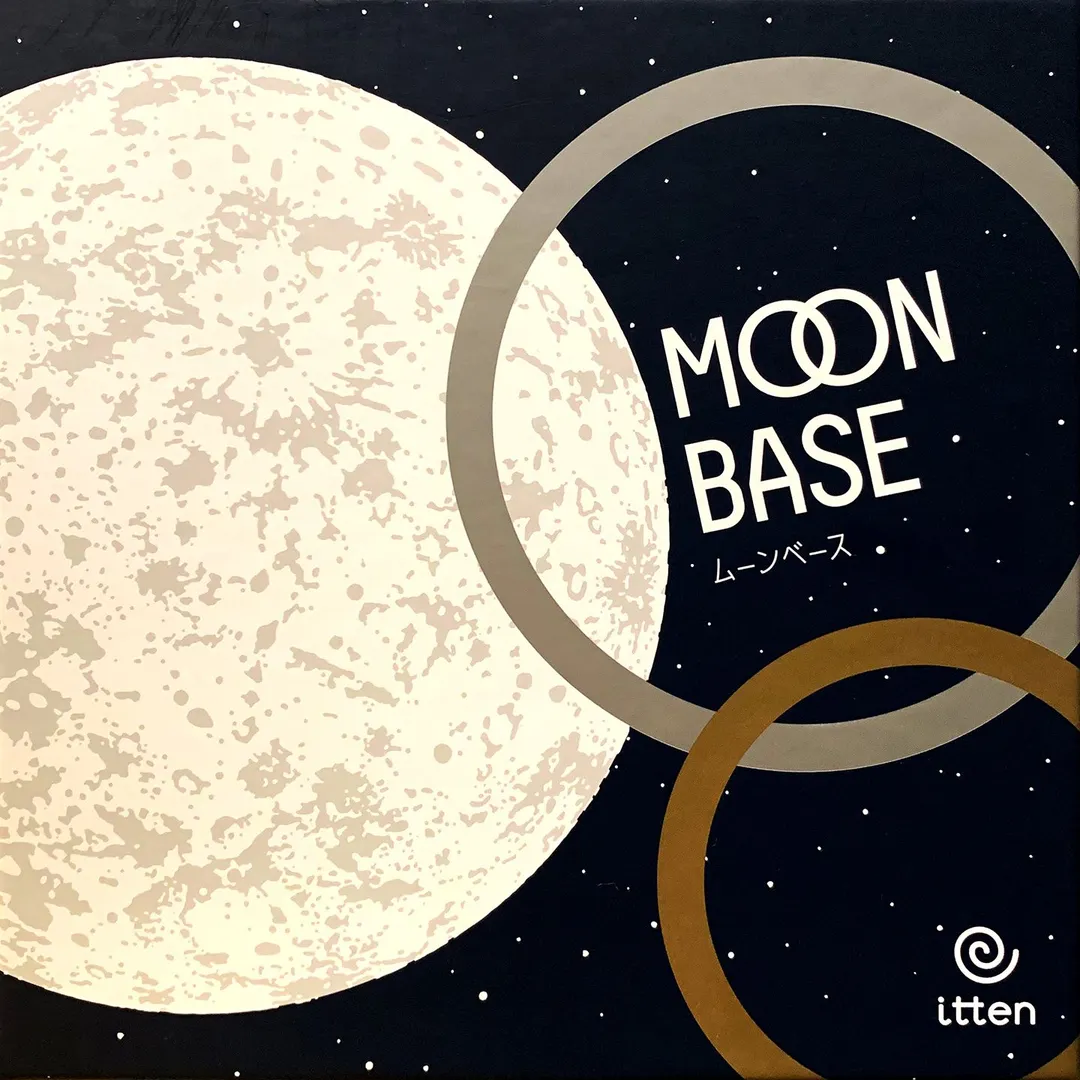
Moon Base ist ein Brettspiel aus dem Jahr 2019 für 2 Personen, mit 30–60 Minuten pro Partie und ab 9 Jahren. Entwickelt wurde es von Naotaka Shimamoto; die wichtigsten Mechaniken sind Area Majority / Influence.





Auf Englisch
Moon Base is a two-player abstract game set on the moon, proceeding over six rounds. The player replenishes the 'Ring Module' at each round, and builds the moon base while placing and stacking on the crater. The player uses their three-color ring well to advance their color. At the end of each round, it will be a point to construct a 'residential zone' and 'resource facility', but while aiming to move the 'mobile research building' effectively, players will also aim for bonus points that can be earned at the end of the sixth round . Finally, the player with many total points wins. Game Abstract Moon Base is a 2 player abstract game about Moon Development. There Are 6 Rounds. Each round, players choose a set number of ring modules to place on the craters, or place on top of each other to develop the Moon Base. Using the three different colors of the rings, players try to build in a way that their colors will gain the upper hand. At the end of each round whoever has the highest total points wins the game with the highest points by gaining bonus points at the end. 5 Features of Moon Base <Feature 1> Unique Game Board The impressive craters on the lunar board are the squares of this game. Craters overlap, so if you put a ring in one crater, the other one overlapping it also gets eliminated, and vice versa if you put a ring on the other. Depending on which crater you are placing a ring on, the situation on the board changes and affects your game plan. First come, first served, so if you really care about placing your ring on a specific crater, make sure you do it earlier than your opponent! <Feature 2> A 3D Stacking Game The ring modules that make up Moon Base can be stacked to 2 or 3 layers, and the position where they are placed impacts the subsequent turns. It’s a strategic game, and there are aspects of analog games mixed into it. Regret joyously. “I should have put this ring a little more inside!” <Feature 3> Random Setup Although it is an abstract game, the ring modules are prepared randomly. But once the game starts, you must rely solely on your choices and decisions. All ring modules are disclosed, so make your best judgment on which ring to choose. Have future rounds in mind, read your opponent’s prospective moves in the next round, and change randomness into certainty. <Feature 4> A game that gets more exciting towards the end Players alternate with each player having 4 turns across 6 rounds = 24 hands (placing 1 ring each turn). Bonus points can be earned depending on the situation at the final round, so the battle will get more competitive towards the end. Each player aims to find an unexpected move to turn the game around. <Feature 5> Think about the future on the completed lunar base The game ends when the moon base is complete. The spectacular sight on the board that was created at the end of the competition is a collaborative work you’ve created together with your opponent. After the game, take a moment to look up at the moon in the night sky and think about what we might expect in the future.
Laut Katalog unterstützt Moon Base 2 Personen. Das ist die vom Verlag angegebene Spielerzahl, das Spiel ist also genau für diese Anzahl von Mitspielenden ausgelegt. Varianten für andere Gruppengrößen sind, sofern vorhanden, in der Anleitung deiner Ausgabe beschrieben; prüfe sie, bevor du eine andere Konfiguration aufbaust.
Die angegebene Spieldauer für Moon Base beträgt 30–60 Minuten. Das ist die Schätzung des Verlags für eine vollständige Partie. Die tatsächliche Dauer hängt von der Gruppe, der Personenzahl und der Regelkenntnis ab: Erste Partien dauern meist länger, erfahrene Gruppen sind oft schneller fertig. Aufbau und Regelerklärung sind in dieser Schätzung nicht enthalten.
Im Katalog wird Moon Base ab 9 Jahren empfohlen. Das ist die Empfehlung des Verlags und berücksichtigt Leseanforderungen, Regelkomplexität und Kleinteile, nicht nur das Thema. Jüngere Kinder können oft mit Hilfe eines Erwachsenen mitspielen; beachte die Altersangabe deiner Ausgabe und die Brettspielerfahrung deiner Gruppe.
Moon Base hat bei BoardGameGeek eine Komplexitätswertung von 2,3 von 5 und gilt damit als eher leichtes Spiel. Die Wertung zeigt, wie viel Regelwissen, Planung und Entscheidungen eine typische Partie verlangt. Schwerere Spiele brauchen bei der ersten Erklärung mehr Zeit, daher hilft vor dem Spieleabend eine Vorbereitungsanleitung.
Moon Base gehört zu diesen Kategorien: Abstract Strategy und Space Exploration. Die wichtigsten Mechaniken sind Area Majority / Influence. Kategorien beschreiben Thema und Setting eines Spiels, Mechaniken dagegen, was die Spielenden in ihrem Zug tatsächlich tun. Jede Mechanik führt zu einer Katalogseite mit ähnlichen Spielen, falls du etwas Vergleichbares suchst.
Als Autoren von Moon Base sind angegeben: Naotaka Shimamoto. Diese Angaben stammen aus den veröffentlichten Spieldaten und nennen die für das Spieldesign verantwortlichen Personen, nicht die Illustratoren oder Verlage. Die Autorenseiten auf MeepleRules sammeln weitere Titel derselben Autoren – praktisch, wenn dir ein Spiel gefällt und du ähnliche Spiele suchst.
Im Katalog ist Moon Base als Grundspiel aufgeführt. Es lässt sich eigenständig mit dem Material aus der Schachtel spielen und benötigt keinen weiteren Titel. Erweiterungen, sofern es welche gibt, ergänzen neues Material oder neue Regeln und sind im Katalog separat mit einem Verweis auf dieses Grundspiel aufgeführt.