- BGG-Bewertung
- 7,6
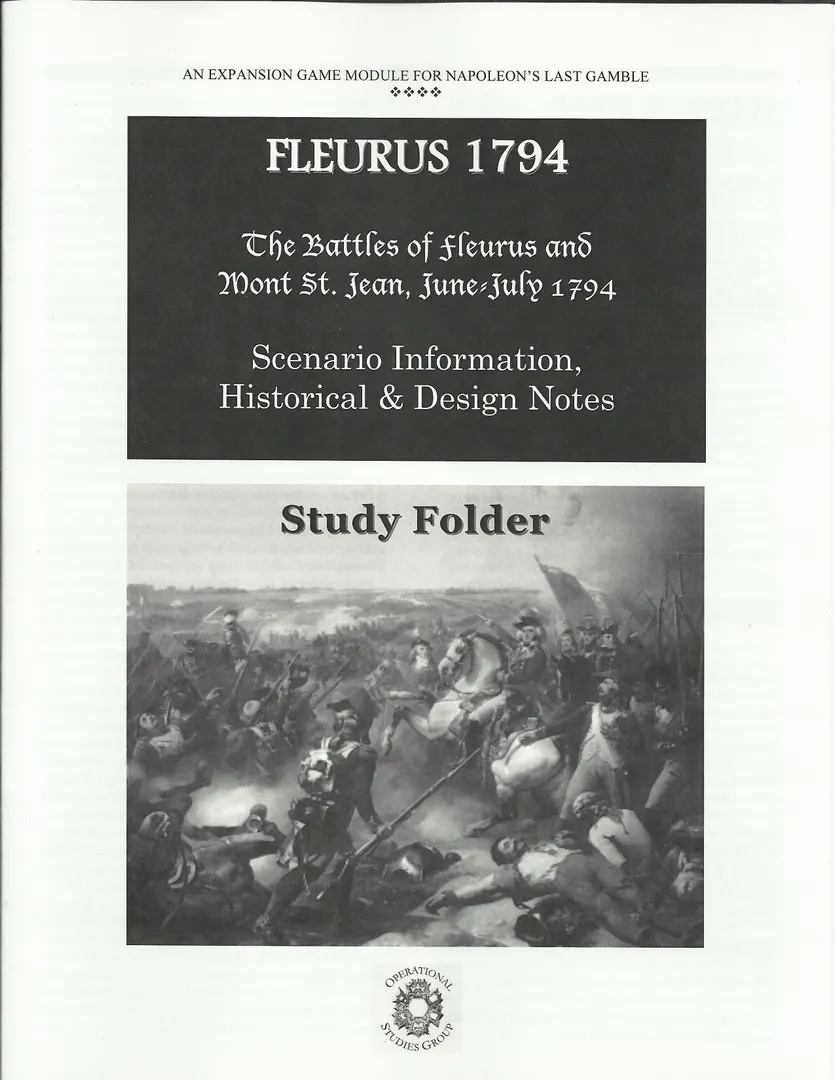
Fleurus 1794: The Battles of Fleurus and Mont St. Jean
- 2–4 Spieler
- Komplexität 2,5/5
- 2016

2016
Regelhilfe für Napoleon's Last Gamble: Battles of the Hundred Days
Verständliche Erklärungen zu Spielzügen, Karteneffekten und strittigen Situationen mit Verweisen auf offizielle Quellen und gespeichertem Fragenverlauf.
Für 2 Personen
Was möchtest du wissen?
Antworten stammen aus dem offiziellen Regelheft, mit Seitenangabe zum Nachprüfen.
Napoleon's Last Gamble: Battles of the Hundred Days ist ein Brettspiel aus dem Jahr 2016 für 2–6 Personen, mit 180–1200 Minuten pro Partie und ab 12 Jahren. Entwickelt wurde es von Kevin Zucker; die wichtigsten Mechaniken sind Dice Rolling, Grid Movement und Hexagon Grid.









Auf Englisch
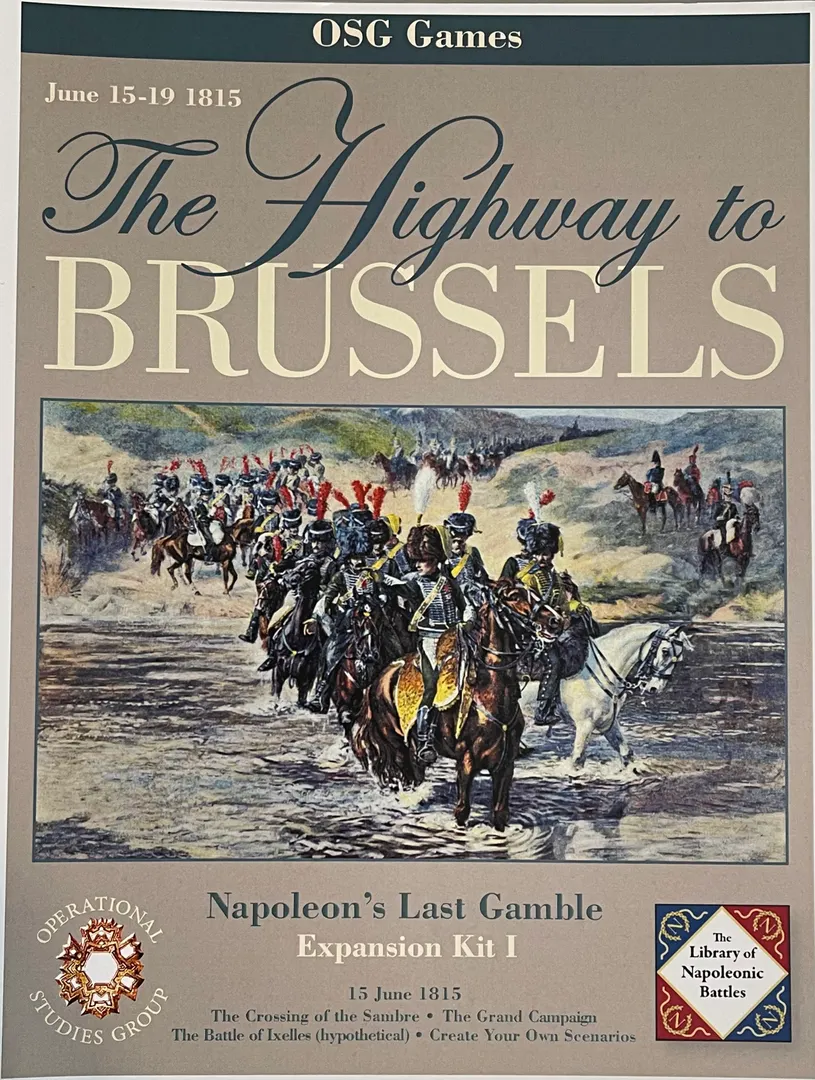
Napoleon’s Last Gamble contains five battles from the Waterloo Campaign, which Napoleon began by seizing the central position between the Prussian and British Armies. On June 15th the Grande Armée was unleashed across the Sambre River. Allied screening forces sent out the warning to headquarters. The Allies executed a forward concentration behind the cover of their screens. As the 16th dawned, troops of both sides still converged on the battlefields. Napoleon's Last Gamble is one of the games from OSG's Series: The Library of Napoleonic Battles (OSG) series. Details on the series are below, as all the games share a common rules set and game system. COMPONENTS Two 22x34" maps One 17x22" map 560 die-cut counter units 100 playing cards two rulebooks 15 Player aid cards covered in a box BATTLES SIMULATED Quatre-Bras, Ney at the Crossroads, 16 June The French attacked on two fronts simultaneously. The tenacious defense of Quatre Bras by the Anglo-Allied troops saved the Prussians from receiving the full weight of the Armée du Nord. Ligny, The Last Victory, 16 June Finally unleashed, the Guard pushed the Prussians back from the Ligny brook. Blücher himself was wounded and separated from headquarters. But Napoleon’s hoped-for knock-out blow remained undelivered. Wavre, Grouchy’s Blunder, 18 June Napoleon separated the two wings of his army, ordering Marshal Grouchy on the track of the Prussians while he pursued Wellington. Grouchy’s prescribed route was wide of the mark, and took him to the outer flank, allowing the Prussians to interpose themselves between the two French wings—Blücher achieved a strategic reversal of the opening. Waterloo, A Near Run Thing, 18 June While Grouchy frittered away time engaging the Prussian rear-guard at Wavre, Ney conducted the mid-phase of the battle like a rear-guard action in the Peninsular Campaign, failing to provide infantry support for his spectacular cavalry charges. Wellington fought a successful defensive battle, managing to cling to his ridge until the arrival of three Prussian corps. The broken French army retreated toward Charleroi; Grouchy’s intact wing moved south-east toward Namur. La Souffel, Rapp’s Last Stand, 28 June Three days after Waterloo, Rapp woke up and began a slow withdrawal from the Rhine, pursued by the vanguard of Schwarzenberg's Army. On June 26 the heavily-outnumbered Rapp skirmished with the Austrian III Corps. Two days later he made a stand along the Souffel River, and the Austrians attacked. DESCRIPTION Series: The Library of Napoleonic Battles (OSG) - formerly known as the Napoleon's Last Battles (NLB) Series: 480 meters per hex, 1 hour per turn, 400-800 men per strength point. Each Approach to Battle game lasts about 22 turns. The Full campaign links the individual battles. (Text mostly from the OSG pages)
Laut Katalog unterstützt Napoleon's Last Gamble: Battles of the Hundred Days 2–6 Personen. Diese Spanne entspricht der vom Verlag angegebenen Spielerzahl, das Spiel lässt sich also für jede Gruppengröße innerhalb dieser Spanne aufbauen. Aufbau, einzelne Regeln und Wertungsdetails können je nach Personenzahl trotzdem abweichen; prüfe daher die genaue Konfiguration in der Anleitung deiner Ausgabe.
Die angegebene Spieldauer für Napoleon's Last Gamble: Battles of the Hundred Days beträgt 180–1200 Minuten. Das ist die Schätzung des Verlags für eine vollständige Partie. Die tatsächliche Dauer hängt von der Gruppe, der Personenzahl und der Regelkenntnis ab: Erste Partien dauern meist länger, erfahrene Gruppen sind oft schneller fertig. Aufbau und Regelerklärung sind in dieser Schätzung nicht enthalten.
Im Katalog wird Napoleon's Last Gamble: Battles of the Hundred Days ab 12 Jahren empfohlen. Das ist die Empfehlung des Verlags und berücksichtigt Leseanforderungen, Regelkomplexität und Kleinteile, nicht nur das Thema. Jüngere Kinder können oft mit Hilfe eines Erwachsenen mitspielen; beachte die Altersangabe deiner Ausgabe und die Brettspielerfahrung deiner Gruppe.
Napoleon's Last Gamble: Battles of the Hundred Days hat bei BoardGameGeek eine Komplexitätswertung von 2,8 von 5 und gilt damit als eher leichtes Spiel. Die Wertung zeigt, wie viel Regelwissen, Planung und Entscheidungen eine typische Partie verlangt. Schwerere Spiele brauchen bei der ersten Erklärung mehr Zeit, daher hilft vor dem Spieleabend eine Vorbereitungsanleitung.
Napoleon's Last Gamble: Battles of the Hundred Days gehört zu diesen Kategorien: Wargame und Napoleonic. Die wichtigsten Mechaniken sind Dice Rolling, Grid Movement und Hexagon Grid. Kategorien beschreiben Thema und Setting eines Spiels, Mechaniken dagegen, was die Spielenden in ihrem Zug tatsächlich tun. Jede Mechanik führt zu einer Katalogseite mit ähnlichen Spielen, falls du etwas Vergleichbares suchst.
Als Autoren von Napoleon's Last Gamble: Battles of the Hundred Days sind angegeben: Kevin Zucker. Diese Angaben stammen aus den veröffentlichten Spieldaten und nennen die für das Spieldesign verantwortlichen Personen, nicht die Illustratoren oder Verlage. Die Autorenseiten auf MeepleRules sammeln weitere Titel derselben Autoren – praktisch, wenn dir ein Spiel gefällt und du ähnliche Spiele suchst.
Im Katalog ist Napoleon's Last Gamble: Battles of the Hundred Days als Grundspiel aufgeführt. Es lässt sich eigenständig mit dem Material aus der Schachtel spielen und benötigt keinen weiteren Titel. Erweiterungen, sofern es welche gibt, ergänzen neues Material oder neue Regeln und sind im Katalog separat mit einem Verweis auf dieses Grundspiel aufgeführt.