
- BGG-Rang
- BGG #6.483
- BGG-Bewertung
- 8,0
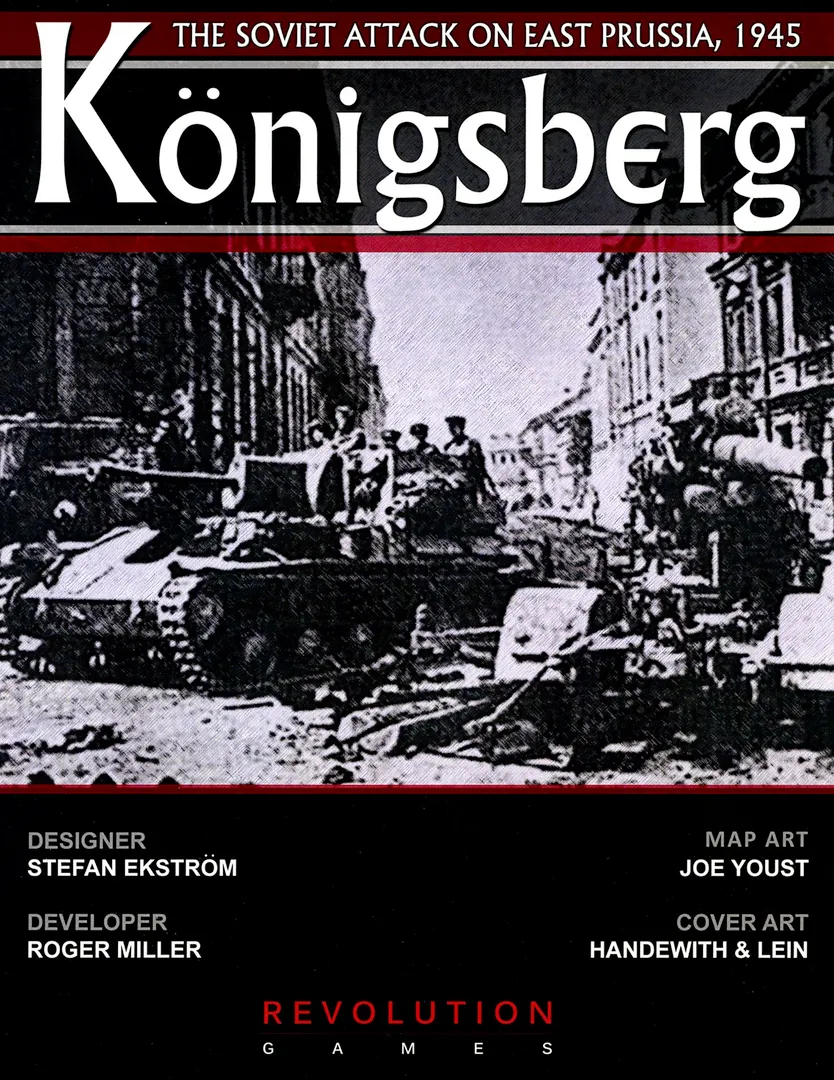
Königsberg: The Soviet Attack on East Prussia, 1945
- 1–3 Spieler
- 240–480 Min.
- Komplexität 2,3/5
- 2018
2009
Regelhilfe für Pax Baltica: Great Northern War 1700-1721
Verständliche Erklärungen zu Spielzügen, Karteneffekten und strittigen Situationen mit Verweisen auf offizielle Quellen und gespeichertem Fragenverlauf.
Für 2 Personen
Was möchtest du wissen?
Antworten stammen aus dem offiziellen Regelheft, mit Seitenangabe zum Nachprüfen.
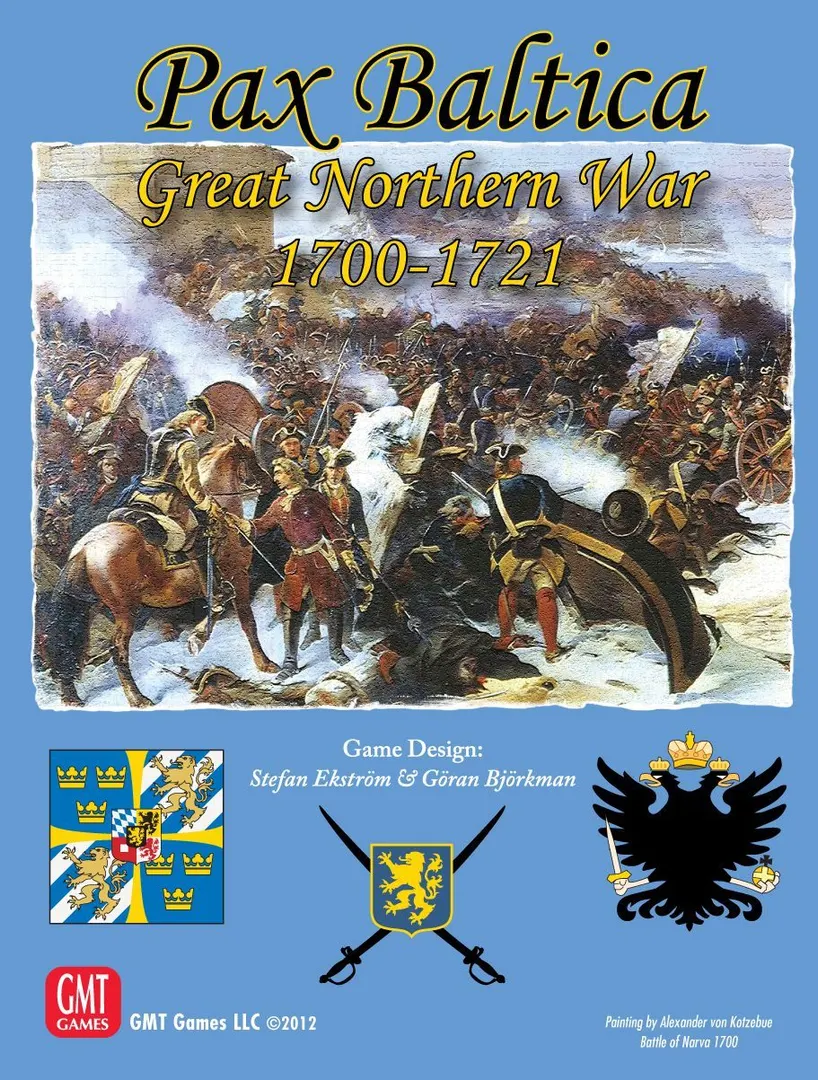
Pax Baltica: Great Northern War 1700-1721 ist ein Brettspiel aus dem Jahr 2009 für 2 Personen, mit 60–840 Minuten pro Partie und ab 12 Jahren. Entwickelt wurde es von Stefan Ekström und Göran Björkman; die wichtigsten Mechaniken sind Area Movement, Dice Rolling und Secret Unit Deployment.

Auf Englisch
It is 1700, and a youthful Karl XII has recently come to power as King of Sweden. Rivals around the Baltic Sea seize the opportunity to get their hands on Swedish territory. An alliance is struck between Denmark, Saxony-Poland, and Russia, the last under the vibrant leadership of Tsar Pyotr. This coalition mobilizes to take advantage of the untried King, and break Swedish dominance in the Baltics forever... Thus opened the Great Northern War, ravaging Northern and Eastern Europe for over two decades at the beginning of the eighteenth century. By the end of the war, one nation would lose its status as a Great Power, while another would rise to dominate the region for centuries onward. PAX BALTICA is a two-player wargame covering the entire Great Northern War (1700-1721). Published first as a limited “guerilla” edition in 2009 by Three Crowns Game Productions of Sweden, this new enhanced edition has been revised and upgraded by GMT Games in conjunction with the original designers. Over twenty years of fighting span the map from Norway to Turkey, Saxony to Finland. Units are represented by labeled wooden blocks, which are stood upright to conceal their identity and strength from the enemy, allowing players to dupe and outfox each other on campaign. Action points are spent to maneuver on the map, but also for reconnaissance, replacements, or a roll on the treacherous but lucrative National Politics Table. Straightforward rules account for lines of communication and forage, as well as time-consuming sieges, adding to the period flavor. The fast-paced and exciting combat system captures the aggressive "charge with cold steel" tactics that Sweden used to defeat her enemies in succession at the start of the war. Players are subject to a host of influences and distractions that will hinder their plans at every turn. An elaborate plan will be at the mercy of a poor action roll or sudden plague, while other events shape strategy with historical motivations and deterrents. Players must prepare for the worst, but be open to fleeting opportunities. Special rules capture simply the unique events and circumstances of the Great Northern War, including: • Russian army reforms • Ukrainian Cossack uprisings • Intervention by the Ottoman Empire • Polish royal politics • Attrition of Swedish manpower • Founding of Sankt-Peterburg Four scenarios are included with the game: a short tournament scenario covering the Swedish invasion of Russia that led to the Battle of Poltáva; two scenarios that simulate the first and last half of the war; and a “grand campaign” scenario that refights the entirety of the Great Northern War, a first in wargame publishing. Turns typically take no more than a couple of minutes, ensuring a fast pace of play. Swings of fortune ensure that no two games will turn out the same. Can you save Sweden’s empire? Or ensure Russia’s rise to prominence? You make the choices that will determine who reigns over the PAX BALTICA. Components: • 1 Map (22” x 34”) • 1 Rulebook (16 pages) • 1 Playbook (32 pages) • 65 wooden blocks (units) in five colors • 1 sticker sheet for mounting on blocks • 51 wooden cubes (control markers, etc.) in six colors • 8 dice, 4 blue and 4 green Game Design: Stefan Ekström and Göran Björkman Development for GMT: Scott Muldoon Complexity: 4 Solitaire Suitability: 3 Scale: Strategic. 1 turn = one season; units are armies, regiments, and fleets; 1 strength step = approx. 1500 troops or 6-8 fighting ships Players: 2 Time to Play: 1-2 hours for the shortest scenario, 7-14 hours for the grand campaign Original Three Crowns edition: Great Northern war, a 21-year long war lasted from 1700 to 1721 and ended Sweden’s period as a major power in northern Europe and started Russia’s domination of Eastern Europe. An intriguing conflict that is often considered a side-show of the War of Spanish succession. Nevertheless the former had probably greater impact of the developments in Europe during the 100 years to come than the latter. The effects of the war are in fact still seen today. Pax Baltica. Probably the first board game ever covering the entire Great Northern War. The game includes five different scenarios with a varying playtime between two hours and a day. The units in the game are blocks which give a great flexibility in taking steps and differentiate the quality and strength of the troops. The high quality map is divided into provinces which you have to conquer in order to take control over a country. This dynamic conflict covers large parts of northern and eastern Europe. From Bremen in the West to Smolensk in the East. From Trondheim in the North to Bender in the South. Playable nations are Sweden, Russia, Turkey, Denmark and Saxony. Other countries represented as minors are: Great Britain, Poland, Ukraine, Prussia and Hanover. The game, packed in a book case, includes a A2 full color map, 60 high quality wooden blocks, 4 dice, various markers and rules including 5 scenarios.
Laut Katalog unterstützt Pax Baltica: Great Northern War 1700-1721 2 Personen. Das ist die vom Verlag angegebene Spielerzahl, das Spiel ist also genau für diese Anzahl von Mitspielenden ausgelegt. Varianten für andere Gruppengrößen sind, sofern vorhanden, in der Anleitung deiner Ausgabe beschrieben; prüfe sie, bevor du eine andere Konfiguration aufbaust.
Die angegebene Spieldauer für Pax Baltica: Great Northern War 1700-1721 beträgt 60–840 Minuten. Das ist die Schätzung des Verlags für eine vollständige Partie. Die tatsächliche Dauer hängt von der Gruppe, der Personenzahl und der Regelkenntnis ab: Erste Partien dauern meist länger, erfahrene Gruppen sind oft schneller fertig. Aufbau und Regelerklärung sind in dieser Schätzung nicht enthalten.
Im Katalog wird Pax Baltica: Great Northern War 1700-1721 ab 12 Jahren empfohlen. Das ist die Empfehlung des Verlags und berücksichtigt Leseanforderungen, Regelkomplexität und Kleinteile, nicht nur das Thema. Jüngere Kinder können oft mit Hilfe eines Erwachsenen mitspielen; beachte die Altersangabe deiner Ausgabe und die Brettspielerfahrung deiner Gruppe.
Pax Baltica: Great Northern War 1700-1721 hat bei BoardGameGeek eine Komplexitätswertung von 2,9 von 5 und gilt damit als eher leichtes Spiel. Die Wertung zeigt, wie viel Regelwissen, Planung und Entscheidungen eine typische Partie verlangt. Schwerere Spiele brauchen bei der ersten Erklärung mehr Zeit, daher hilft vor dem Spieleabend eine Vorbereitungsanleitung.
Pax Baltica: Great Northern War 1700-1721 gehört zu diesen Kategorien: Wargame und Age of Reason. Die wichtigsten Mechaniken sind Area Movement, Dice Rolling und Secret Unit Deployment. Kategorien beschreiben Thema und Setting eines Spiels, Mechaniken dagegen, was die Spielenden in ihrem Zug tatsächlich tun. Jede Mechanik führt zu einer Katalogseite mit ähnlichen Spielen, falls du etwas Vergleichbares suchst.
Als Autoren von Pax Baltica: Great Northern War 1700-1721 sind angegeben: Stefan Ekström und Göran Björkman. Diese Angaben stammen aus den veröffentlichten Spieldaten und nennen die für das Spieldesign verantwortlichen Personen, nicht die Illustratoren oder Verlage. Die Autorenseiten auf MeepleRules sammeln weitere Titel derselben Autoren – praktisch, wenn dir ein Spiel gefällt und du ähnliche Spiele suchst.
Im Katalog ist Pax Baltica: Great Northern War 1700-1721 als Grundspiel aufgeführt. Es lässt sich eigenständig mit dem Material aus der Schachtel spielen und benötigt keinen weiteren Titel. Erweiterungen, sofern es welche gibt, ergänzen neues Material oder neue Regeln und sind im Katalog separat mit einem Verweis auf dieses Grundspiel aufgeführt.