
- BGG-Bewertung
- 7,5
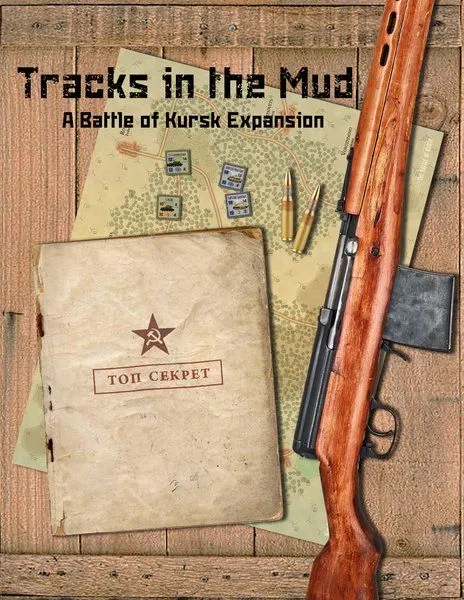
Platoon Commander Deluxe: Kursk – Tracks in the Mud
- 2 Spieler
- Komplexität 3,5/5
- 2018
2018
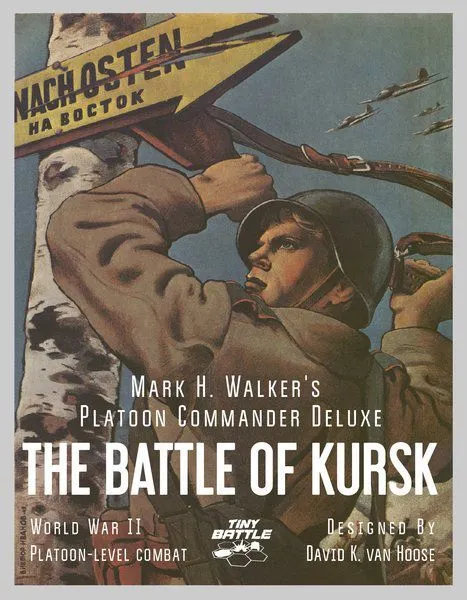
Regelhilfe für Platoon Commander Deluxe: The Battle of Kursk
Verständliche Erklärungen zu Spielzügen, Karteneffekten und strittigen Situationen mit Verweisen auf offizielle Quellen und gespeichertem Fragenverlauf.
Für 2 Personen
Was möchtest du wissen?
Antworten stammen aus dem offiziellen Regelheft, mit Seitenangabe zum Nachprüfen.
Platoon Commander Deluxe: The Battle of Kursk ist ein Brettspiel aus dem Jahr 2018 für 2 Personen. Entwickelt wurde es von Mark H. Walker und David K. van Hoose; die wichtigsten Mechaniken sind Dice Rolling, Hexagon Grid und Line of Sight.





Auf Englisch
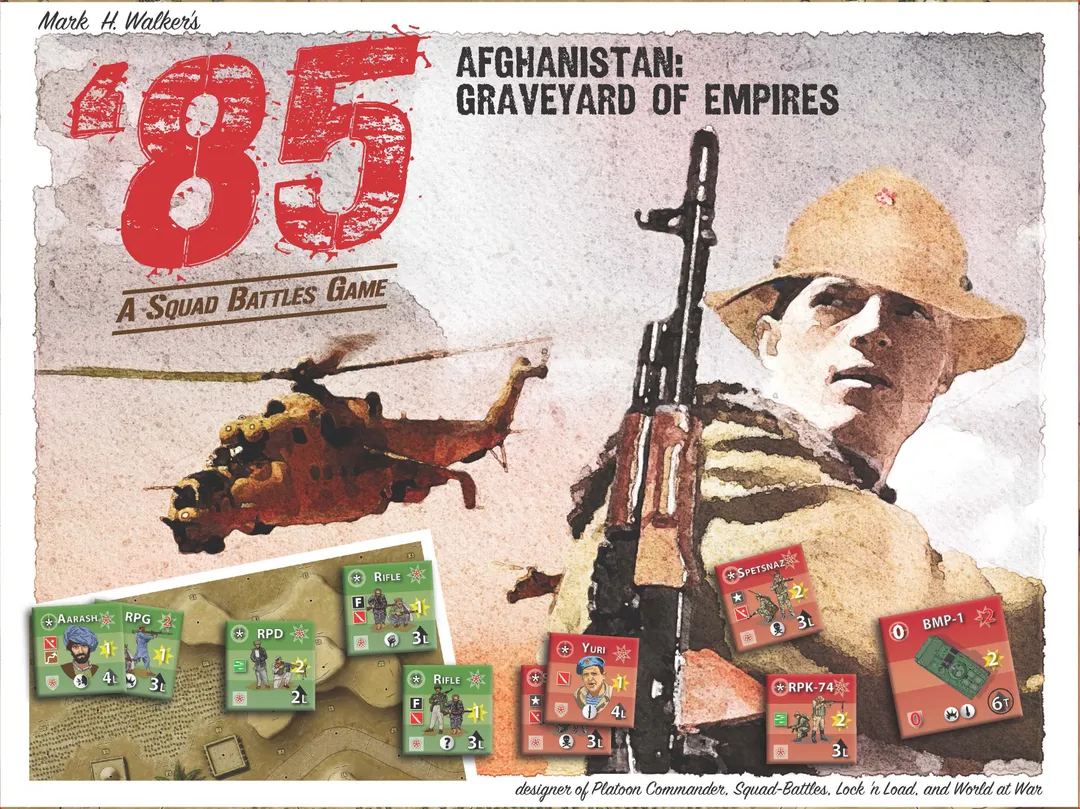
Publisher's advertising text: 'Kursk. Many historians believe it was the turning point of World War II. Kursk. Witness to the largest tank battle of the entire war. Kursk. The end of the myth of German invincibility. Kursk. Just one hell of a lot of fun to game with 1” square cardboard counters representing platoons of infantry and tanks and batteries of anti-tank guns, mortars, and stuff. And that is what you get with Platoon Commander Deluxe: Kursk. Platoon Commander Deluxe: Kursk (PCD:K) is the port of Tiny Battles’ well-known Platoon Commander system to Flying Pig’s big box, mounted map, large counter method of game publishing. Each game includes three mounted 22” x 17” geomorphic maps, and four sheets of thick (as in 2mm thick, wow these counters are so easy to pick up, thick, why haven’t wargames been like this forever, thick), 1” square counters. There are Tiger tanks, Panther tanks, Mk IV tanks, T-34/76 tanks, KV-1 tanks, SU-152 assault guns, infantry (rifle, guards, pioneers, submachinegun), mortar batteries, Stukas, IL-2, and more. PCD:K uses version 2 of the Platoon Commander rules, which are identical to the V1.5 rules released with the latest Tiny Battle Publishing Platoon Commander game, Poland Strikes, with the exception of enhanced artillery and new air strike routines. Each turn is gamed through several phases. At the beginning of each turn, the players determine initiative with a unique dice-off system in which ties award the initiative to whomever lacked it the previous turn and applying the Commander's Focus to the roll might tilt the odds in your favor. Next, players will draw a scenario-designated number (usually just one) of Action Cards that may be used for anything from artillery strikes, through rally assists, to negating the opponent's just-played card. Then it is time to rally disrupted units with a simple 1d6 roll against a nationality or scenario-designated morale. Action Cards, in addition to the special Aid chit, may be used to improve a unit's chances of preparing for combat. And then all hell breaks lose... It's the Fire Phase and players alternate firing with individual units or stacks of units against in-range and in-sight enemy units. When firing on the enemy tanks, the target's Armor Factor is subtracted from the firing unit's Armor Piercing Factor, two dice are rolled, and the results checked on the appropriate column on the Fire Results Table, yielding a number of potential hits. The target rolls a die for each potential hit and compares it to his or her morale. Pass the morale check, that hit is negated. These columns and die rolls can be modified by the target's terrain, flanking fire, the Focus marker (represents the commander's presence), and most importantly Action Cards, which can grant column shifts or even allow the same unit to fire again, adding a delicious uncertainty that makes the game thrilling to play. Players continue to alternate attacks until neither wishes to attack. Next comes the Movement Phase. Unlike the preceding Fire Phase, one player moves ALL his eligible units before the opposition gets to move. Certain units can move and fire or vice versa (with a penalty), unfired opposing units can opportunity fire on enemies moving within their line of sight. As in many other facets of the game, the insightful play of Action Cards during the movement phase is critical, allowing additional movement or opportunity fire conducted by units that have already fired. No PanzerBush tactics here, you never know when a unit will be able to fire on you. Exciting stuff. Finally, we reach the Aid and Focus Phase. Platoon Commander eschews the use of HQs that can be unrealistically targeted. Instead both players have Aid and Focus markers, representing where the commander intends to place emphasis or send additional assets (ammunition, weapons, etc) or first aid. The placement of these markers provides combat and morale bonuses to the units underneath them. Additionally, if the player chooses, the Focus marker can be used to influence the initiative roll. And that's a turn of Platoon Commander. So, What's Different? I hear that a lot. With all the tactical games on the market, what makes Platoon Commander Deluxe: Kursk different? Clutterless counters. PCD:K uses color to determine a weapon's range. For example, an Armor Piercing factor printed on gold indicates that the weapon can fire normally at a target up to four hexes away. Unique phasing. Players alternate attacking in the Fire Phase, but move all their units at once during the Movement Phase. Flanking Friendly Close Assault Phase. Units do not enter the hex of the Close Assault target, but rather attack from adjacent hexes. This allows the attacker to not only amass the overwhelming odds needed to take that key position, but also attack from multiple directions, which provide a flanking bonus. Additionally, alternating attacks in the Close Assault phase allow defenders to conduct true spoiling attacks. Ranged combat results are based not only an the target's armor factor and terrain, which determine the column on which the attack is executed, but also the target unit's morale which determines how many hits affected the target. Artillery is card driven. Neither player knows the other's artillery capability by glancing at a scenario card. Artillery barrages are determined by Action Cards. Action Cards. PCD:K is not card driven, but rather card assisted. The Action Cards provide artillery, rally units, provide combat bonuses, and even unexpected Opportunity Fire shots. Focus and Aid Markers. These markers allow players to influence the battle much as their real life counterparts would. Players may choose to focus on a specific area, providing combat bonuses, or provide additional aid to those disrupted by fire. It’s a system that grognards and newbies alike can enjoy. The counters are large, easy to read, and beautifully illustrated. There is no jungle of numbers to wade through; the range at which a unit can fire is indicated by the color of the placard (badge?) behind the attack factor. Although gamers need not fiddle with unit facing, simple rules account for flanking fire. And infantry isn’t forgotten either. Platoon Commander Deluxe uses a unique system in which infantry assaults from adjacent hexes, allowing commanders to concentrate overwhelming force at a critical point and even conduct flank attacks. And woe be the Tiger platoon caught unsupported in the midst of a city by a horde of Russian rifleman.'
Laut Katalog unterstützt Platoon Commander Deluxe: The Battle of Kursk 2 Personen. Das ist die vom Verlag angegebene Spielerzahl, das Spiel ist also genau für diese Anzahl von Mitspielenden ausgelegt. Varianten für andere Gruppengrößen sind, sofern vorhanden, in der Anleitung deiner Ausgabe beschrieben; prüfe sie, bevor du eine andere Konfiguration aufbaust.
Platoon Commander Deluxe: The Battle of Kursk hat bei BoardGameGeek eine Komplexitätswertung von 3,0 von 5 und gilt damit als mittelschweres Spiel. Die Wertung zeigt, wie viel Regelwissen, Planung und Entscheidungen eine typische Partie verlangt. Schwerere Spiele brauchen bei der ersten Erklärung mehr Zeit, daher hilft vor dem Spieleabend eine Vorbereitungsanleitung.
Platoon Commander Deluxe: The Battle of Kursk gehört zu diesen Kategorien: Wargame und World War II. Die wichtigsten Mechaniken sind Dice Rolling, Hexagon Grid und Line of Sight. Kategorien beschreiben Thema und Setting eines Spiels, Mechaniken dagegen, was die Spielenden in ihrem Zug tatsächlich tun. Jede Mechanik führt zu einer Katalogseite mit ähnlichen Spielen, falls du etwas Vergleichbares suchst.
Als Autoren von Platoon Commander Deluxe: The Battle of Kursk sind angegeben: Mark H. Walker und David K. van Hoose. Diese Angaben stammen aus den veröffentlichten Spieldaten und nennen die für das Spieldesign verantwortlichen Personen, nicht die Illustratoren oder Verlage. Die Autorenseiten auf MeepleRules sammeln weitere Titel derselben Autoren – praktisch, wenn dir ein Spiel gefällt und du ähnliche Spiele suchst.
Im Katalog ist Platoon Commander Deluxe: The Battle of Kursk als Grundspiel aufgeführt. Es lässt sich eigenständig mit dem Material aus der Schachtel spielen und benötigt keinen weiteren Titel. Erweiterungen, sofern es welche gibt, ergänzen neues Material oder neue Regeln und sind im Katalog separat mit einem Verweis auf dieses Grundspiel aufgeführt.
