
- BGG-Rang
- BGG #9.881
- BGG-Bewertung
- 8,0
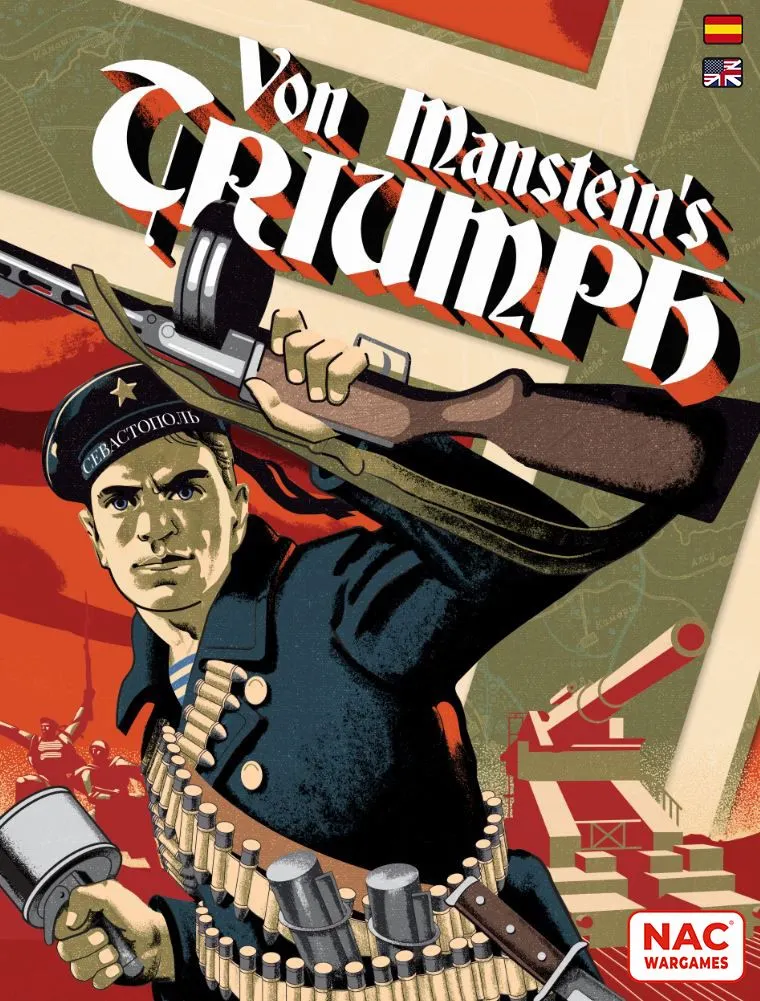
Von Manstein's Triumph
- 2 Spieler
- 120–180 Min.
- Komplexität 2,2/5
- 2022
2009
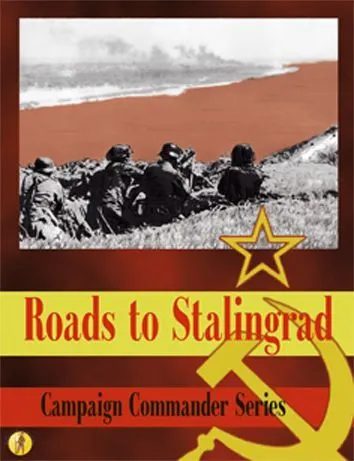
Regelhilfe für Roads to Stalingrad: Campaign Commander Series
Verständliche Erklärungen zu Spielzügen, Karteneffekten und strittigen Situationen mit Verweisen auf offizielle Quellen und gespeichertem Fragenverlauf.
Für 2 Personen
Was möchtest du wissen?
Antworten stammen aus dem offiziellen Regelheft, mit Seitenangabe zum Nachprüfen.
Roads to Stalingrad: Campaign Commander Series ist ein Brettspiel aus dem Jahr 2009 für 2 Personen und mit 180 Minuten pro Partie. Entwickelt wurde es von Francisco Ronco; die wichtigsten Mechaniken sind Area Movement, Dice Rolling und Simultaneous Action Selection.


Auf Englisch
Campaign Commander Volume I: Roads to Stalingrad. "Roads to Stalingrad" is the first volume of the Campaign Commander Series and depicts the campaign in southern Russia from the summer of 1942 to the end of the winter of 1943. After a terrible first winter in Russia, the German troops reorganized and readied themselves to launch the offensive to end the war. The soviets got ready first; they launched an attack to retake Kharkov that ended in disaster for the troops involved. After finishing this offensive the Axis forces - numbering many Hungarians, Romanians and Italians - launched, at the beginning of July 1942 the operation code named "Case Blue". German advance seemed unstoppable, reaching the Caucasus and the banks of the river Volga. At the city of Stalingrad the German army would experience a real nightmare fighting through August to October in an attempt to conquer it. Control of the city meant that the Germans could cut the traffic along the Volga, while for the Soviets it became a symbol of resistance against the invaders. Both Stalin and Hitler sent more and more troops to the cauldron of that destroyed city, into the fiercest and bloodiest battle ever known in history. In the event, conquering the city was rather useless to the Germans since, beginning on the 19th of November, Operation Uranus was launched and Marshall Zhukov could trap the German 6th Army into the ruins just won. Successive soviet offensives destroyed the Italian, Romanian and Hungarian armies on the river Don, forcing the Germans to evacuate their conquests in the Caucasus and endangering even the survival of the whole German Army Group South. Only the timely intervention of Marshall Erich von Manstein allowed the Germans to stop the Soviet advance and stabilize the front, thus saving an already catastrophic situation. The game is played at the operational level - with a zonal map at a 1:120000 scale. Designed for two players, one handles the Axis while the other commands the Soviets. The game has an estimated playing time of 3-4 hours and uses a double system of counters/map and cards in its mechanics. Players must use appropriately their troops and resources to obtain victory points either by destroying enemy forces or by occupying cities on the map. This is not a card driven game, cards are used for causing certain events, influence the outcome of battles and to place on map the necessary resources and reinforcements to fight on. The game starts in summer, the Axis player has the initiative and will mercilessly and relentlessly pound the Soviets. The Soviet player will have to hope for the winter - a card to be played given certain conditions - to stop the Axis advance and defeat them. As the other titles in the series, this game has very simple rules and has been designed to make games wholly interactive, creating a solid and enjoyable experience for those who simply cannot find the time and space to play a longer and more complex game. The Axis player must face the historical disjunctive, should he concentrate on taking the Caucasus, Stalingrad or both? The Soviet player will have to be patient and force his enemy to overextend his resources, at the same time managing to accumulate forces for a lethal winter offensive.
Laut Katalog unterstützt Roads to Stalingrad: Campaign Commander Series 2 Personen. Das ist die vom Verlag angegebene Spielerzahl, das Spiel ist also genau für diese Anzahl von Mitspielenden ausgelegt. Varianten für andere Gruppengrößen sind, sofern vorhanden, in der Anleitung deiner Ausgabe beschrieben; prüfe sie, bevor du eine andere Konfiguration aufbaust.
Die angegebene Spieldauer für Roads to Stalingrad: Campaign Commander Series beträgt 180 Minuten. Das ist die Schätzung des Verlags für eine vollständige Partie. Die tatsächliche Dauer hängt von der Gruppe, der Personenzahl und der Regelkenntnis ab: Erste Partien dauern meist länger, erfahrene Gruppen sind oft schneller fertig. Aufbau und Regelerklärung sind in dieser Schätzung nicht enthalten.
Roads to Stalingrad: Campaign Commander Series hat bei BoardGameGeek eine Komplexitätswertung von 2,5 von 5 und gilt damit als eher leichtes Spiel. Die Wertung zeigt, wie viel Regelwissen, Planung und Entscheidungen eine typische Partie verlangt. Schwerere Spiele brauchen bei der ersten Erklärung mehr Zeit, daher hilft vor dem Spieleabend eine Vorbereitungsanleitung.
Roads to Stalingrad: Campaign Commander Series gehört zu diesen Kategorien: Wargame und World War II. Die wichtigsten Mechaniken sind Area Movement, Dice Rolling und Simultaneous Action Selection. Kategorien beschreiben Thema und Setting eines Spiels, Mechaniken dagegen, was die Spielenden in ihrem Zug tatsächlich tun. Jede Mechanik führt zu einer Katalogseite mit ähnlichen Spielen, falls du etwas Vergleichbares suchst.
Als Autoren von Roads to Stalingrad: Campaign Commander Series sind angegeben: Francisco Ronco. Diese Angaben stammen aus den veröffentlichten Spieldaten und nennen die für das Spieldesign verantwortlichen Personen, nicht die Illustratoren oder Verlage. Die Autorenseiten auf MeepleRules sammeln weitere Titel derselben Autoren – praktisch, wenn dir ein Spiel gefällt und du ähnliche Spiele suchst.
Im Katalog ist Roads to Stalingrad: Campaign Commander Series als Grundspiel aufgeführt. Es lässt sich eigenständig mit dem Material aus der Schachtel spielen und benötigt keinen weiteren Titel. Erweiterungen, sofern es welche gibt, ergänzen neues Material oder neue Regeln und sind im Katalog separat mit einem Verweis auf dieses Grundspiel aufgeführt.