
- BGG-Rang
- BGG #3.144
- BGG-Bewertung
- 8,1
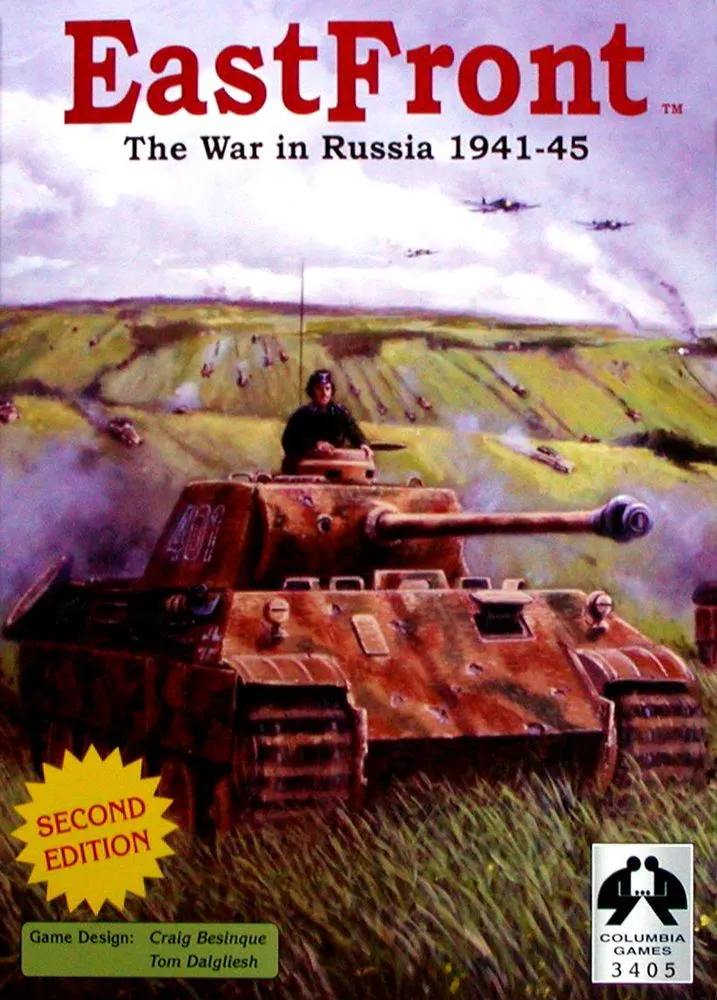
EastFront: The War in Russia 1941-45 – Second Edition
- 2 Spieler
- 240 Min.
- Komplexität 3,5/5
- 2006
1982
Regelhilfe für Rommel in the Desert
Verständliche Erklärungen zu Spielzügen, Karteneffekten und strittigen Situationen mit Verweisen auf offizielle Quellen und gespeichertem Fragenverlauf.
Für 2 Personen
Was möchtest du wissen?
Antworten stammen aus dem offiziellen Regelheft, mit Seitenangabe zum Nachprüfen.
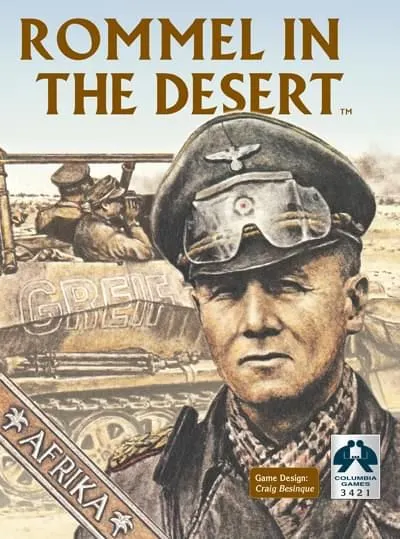
Rommel in the Desert ist ein Brettspiel aus dem Jahr 1982 für 2 Personen, mit 180–480 Minuten pro Partie und ab 12 Jahren. Entwickelt wurde es von Craig Besinque; die wichtigsten Mechaniken sind Dice Rolling, Secret Unit Deployment und Hexagon Grid.





Auf Englisch
Rommel in the Desert is a fast-moving, challenging, tense, and playable wargame based on the North Africa desert campaign of World War II. This game has been enjoyed by thousands of gamers for 40 years. Experience the wargame many consider the best on the subject. Rommel in the Desert simulates the experience of command. The real problems of generals have nothing to do with shuffling combat factors to get a perfect 3-1 attack while the enemy waits passively to be overwhelmed. Rommel gained many of his victories by employing speed, daring, and surprise. In this game, as in the desert campaign, the events of the battlefield are often subordinate to the battle of wits and nerves between opposing commanders. A good grasp of strategy will help, but foresight, nerve, and instinct are the crucial elements of success. CONTENTS 100 wooden blocks (20mm) Labels Mapboard (11 x 34 inches) Rules 1.02 42 Supply Cards 4 Dice (adapted from Columbia Games website) Rommel in the Desert is a pre-"Front" game touching on the conflict between the British and Germans in North Africa during WWII. A game of maneuver, each side has to move with precision and know when to strike, since a cut in supply spells disaster for either side. The supply system is card driven. The game comes with a map of North Africa and 100 wooden blocks to represent the British and Germans. This title uses Columbia Games Block system. While there are variations in the rule sets for each of their games nonetheless all of their games are based on block system. Basically this means that rather than the traditional use of counters to represent units on the map the game instead uses wooden blocks that stand upright and with unit details only shown on one side of the blocks. This does two things: First it provides an easy way of producing a "fog of war" because your opponent can not tell, save through good memory, what type of unit a specific piece is and its current strength. Second, by having the blocks stand on end it provides a way to keep track of a units strength by rotating the block so the current strength is the top number. Most war games have some type of mechanism that lets units take steps in their overall strength. Counters normally have at most two steps because of they only have two sides, however blocks have four and so now you can easily keep track of twice the amount of detail that many other war games provide. With the use of blocks Columbia has provided a way of adding a good deal of depth to their war games without adding further complex layers of bookkeeping and thus allow for interesting and relatively short sessions of play. (from BGG user)
Laut Katalog unterstützt Rommel in the Desert 2 Personen. Das ist die vom Verlag angegebene Spielerzahl, das Spiel ist also genau für diese Anzahl von Mitspielenden ausgelegt. Varianten für andere Gruppengrößen sind, sofern vorhanden, in der Anleitung deiner Ausgabe beschrieben; prüfe sie, bevor du eine andere Konfiguration aufbaust.
Die angegebene Spieldauer für Rommel in the Desert beträgt 180–480 Minuten. Das ist die Schätzung des Verlags für eine vollständige Partie. Die tatsächliche Dauer hängt von der Gruppe, der Personenzahl und der Regelkenntnis ab: Erste Partien dauern meist länger, erfahrene Gruppen sind oft schneller fertig. Aufbau und Regelerklärung sind in dieser Schätzung nicht enthalten.
Im Katalog wird Rommel in the Desert ab 12 Jahren empfohlen. Das ist die Empfehlung des Verlags und berücksichtigt Leseanforderungen, Regelkomplexität und Kleinteile, nicht nur das Thema. Jüngere Kinder können oft mit Hilfe eines Erwachsenen mitspielen; beachte die Altersangabe deiner Ausgabe und die Brettspielerfahrung deiner Gruppe.
Rommel in the Desert hat bei BoardGameGeek eine Komplexitätswertung von 3,4 von 5 und gilt damit als mittelschweres Spiel. Die Wertung zeigt, wie viel Regelwissen, Planung und Entscheidungen eine typische Partie verlangt. Schwerere Spiele brauchen bei der ersten Erklärung mehr Zeit, daher hilft vor dem Spieleabend eine Vorbereitungsanleitung.
Rommel in the Desert gehört zu diesen Kategorien: Wargame und World War II. Die wichtigsten Mechaniken sind Dice Rolling, Secret Unit Deployment und Hexagon Grid. Kategorien beschreiben Thema und Setting eines Spiels, Mechaniken dagegen, was die Spielenden in ihrem Zug tatsächlich tun. Jede Mechanik führt zu einer Katalogseite mit ähnlichen Spielen, falls du etwas Vergleichbares suchst.
Als Autoren von Rommel in the Desert sind angegeben: Craig Besinque. Diese Angaben stammen aus den veröffentlichten Spieldaten und nennen die für das Spieldesign verantwortlichen Personen, nicht die Illustratoren oder Verlage. Die Autorenseiten auf MeepleRules sammeln weitere Titel derselben Autoren – praktisch, wenn dir ein Spiel gefällt und du ähnliche Spiele suchst.
Im Katalog ist Rommel in the Desert als Grundspiel aufgeführt. Es lässt sich eigenständig mit dem Material aus der Schachtel spielen und benötigt keinen weiteren Titel. Erweiterungen, sofern es welche gibt, ergänzen neues Material oder neue Regeln und sind im Katalog separat mit einem Verweis auf dieses Grundspiel aufgeführt.