
- BGG-Rang
- BGG #12.784
- BGG-Bewertung
- 8,0
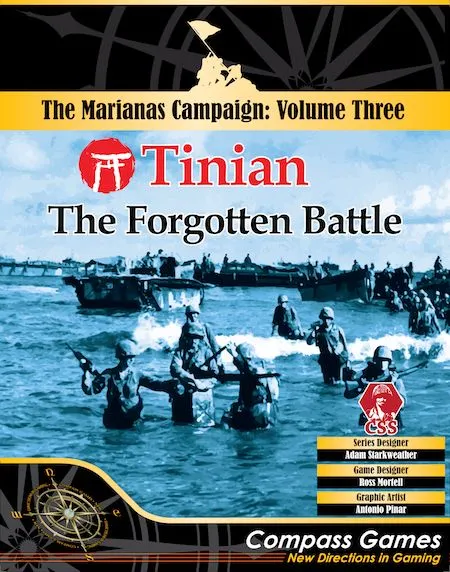
Tinian: The Forgotten Battle
- 1–2 Spieler
- 120–900 Min.
- Komplexität 3,1/5
- 2019
2017
Regelhilfe für Saipan: The Bloody Rock
Verständliche Erklärungen zu Spielzügen, Karteneffekten und strittigen Situationen mit Verweisen auf offizielle Quellen und gespeichertem Fragenverlauf.
Für 1 Person
Was möchtest du wissen?
Antworten stammen aus dem offiziellen Regelheft, mit Seitenangabe zum Nachprüfen.
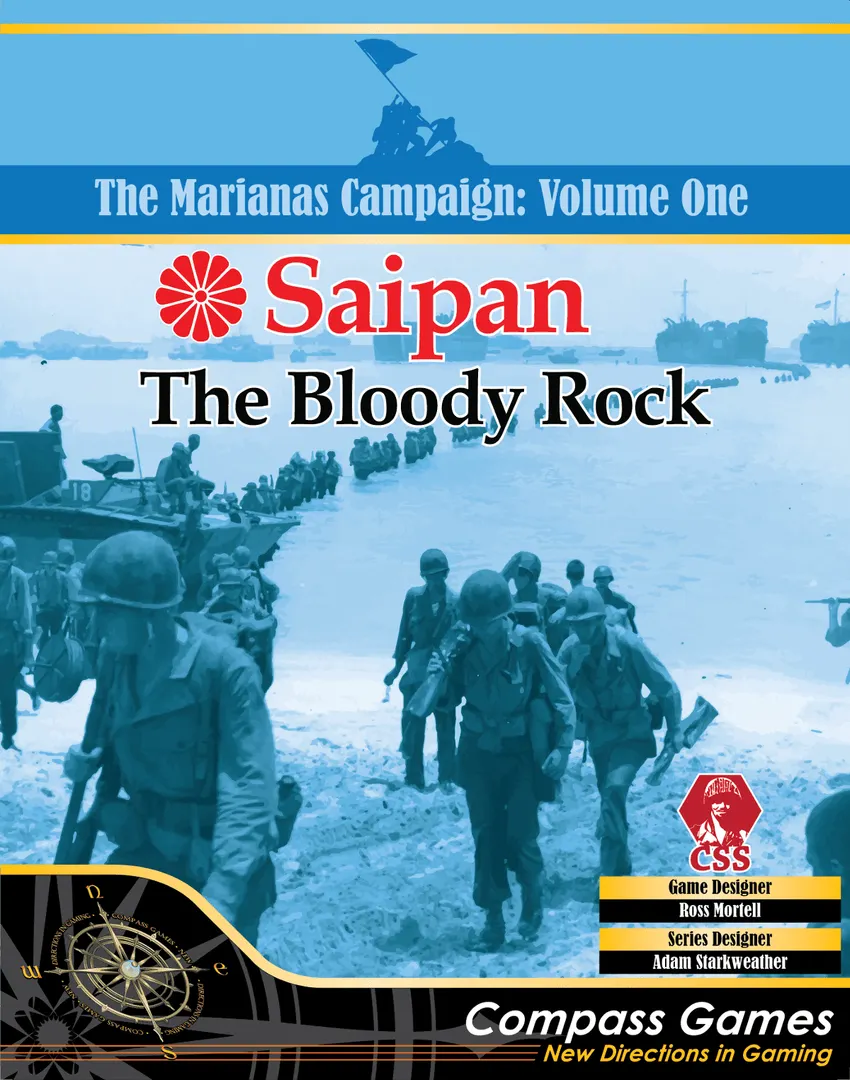
Saipan: The Bloody Rock ist ein Brettspiel aus dem Jahr 2017 für 1–4 Personen, mit 120–2100 Minuten pro Partie und ab 13 Jahren. Entwickelt wurde es von Adam Starkweather und Ross Mortell; die wichtigsten Mechaniken sind Dice Rolling, Hexagon Grid und Zone of Control.
Auf Englisch
Description from the publisher: The decision to invade The Marianas (of which Saipan is a part) was not an easy one. General MacArthur still favored the more westerly route through the Philippines and had support amongst the Joint Chiefs of Staff. It took several conferences and nearly a year before the decision was made. There were several reasons that the Americans finally decided to invade the Marianas: Firstly, it was the most direct route to Japan, Secondly, they could base B29 bombers there which could bomb Tokyo, Thirdly, Saipan would be the first piece of prewar Japanese soil taken during the war. Lastly, the American planners hoped that they could draw the Japanese fleet into a decisive engagement. With all these reasons, a battle for the Marianas was inevitable. On 15th June 1944 71,000 American Marines and Infantry attempted to make the plan work. 32,000 dug-in Japanese attempted to stop them. Saipan – The Bloody Rock will be the first game to utilize the new Company Scale System (CSS) by Adam Starkweather and will come on 2 maps. This will be your chance to experience a full-on naval invasion as Amtracs and DUKWs head towards the emplaced forces of Imperial Japan. The game will come with 4 scenarios and 2 campaign games: Dog-Day – The first day of the Invasion. It is 8 turns long and fought on a single map. An excellent introduction to both the system and the game. First Week in Hell – The first week of the invasion and the capture of Aslito airfield. This scenario is 56 turns long and is played on a single map. For the space but not time challenged players among you. Death Valley – This scenario covers a single day of the fighting and concentrates on the American attempt to capture Mount Tapotchau and the area that became know as Death Valley. 8 turns long and a single map. An excellent large battle you can play over one sitting. Shattered Jewels - This scenario covers a single day of fighting and revolves around the largest Banzai attack of the war. Thousands of Japanese attack the 105th Regiment near the town of Tanapag. Variable length but usually 4-5 turns. The Battle for Saipan – The full historical campaign from 15th June- 9th July (224 Turns). This game covers the full fight for Saipan in 1944, from the first invasion at Charan Kanoa in the south, through the long bloody fight in the central mountains around Mount Tapotchao and finally to the last Japanese stand in the north. Bloody Rock – This is a hypothetical campaign game that lets the players decide how to defend Saipan and how to invade it. The American player receives the same historical forces but now has the opportunity to devise his own landing schedule over one of 25 beaches. The Japanese player gets to prepare his own defenses; set up pillboxes, lay mines and deploy 6” naval guns etc. Can you do better than history? Complexity: 6 Solitaire Suitability:8 Time Scale: 1 turn = 2 hours Map Scale: 1 hex = 500 meters Unit Scale: Companies and below Players: Best with 2 players but can be played with up to 4 players as well as solitaire
Laut Katalog unterstützt Saipan: The Bloody Rock 1–4 Personen. Diese Spanne entspricht der vom Verlag angegebenen Spielerzahl, das Spiel lässt sich also für jede Gruppengröße innerhalb dieser Spanne aufbauen. Aufbau, einzelne Regeln und Wertungsdetails können je nach Personenzahl trotzdem abweichen; prüfe daher die genaue Konfiguration in der Anleitung deiner Ausgabe.
Die angegebene Spieldauer für Saipan: The Bloody Rock beträgt 120–2100 Minuten. Das ist die Schätzung des Verlags für eine vollständige Partie. Die tatsächliche Dauer hängt von der Gruppe, der Personenzahl und der Regelkenntnis ab: Erste Partien dauern meist länger, erfahrene Gruppen sind oft schneller fertig. Aufbau und Regelerklärung sind in dieser Schätzung nicht enthalten.
Im Katalog wird Saipan: The Bloody Rock ab 13 Jahren empfohlen. Das ist die Empfehlung des Verlags und berücksichtigt Leseanforderungen, Regelkomplexität und Kleinteile, nicht nur das Thema. Jüngere Kinder können oft mit Hilfe eines Erwachsenen mitspielen; beachte die Altersangabe deiner Ausgabe und die Brettspielerfahrung deiner Gruppe.
Saipan: The Bloody Rock hat bei BoardGameGeek eine Komplexitätswertung von 4,0 von 5 und gilt damit als schweres Spiel. Die Wertung zeigt, wie viel Regelwissen, Planung und Entscheidungen eine typische Partie verlangt. Schwerere Spiele brauchen bei der ersten Erklärung mehr Zeit, daher hilft vor dem Spieleabend eine Vorbereitungsanleitung.
Saipan: The Bloody Rock gehört zu diesen Kategorien: Wargame und World War II. Die wichtigsten Mechaniken sind Dice Rolling, Hexagon Grid und Zone of Control. Kategorien beschreiben Thema und Setting eines Spiels, Mechaniken dagegen, was die Spielenden in ihrem Zug tatsächlich tun. Jede Mechanik führt zu einer Katalogseite mit ähnlichen Spielen, falls du etwas Vergleichbares suchst.
Als Autoren von Saipan: The Bloody Rock sind angegeben: Adam Starkweather und Ross Mortell. Diese Angaben stammen aus den veröffentlichten Spieldaten und nennen die für das Spieldesign verantwortlichen Personen, nicht die Illustratoren oder Verlage. Die Autorenseiten auf MeepleRules sammeln weitere Titel derselben Autoren – praktisch, wenn dir ein Spiel gefällt und du ähnliche Spiele suchst.
Im Katalog ist Saipan: The Bloody Rock als Grundspiel aufgeführt. Es lässt sich eigenständig mit dem Material aus der Schachtel spielen und benötigt keinen weiteren Titel. Erweiterungen, sofern es welche gibt, ergänzen neues Material oder neue Regeln und sind im Katalog separat mit einem Verweis auf dieses Grundspiel aufgeführt.